

Bisket Jatra 2026 is happening RIGHT NOW in Bhaktapur from April 10 to 18 and today April 13 marks the beginning of Sindoor Jatra in Madhyapur Thimi, one of the most visually explosive events in all of Nepal.
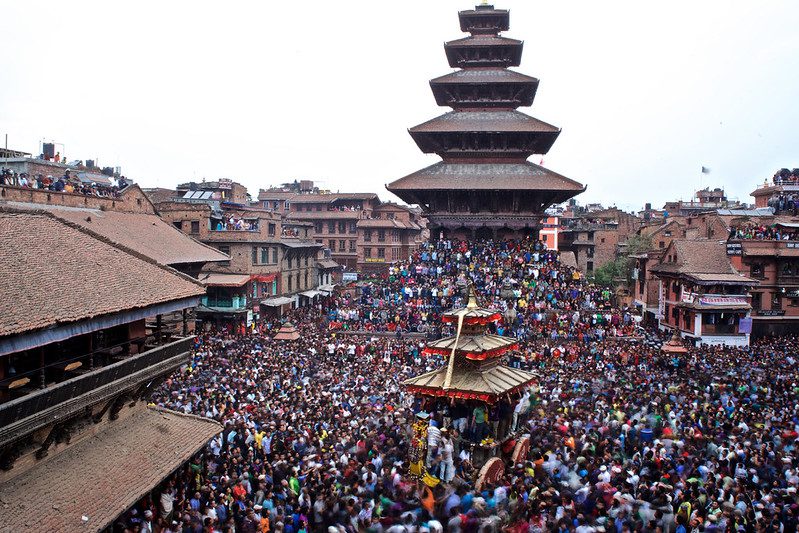
Imagine standing in the middle of an ancient stone square in Bhaktapur. The air smells of incense, marigold garlands and mustard oil lamps. Somewhere ahead of you, a massive wooden chariot the size of a small house is being pulled through the cobblestone streets by hundreds of people gripping thick jute ropes.
The sound of Dhime drums fills your chest before it even reaches your ears. People are shouting, pushing and pulling from both sides. Orange vermillion powder fills the sky like a cloud. Children sit on old stone walls watching with wide eyes. Elders pray quietly near the temple entrance.
This is not a performance for tourists. This is Bisket Jatra.
A nine day festival that has been happening in Bhaktapur for over 500 years without stopping. It is raw, real and unlike anything else in Nepal.
If you are already in Kathmandu or Bhaktapur right now, this is the most important thing happening in the country this week. This guide will tell you everything you need to know before you go.And if you are planning to stay longer after the festival, April is also the perfect month for trekking. Check out our Trekking Regions if you want to make the most of your time in Nepal.
What is Bisket Jatra?
Bisket Jatra is a nine day festival celebrated every year in Bhaktapur, Nepal. It is also known as Biska Jatra or Vishwodhoj Jatra. The festival is celebrated by the Newar community, one of the oldest indigenous communities of the Kathmandu Valley. The Newar people have kept this festival alive for centuries through a system of community responsibility called the Guthi system. Different families and groups are assigned different responsibilities every year, from building the chariot to performing the rituals.
The festival marks the Nepali New Year and the arrival of spring. But it is much more than just a New Year celebration. At its core, Bisket Jatra is about the victory of good over evil. It celebrates the killing of two deadly serpents that once terrorised the kingdom of Bhaktapur. The festival follows the solar calendar, which is different from most Nepali festivals that follow the lunar calendar. This makes Bisket Jatra fall in mid April every year without much variation.
The main celebrations happen in Bhaktapur city, specifically around Taumadhi Square, Pottery Square and Lyasinkhel. But nearby towns like Thimi, Bode and Tokha also have their own versions of the festival happening at the same time.
Bisket Jatra 2026 Dates and Full Schedule
Bisket Jatra 2026 runs from April 10 to April 18. The festival spans nine days from the 27th of Chaitra to the 5th of Baisakh on the Bikram Sambat calendar. Here is the full schedule so you know exactly what to expect on each day.
| Date | What Happens | Best Time to Arrive |
| April 10 | Chariot procession and tug of war at Taumadhi Square | By 3 PM |
| April 11 | Chariot moves through Bhaktapur streets | By 10 AM |
| April 12 | Chariot stays at Gahiti | Anytime of the day |
| April 13 | Chariot pulled to Lyasinkhel. Sindoor Jatra begins in Thimi | By 4 PM |
| April 14 | Nepali New Year 2083. The Lingo pole falls at Pottery Square | By 9 AM |
| April 15 | Sindoor Jatra main day in Thimi. Tongue piercing in Bode | By 7 AM in Thimi |
| April 16 | Chariot returns toward Gahiti | By 11 AM |
| April 17 | Final chariot procession begins | By 2 PM |
| April 18 | Last day. Final tug of war. Chariot returns to the temple | By 3 PM |
If you can only attend one day, go on April 10 for the opening chariot tug of war or April 14 for the Lingo falling and Nepali New Year.
The Legend Behind Bisket Jatra: The Serpent Curse Story
Every great festival has a great story behind it. The story behind Bisket Jatra is one of the most gripping in all of Nepal and it has been passed down through generations in Bhaktapur without changing much at all.
Long ago, the king of Bhaktapur had only one daughter. She was beautiful and kind. The king declared that whoever married his daughter would become the next king of Bhaktapur. Many brave young men from the kingdom agreed to try their luck. But there was a terrible problem. Every single morning after the wedding night, the new husband was found dead. Nobody could explain why. The same thing happened again and again. One groom after another. The entire kingdom was terrified. Eventually, no man in Bhaktapur was willing to marry the princess anymore.
Word spread to nearby kingdoms. One day a young prince with tantric powers heard about the curse. He was not afraid. He believed he could break it. The Goddess Bhadrakali, disguised as an old woman, appeared to him and told him what to do. She told him to find a hidden sword near the river and to stay awake the entire night after the wedding with the sword in his hand.
The prince married the princess and did exactly as he was told. He stayed awake through the night. At midnight, something moved. Two giant serpents slowly emerged from the princess’s nostrils. Before they could strike, the prince raised his sword and killed them both instantly. The curse was broken forever.
The king was overjoyed. To celebrate this victory and to remember the prince’s courage, he declared a great festival. That festival became Bisket Jatra. The tall wooden pole you see raised during the festival represents the serpents. When it falls, it symbolises the defeat of evil.
This is why the festival is also sometimes called Bisya Jatra, where the word Bi means serpent and Sya means to kill.
Day by Day Guide: What Happens Each Day in Bhaktapur
Day 1 (April 10), The Chariot Tug of War at Taumadhi Square
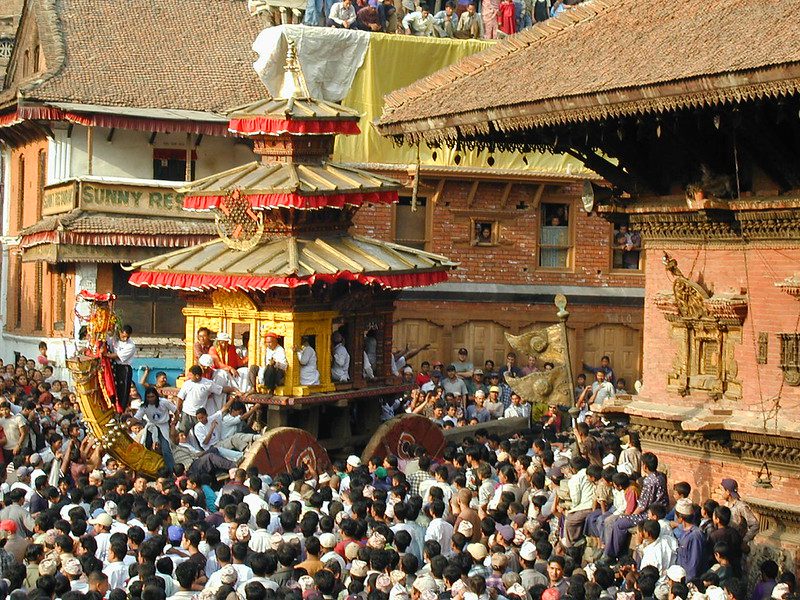
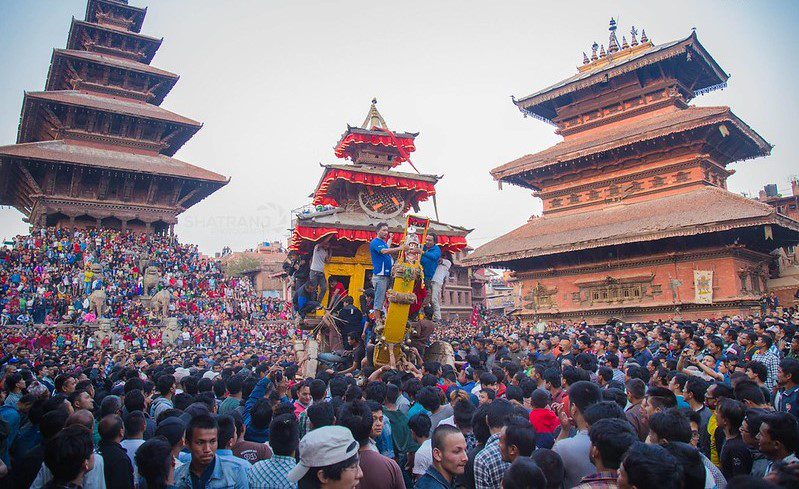
This is the most exciting and most watched moment of the entire festival. A massive three story wooden chariot is placed at Taumadhi Square in the heart of Bhaktapur. This chariot carries the idol of Lord Akash Bhairava, a fierce and powerful form of Lord Shiva who is believed to protect the city. The chariot is hand carved with detailed religious symbols and decorated with cloth and metalwork. It sits on large wooden wheels and stands several stories tall.
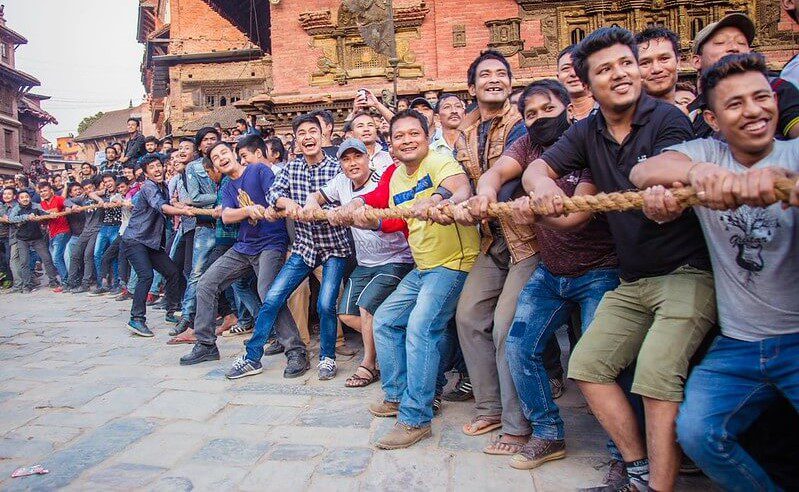
The city of Bhaktapur then divides into two sides. The eastern part of the city is called Thane. The western part is called Kone. People from both sides grip long thick jute ropes attached to the chariot. Then the pulling begins. Hundreds of people pull with full body weight from both sides. The sound of Dhime drums never stops. Conch shells blow in unison. The crowd is enormous and the energy is unlike anything else you will experience in Nepal.
Whoever wins gets the chariot brought to their neighborhood first. The other side must wait their turn. This tug of war is not just a game. It has deep meaning for the community. It represents the balance between the two halves of the city and the ongoing struggle between divine forces.
Arrive at Taumadhi Square by 3 PM. The procession usually begins in the late afternoon and continues into the evening.
Day 2 and Day 3 (April 11 to 12), The Chariot Moves Through the City
After the opening tug of war, the chariot begins a slow journey through the ancient lanes of Bhaktapur. Devotees line the streets to offer prayers and flowers as it passes. The chariot is guided carefully around narrow corners and through tight alleys that were built centuries ago. It eventually rests at a place called Gahiti for two days. People continue to come and offer worship at the chariot during this time.
Day 4 and Day 5 (April 13 to 14), The Lingo Falls and the New Year Arrives
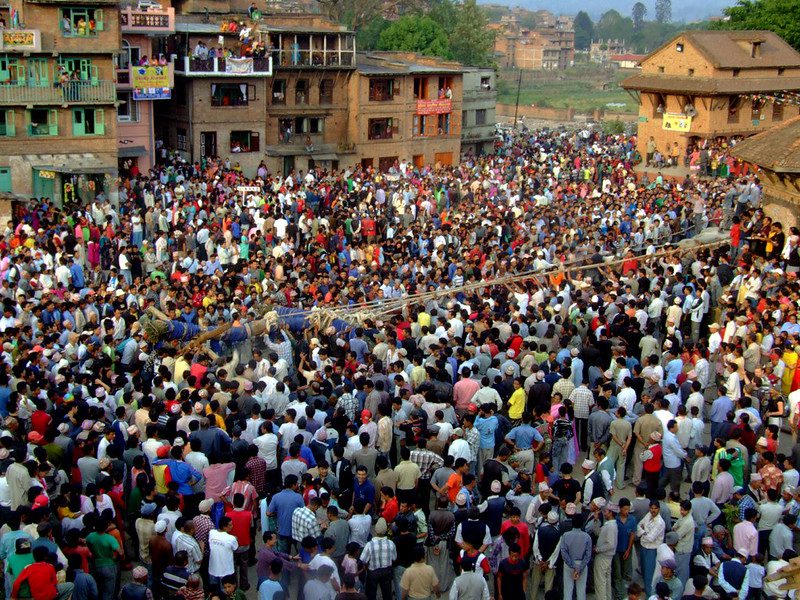
These are the two most spiritually significant days of the festival. On the evening of April 13, the chariot is pulled from Gahiti down to a large open area called Lyasinkhel near Pottery Square. A tall wooden pole called the Lingo or Yoh Si Dyo is erected here. This pole stands about 25 meters tall. Two long cloth banners are tied to the top of the pole. These banners represent the serpents from the legend.
On April 14, which is Baisakh 1 and the first day of Nepali New Year 2083, the crowds gather around the Lingo pole. Thick ropes are tied to it. Then together, the crowd pulls until the pole slowly falls to the ground. This moment is called Satruhanta Jatra, which means the festival of seeing your enemy fall. There is a widespread belief that if you witness the Lingo falling to the ground, your enemies and your troubles will also face defeat in the coming year. This is why the moment draws one of the largest crowds of the entire nine days.
Day 6 (April 15), Sindoor Jatra in Thimi and Tongue Piercing in Bode
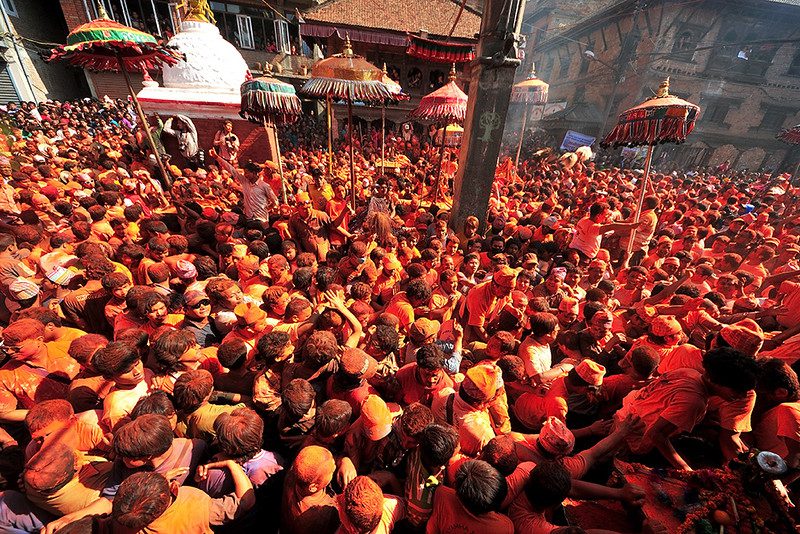
April 15 is the most visually spectacular day outside of Bhaktapur itself. In the nearby town of Thimi, which is only about 3 km away, a festival called Sindoor Jatra takes place. Around 32 chariots carrying images of different gods and goddesses are carried through the streets on people’s shoulders. The streets fill with colour as people throw handfuls of bright orange vermillion powder at the chariots and at each other. Traditional Newari drums and cymbals play without stopping. Everybody ends up completely covered in orange from head to foot. It is one of the most photographed moments in all of Nepal.
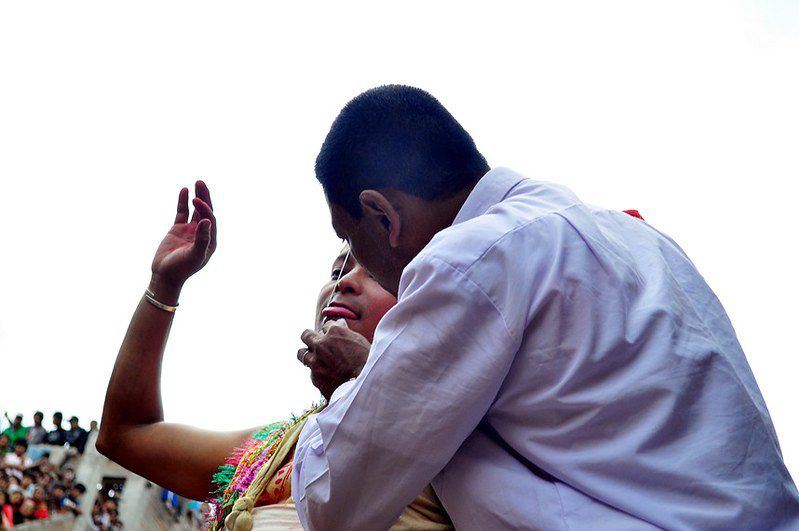
On the same day, in the village of Bode, a man has his tongue pierced by an iron spike. He then carries flaming torches on a bamboo rack on his shoulders and walks through the entire village for the rest of the day. He does not eat, drink or speak while the spike is through his tongue. He walks calmly while thousands of people watch. This ritual has been performed the same way for hundreds of years. It is an act of devotion and spiritual endurance.
Day 7 to Day 9 (April 16 to 18) , The Final Days and Closing of the Festival
The chariot makes its final journey back through the streets of Bhaktapur on the seventh and eighth day. On April 18, the last day of the festival, one final tug of war takes place. This closing battle is just as intense as the first one. After the tug of war ends, the chariot is guided back to the Bhairavnath temple and stored inside. The festival is officially over for another year.
Check out our Everest Base Camp Trek if you want to make the most of your time in Nepal.
Why Bisket Jatra and Nepali New Year 2083 Fall on the Same Day ?
A lot of people think Bisket Jatra is simply the Nepali New Year festival. The truth is more interesting than that. Bisket Jatra is actually a completely separate tradition. It follows the solar calendar, not the lunar calendar that most Nepali festivals use. The origins of Bisket Jatra have nothing to do with the New Year. They go back to the serpent legend.
However, the main day of Bisket Jatra happens to fall on Baisakh 1, which is the first day of the Nepali New Year on the Bikram Sambat calendar. In 2026, that day is April 14. So the two events happen on the same day every year. Over centuries they have become deeply connected in the minds of the Newar community and for most Nepali people they feel like the same celebration.
In Bhaktapur, April 14 is the most charged day of the year. The Lingo falls. The New Year begins. The streets are packed. People greet each other with Naya Barsha ko Shubhakamana, which means Happy New Year. Families perform Sagun rituals at home, offering eggs, fish, lentil cakes, rice wine and meat.
If you want to be somewhere extraordinary on Nepali New Year 2083, Bhaktapur is the answer.If you are thinking about trekking after the festival, the Annapurna Base Camp Trek is a great option for first time trekkers and experienced hikers alike.
The Lingo Pole: What It Means and When It Falls
The Lingo is the most iconic symbol of Bisket Jatra. Without it, the festival would feel incomplete. It is a massive wooden pole, roughly 25 meters tall, raised by hand using thick ropes and the strength of hundreds of people working together. The raising of the Lingo happens on the evening of April 13 at Lyasinkhel near Pottery Square.
Two long cloth banners hang from the top of the pole. These represent the two serpents from the legend. As long as the Lingo stands, the spirit of the festival is alive. Then on April 14, the pulling down begins. Ropes are attached and a large crowd works together to bring the pole to the ground. The direction in which it falls is also watched carefully by locals. It is said that the direction of the fall can carry meaning for the coming year.
Watching the Lingo fall is considered a blessing. People travel from across Nepal just to be in that square at that moment.
Sindoor Jatra in Thimi: When the Whole Town Turns Orange ?
Thimi deserves its own section because it is so different from Bhaktapur’s celebrations and so easy to combine into the same visit.
Thimi is an ancient Newar town about 3 km from Bhaktapur and about 10 km from central Kathmandu. It sits along the road between Kathmandu and Bhaktapur, making it easy to stop on the way. During Sindoor Jatra on April 15, the entire town transforms into a sea of orange.
The festival at Thimi runs for three days but April 15 is the main day. By 7 AM at Balkumari Temple, the main procession begins. Groups of men carry wooden palanquins called Khats on their shoulders. Each Khat holds the idol of a different god or goddess. There are around 32 Khats in total moving through the town at the same time. As they pass through the streets, devotees throw sindoor powder from every direction. The powder clouds are so thick you can barely see through them.
Traditional Newari music plays throughout the morning. The mood is joyful and energetic. Children, elders, tourists and locals all end up orange.
Tongue Piercing Ritual in Bode
Out of all the rituals during Bisket Jatra, the tongue piercing in Bode is the one that people find most difficult to believe.
Every year in the small village of Bode, a single volunteer has a thick iron spike pushed through his tongue. This person is called the Dhami. From the moment the spike goes in, he begins a procession through the village. He carries a large round bamboo rack on his shoulders with many oil lamps burning all around him. He walks slowly and calmly through every part of the village while thousands of people follow and watch.
The Dhami does not eat, drink or speak for the entire day. He shows no signs of pain or discomfort. The people of Bode believe this act brings protection and good fortune to the village for the coming year. When the day ends, the spike is removed. It is said that the wound heals quickly with no lasting damage.
This ritual has been performed every year for hundreds of years without stopping. It is one of the most extraordinary acts of devotion you will ever see.
How to Get to Bhaktapur from Kathmandu
Bhaktapur is about 13 km from central Kathmandu. It takes around 30 to 45 minutes depending on traffic. During the festival days, traffic can be heavier so allow extra time.
By taxi: A taxi from Thamel costs around 800 to 1200 Nepali rupees. Ask your hotel to call one in advance or book through a ride app.
By local microbus: Microbuses to Bhaktapur leave from Kalanki and from near Ratnapark in central Kathmandu. The fare is around 30 to 40 Nepali rupees. It takes a bit longer but it is a very cheap option.
By private vehicle: If you are booking a tour or have your own transport, you can drive directly to Bhaktapur Durbar Square. There is a parking area near the main entrance.
Foreign visitors are required to pay a heritage conservation fee to enter Bhaktapur Durbar Square. The current fee is around 1,800 Nepali rupees. This fee supports the maintenance of one of the most well preserved medieval cities in Asia.
If you want to explore Bhaktapur together with nearby Patan in a single guided day, have a look at our Bhaktapur and Patan Day Tour for a comfortable and well planned experience.
Many travellers combine Bisket Jatra with a trek right after. The Manaslu Circuit Trek starts from Kathmandu and April is one of the best months to do it.
What to Eat During Bisket Jatra
One of the most overlooked parts of Bisket Jatra is the food. The festival season brings out the best of traditional Newari cuisine. Street stalls and local homes fill the lanes of Bhaktapur with smells that are hard to describe until you have been there. Here is what you should look out for and try.
Samay Baji
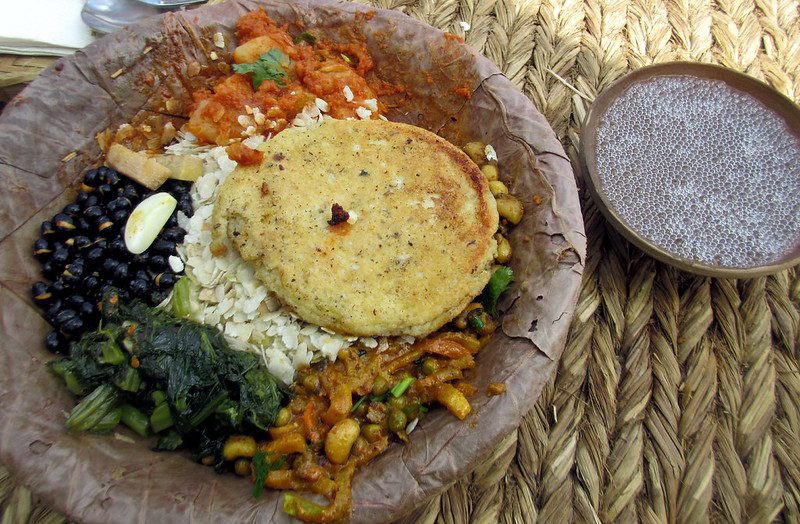
This is the most traditional Newari festival dish. It is a platter made of beaten rice, black lentil patties, boiled egg, dried fish, ginger, garlic and a small amount of Aila. Every Newar family prepares this at home during the festival. You will find it in small local restaurants and stalls around Taumadhi Square. It is the taste of the festival more than any other dish.
Bara
Bara is a thick lentil pancake made from ground black lentils. It is crispy on the outside and soft on the inside. You can eat it plain or with a fried egg on top. During Bisket Jatra it is sold at almost every street corner in Bhaktapur. It is filling, cheap and extremely good.
Chatamari
Chatamari is often called the Newari pizza. It is a thin rice flour crepe topped with minced meat, eggs and spices. It is cooked fresh and served hot. You will find it in small eateries around Bhaktapur Durbar Square. It is one of the most popular dishes with both locals and visitors.
Aila
Aila is a traditional Newari rice wine that has been brewed the same way for generations. During Bisket Jatra, Aila is a central part of the celebration. It is strong, clear and served in small clay cups. Many local families make their own Aila at home. You can find it in traditional Newari restaurants around Bhaktapur. If you are offered a cup by a local during the festival, accepting it is considered respectful and friendly.
Sagun Platter
Sagun is a ritual offering that is also eaten as a meal during the festival. The platter typically includes a boiled egg, dried fish, lentil cakes, ginger and a small cup of Aila. It represents good fortune and is shared between family members on the morning of the New Year. Some restaurants in Bhaktapur serve a version of this during festival days.
If you enjoy exploring local food alongside cultural experiences, Bhaktapur during Bisket Jatra is one of the best places in Nepal to do both at the same time.
What to Carry, Wear and Know Before You Go
Going to Bisket Jatra is easy but a little preparation makes it much more enjoyable.
- Clothing: Wear comfortable clothes you do not mind getting dusty or crowded. Wear closed shoes that you can walk in for several hours.
- Timing: Arrive early. Taumadhi Square gets extremely crowded very fast on April 10. Try to be there by 3 PM at the latest. For the Lingo on April 14, arrive at Pottery Square by mid morning.
- Cash: Carry Nepali rupees in cash. Most food stalls, small shops and entry counters at the festival do not accept cards.
- Camera and phone: Make sure your camera or phone has enough storage. This festival offers incredible photos at every turn.
- Water and snacks: The weather in April is warm. It can get very tiring standing in crowds for hours. Bring a bottle of water and a light snack.
- Safety in the crowd: During the tug of war, thick ropes are pulled across the square with great force. Do not stand too close to the ropes. Watch from a safe distance and stay aware of the crowd movement around you.
April is also an excellent time for trekking in Nepal. If you want to plan a trek before or after the festival, our Best Time for Trekking in Nepal guide will help you decide which route suits you best.
What Not to Do at Bisket Jatra
Bisket Jatra is a deeply sacred festival. The Newar community has kept its rituals alive for over 500 years with great care and respect. As a visitor, being aware of a few simple things will make your experience much more respectful and enjoyable.
Do not step on offerings on the ground
During the festival, families place flower offerings, sindoor powder, rice and small oil lamps on the ground near temple entrances and at street corners. These are sacred offerings. Always look down as you walk and step around them carefully. Stepping on them is considered very disrespectful.
Do not point your feet toward the chariot or temple idols
In Nepali and Newari culture, the feet are considered the lowest and most impure part of the body. Pointing your feet toward a religious object, a deity or the chariot is seen as deeply offensive. When you sit down to watch the procession, be mindful of where your feet are pointing.
Do not use a drone without permission
Drones are strictly regulated around Bhaktapur and its heritage sites. Flying a drone without a permit from the Civil Aviation Authority of Nepal is illegal and can result in a heavy fine. If you are a photographer and want aerial footage, sort the permits out well in advance.
Do not enter certain temple areas as a non Hindu
Some temple interiors in Bhaktapur are restricted to Hindu worshippers only. There will usually be a sign at the entrance. Respect these boundaries and do not try to enter restricted areas. You can still watch and photograph the rituals from outside.
Do not touch the chariot or the Lingo pole
The chariot and the Lingo are sacred ritual objects. Do not touch them, lean on them or climb on them for a photo. This applies to both the chariot during the procession and the Lingo pole at Lyasinkhel.
Do not stand too close to the ropes during the tug of war
This is as much about safety as it is about respect. The ropes used during the chariot tug of war are under enormous tension with hundreds of people pulling from both sides. If a rope snaps or the chariot moves suddenly, people standing too close can get seriously hurt. Always watch from a safe distance.
Do not eat or drink inside temple courtyards
Eating and drinking inside temple premises is not allowed during religious festivals. If you need to eat or drink, step outside the courtyard first.
Following these simple guidelines will make sure you have a respectful and trouble free experience at one of Nepal’s greatest festivals.
FAQs About Bisket Jatra
1. When does Bisket Jatra 2026 start and end?
Bisket Jatra 2026 starts on April 10 and ends on April 18 in Bhaktapur, Nepal. The festival runs for nine days and eight nights in total.
2. What is the best day to attend Bisket Jatra 2026?
April 12 is the best day for the Sindur Jatra in Thimi. April 14 is the most spiritual day when the Lingo pole falls and the Nepali New Year begins. If you can only pick one day, go on April 13.
3. Is Bisket Jatra the same as Nepali New Year?
No. Bisket Jatra is a separate festival rooted in the ancient serpent legend. However, the main day of the festival falls on April 14 which is also Baisakh 1 or Nepali New Year 2083. Most people celebrate both on the same day.
4. Where exactly does Bisket Jatra take place in Bhaktapur?
The main events happen at Taumadhi Square, Pottery Square and Lyasinkhel. Sindoor Jatra takes place in nearby Thimi and the tongue piercing ritual happens in the village of Bode.
5. How do I get to Bhaktapur from Kathmandu for Bisket Jatra?
Bhaktapur is about 13 km from central Kathmandu. A taxi from Thamel costs around 800 to 1200 Nepali rupees and takes 30 to 45 minutes. Local microbuses from Kalanki or Ratnapark cost around 30 to 40 rupees.
6. Is there an entry fee to attend Bisket Jatra?
The festival itself is free to watch. However foreign visitors must pay a heritage conservation fee of around 1,800 Nepali rupees to enter Bhaktapur Durbar Square area and free for allon Jatra Days.
7. What is the Lingo pole in Bisket Jatra?
The Lingo is a tall wooden pole about 25 meters high that is raised at Lyasinkhel near Pottery Square. It is pulled down on April 14 which is Nepali New Year. People believe that watching the Lingo fall means your enemies and troubles will also fall in the coming year.
8. What is Sindoor Jatra and when does it happen?
Sindoor Jatra is the orange powder festival that takes place in Thimi on April 15. Around 32 chariots carrying different gods are paraded through the streets while people throw bright orange vermillion powder at each other. It is one of the most colorful events of the entire festival season.
9. Is Bisket Jatra safe for tourists and first time visitors?
Yes it is safe for tourists. Just stay away from the ropes during the tug of war, keep your belongings close in the crowd and follow the instructions of local guides if you are with one.
10. Do I need a visa to attend Bisket Jatra in Nepal?
Yes. Most nationalities can get a tourist visa on arrival at Tribhuvan International Airport in Kathmandu. You can check the full details on ourNepal Visa Information page before you travel.


