

The Dhaulagiri Circuit Trek is one of Nepal’s most remote Himalayan Adventure, a route built for trekkers who want something wild, raw and far away from crowded trails. Circling Mt. Dhaulagiri (8,167 m), the seventh-highest mountain in the world, pushes you into dramatic landscapes filled with glaciers, towering icefalls, high passes above 5,000 meters, and frozen wilderness where very few people venture.
Unlike treks like Everest or Annapurna, the Dhaulagiri Circuit Trek is a full camping expedition. You journey through traditional Magar villages, cross the massive Chonbarden Glacier, sleep at the foot of Dhaulagiri, and climb over two high passes: French Pass (5,360 m) and Dhampus Pass (5,240 m), before dropping into the remote, wind-swept Hidden Valley. It’s challenging, cold, unpredictable, and absolutely spectacular.
If you’re planning the Dhaulagiri Circuit Trek in 2026/27, this guide gives you a complete breakdown based on real trail experience including itinerary, difficulty, weather, cost, accommodation, permits, preparation, and essential tips, so you know exactly what to expect before stepping into one of the wildest corners of the Himalayas.
| Category | Details |
| Duration | 18-22days |
| Cost | 2800$ – 3000$ |
| Highest Point | French Pass (5,360 m) |
| Difficulty | Moderate to Challenging |
| Accommodation | Teahouses + Few Campings |
| Best Seasons | Spring (Mar–May) & Autumn (Sep–Nov) |
| Required Permits | ACAP, RAP |
| Special Requirement | Camping crew, Government Licence guide |

18 Days Dhaulagiri Circuit Trek Itinerary (2026/27)
If you are planning to trek the Dhaulagiri Circuit, the below 18-day itinerary of the Dhaulagiri Circuit Trek will give one a fair idea about what exactly the journey looks like. I am writing this based on real experience of walking through these trails, crossing glaciers, climbing high passes, camping in the cold, and enjoying warm village hospitality.This trek is truly a wild, peaceful, challenging, and extremely rewarding trek.
Here is how the journey unfolds:
Day 1: Arrival in Kathmandu (1,400 m)
Your adventure to the Himalayas begins from Kathmandu, Nepal’s vibrant capital . Wander its bustling streets and colourful markets, soak up some rich culture and enjoy the legendary hospitality of the city.
Day 2: Kathmandu Sightseeing & Trek Preparation
You can spend the day exploring some worlds heritage site of Kathmandu including:
- Swayambhunath Stupa
- Boudhanath Stupa
- Kathmandu Durbar Square
This is also the best day to buy last minute trekking gears as well as meet your trekking team. By evening, you will be all geared up to head toward the mountains .
Day 3: Drive from Kathmandu to Beni (899m)
Enjoy a long, scenic drive to Beni, the gateway to the Dhaulagiri region. Watch the landscape transform from bustling cityscapes to rolling hills and river valleys, a first taste of Nepal’s natural beauty.
Day 4: Drive from Beni to Takam (1,500m) – Camping
The journey continues deeper into remote communities, bringing you closer to the start of your trek. Takam offers your first camping night, giving you a sense of the wilderness and the adventure that awaits.
Day 5: Trek from Takam to Muri (1,850m) – Camping
First Day of Trekking! As you head toward Muri, the trail passes through beautiful terraced farmlands and small Magar villages. The Magar community-known for their warm smiles and friendliness, and you’ll often find locals waving at you when you walk by. By the time you reach Muri, you’ll already feel the charm of a quiet village surrounded by a stunning view of the Dhaulagiri summit.
Day 6: Trek from Muri to Bagar (2,080m) – Camping
Today’s trek follows the Myagdi Khola River as you ascend through the forests to reach Bagar. The campsite here is tranquil, with the soothing presence of the surrounding mountains giving you a proper feeling of being out in the wilderness of the remote Himalayas.
Day 7: Trek from Bagar to Dovan (2,520m) – Camping
Today, the trail gets more adventurous. As you leave Bagar, immerse yourself in lush forests, cross sparkling streams, and experience the authentic wilderness of the Dhaulagiri region. Along the way, you’ll encounter vibrant alpine flora and perhaps glimpses of local wildlife. Dovan, nestled by the river, provides a tranquil campsite which is a perfect spot to relax and enjoy the sound of flowing water.
Day 8: Trek from Dovan to Italian Base Camp (3,600m)
A day of significant altitude gain, rewarding trekkers with increasingly dramatic landscapes. The trail winds through rugged terrain with rocky cliffs and panoramic views of Dhaulagiri. Italian Base Camp is a scenic plateau facing the magnificent icefall, making it an ideal spot to acclimatize while soaking in the grandeur of the Himalayas.
Day 9: Acclimatization at Italian Base Camp (3,600m)
Acclimatization is key for high-altitude trekking. Today is a rest day, with optional short hikes to nearby viewpoints offering spectacular glacier vistas. Witness the golden sunrise on Dhaulagiri, a memory that will last a lifetime. This day ensures your body adjusts while letting you truly savor the wilderness around you.
Day 10: Trek to Dhaulagiri Base Camp (4,750m) – Camping
Prepare for one of the most spectacular days of the trek. Navigate the Chonbarden Glacier, traverse ice, moraine, and rocky terrain before reaching the dramatic amphitheater of Dhaulagiri Base Camp. The surrounding peaks create an awe-inspiring backdrop. Nights here are extremely cold with true expedition conditions that make the experience unforgettable.
Day 11: Dhaulagiri Base Camp to Hidden Valley (5,050m) via French Pass (5,360m) – Camping
One of the most challenging yet biggest days of the trek. Climb steadily to French Pass (5,360m) for panoramic views of Dhaulagiri, Tukuche Peak, and Hidden Valley. Then descend into the mystical Hidden Valley, a vast and windy expanse known for its surreal landscapes. Camping here is a once-in-a-lifetime experience, amidst one of the coldest spots on the trek.
Day 12: Hidden Valley to Yak Kharka (3,680m) via Dhampus Pass (5,240m) – Camping
Another high pass day with stunning alpine views. After crossing Dhampus Pass (5,240m), descend towards Yak Kharka, witnessing the majestic Annapurna and Nilgiri ranges along the way. The campsite is surrounded by open alpine meadows, offering tranquility after a long day of trekking.
Day 13: Trek from Yak Kharka to Jomsom (2,770m)
The wilderness gradually fades as you descend into the Kali Gandaki Valley. Jomsom feels like a return to civilization, with warm meals, cozy lodges, and the comfort of hot showers, a perfect reward after days of trekking through remote landscapes.
Day 14: Drive from Jomsom to Tatopani – Natural Hot Springs
Enjoy a scenic drive through the world’s deepest gorge, arriving at Tatopani. Here, soaking in natural hot springs is one of the rejuvenating treats for tired muscles after days of glacier crossings and cold nights.
Day 15: Drive from Tatopani to Pokhara (1,400m)
Return to the lush greenery and lakeside charm of Pokhara. Relax, enjoy local cuisine, and soak in the peaceful ambiance. This is the perfect time to reflect on your trek before exploring the city.
Day 16: Pokhara Sightseeing Day
Take a well-deserved rest day with sightseeing highlights:
- Phewa Lake – serene boating experience
- Davis Falls – a stunning waterfall hidden in a gorge
- World Peace Stupa – panoramic views of Pokhara and surrounding peaks
- Lakeside cafés – unwind and enjoy local flavors
This day allows your body to recover while soaking in the scenic beauty of Pokhara.
Day 17: Drive from Pokhara to Kathmandu
Return to the bustling capital, carrying memories of the high Himalayas. Explore Thamel for souvenirs, enjoy a farewell dinner, and relive your favorite moments from the trek.
Day 18: Final Departure
Your journey concludes, but the experience of the glaciers, high passes, untouched wilderness of Dhaulagiri Circuit Trek stays with you forever. Fly home with stories of adventure, resilience, and Himalayan magic.
Why is Dhaulagiri Circuit Trek Difficult?
The trek crosses two major high passes:
- French Pass (5,360 m)
- Dhampus Pass (5,200 m)
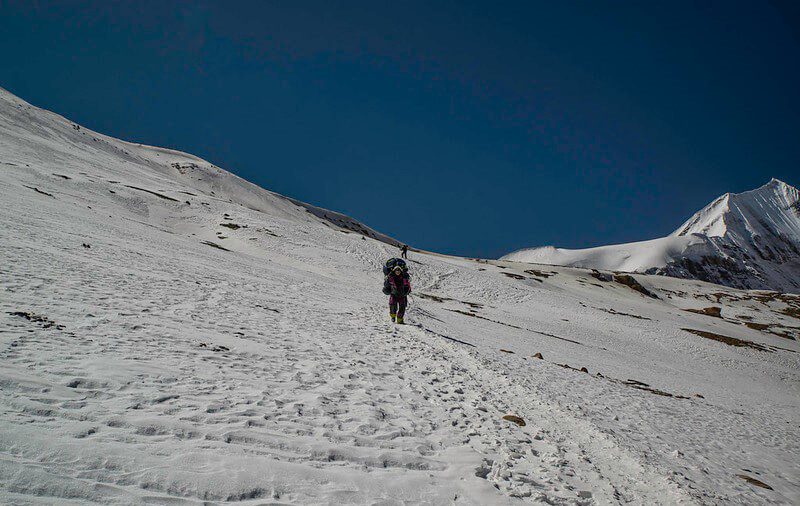
Walking above 5,000 meters is tough. The oxygen level drops, and every step feels heavier. Many trekkers experience symptoms of altitude sickness such as:
- Headache
- Difficulty breathing
- Loss of appetite
- Tiredness
Because of this, proper acclimatization days are included in the itinerary.
Unlike Everest or Annapurna Trek, the Dhaulagiri Circuit is a full camping trek.
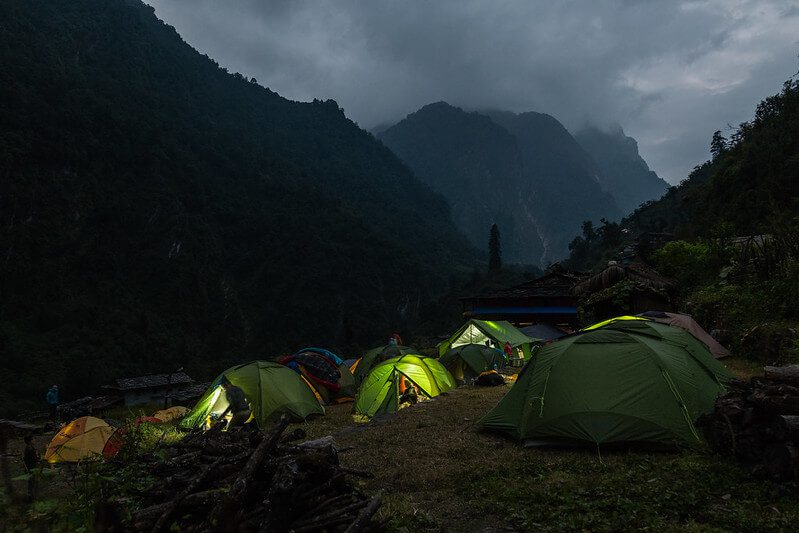
You find basic teahouses only in lower villages like: Muri, Boghara, Dobang, Italian Base Camp. After that, you must camp in: Japanese Base Camp, Glacier Camp, Dhaulagiri Base Camp, Hidden Valley
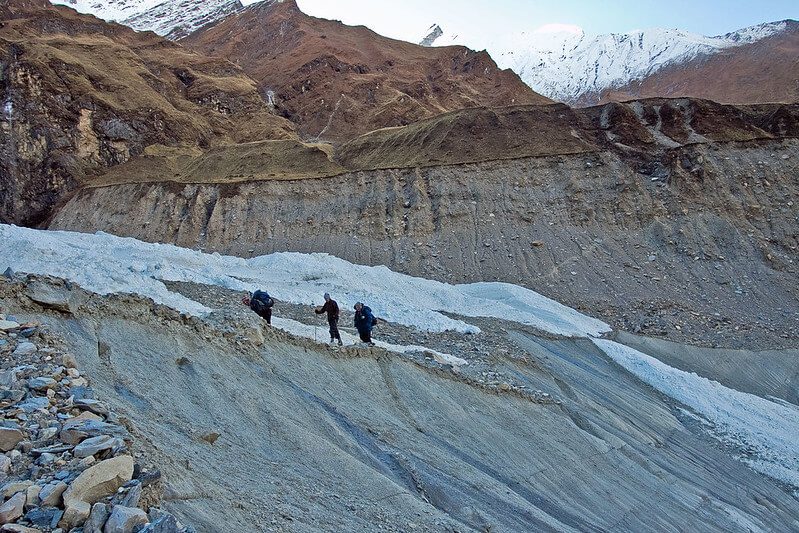
One of the most challenging parts of the trek is crossing the Chonbarden Glacier and walking towards Dhaulagiri Base Camp. The glacier is uneven, icy, and covered with loose rocks. You will walk over: Ice slabs, Frozen streams, Snow slopes, Loose rocky areas
These sections require careful steps and full concentration. This is why having an experienced guide is extremely important.
Long Walking Days (6–9 Hours Daily)
Many days involve long hours of walking. Some days, especially the high pass days, can take 8–10 hours.
For example:
Italian Base Camp to Japanese Base Camp → tough and slow
Dhaulagiri Base Camp to French Pass to Hidden Valley → long, exhausting day,
Hidden Valley to Yak Kharka crossing Dhampus Pass → another full-day challenge
Trekkers need strong legs and good stamina to tackle the demanding terrain of the Dhaulagiri Circuit. Unpredictable weather in the region changes quickly, especially at high altitudes where heavy snowfall, strong winds, freezing nights, and low visibility on glacier sections pose significant challenges. Temperatures can drop to -15°C to -25°C at night in Hidden Valley, making camping difficult.
Dhaulagiri Circuit Trek Cost
The Dhaulagiri Circuit Trek is one of Nepal’s off the beaten Treks, and a trekking package costs around $2,800 to $3,000, depending on whether you go for budget or luxury options. From the moment you land in Kathmandu, everything is taken care of which includes private airport pickup, a welcome dinner, and three nights’ comfortable stay with breakfast. Once on the trek, you’ll enjoy three meals a day at teahouses along the trail, and all the essential trekking gear like sleeping bags, down jackets, duffle bags, walking poles, and crampons are provided.
You’ll have a strong porter (one for every two trekkers) carrying your bags and a licensed guide to make sure your trek is safe and smooth. The package also covers all permits, national park fees, a route map, first-aid kit, and an achievement certificate.
Things not included are personal expenses like phone charging, Wi-Fi, tips, extra drinks, extra days, travel insurance, and city meals.
This package makes it easy to focus on the adventures like crossing high passes, exploring hidden valleys, and soaking in the incredible Himalayan scenery. It’s all set up so you can enjoy the trek and make memories that last a lifetime.
Dhaulagiri Circuit Trek Permits & Regulations (Complete 2026/27 Guide)
The Dhaulagiri Circuit Trek is one of Nepal’s most challenging and rewarding high-altitude adventures.Because the region is rugged, isolated, and environmentally sensitive, trekkers must follow certain permit rules and regulations.
Here is everything you need to know before starting the Dhaulagiri Circuit Trek:
Annapurna Conservation Area Permit (ACAP)
The Dhaulagiri Circuit passes through the Annapurna Conservation Area, so all trekkers must obtain an ACAP permit.You can get the permit at:
- Nepal Tourism Board (NTB), Kathmandu
- NTB, Pokhara
- Entry points of ACAP
Regulations and Requirements for Dhaulagiri Circuit Trek
The Dhaulagiri region is one of the most remote trekking routes in Nepal. The trail crosses extremely high passes such as:
- French Pass (5,360m)
- Dhampus Pass (5,200m)
Because of its difficulty, trekkers must follow essential regulations.
1. Hiring a Licensed Guide (Highly Recommended)
A guide is not legally mandatory for the Dhaulagiri Circuit, but strongly recommended due to:
- Complex glacier navigation
- High risk of rockfall and crevasses
- Zero settlements for several days
- Wild, unmarked trails
- Safety during emergencies
Dhaulagiri is not a beginner trek. A guide increases safety and success rate.
2. Travel Insurance
Every trekker is highly recommended to carry travel insurance that covers:
- High-altitude trekking
- Emergency medical evacuation
- Accidents and injuries
Make sure the policy covers 5000m+ elevations.
3. Acclimatization Rules
High altitude can be deadly on this trek. Proper acclimatization is essential. Trekkers are advised to:
- Spend at least 2 acclimatization days
- Ascend slowly
- Check symptoms of AMS (headache, nausea, dizziness)
- Hydrate well
This trek includes multiple days above 5,000 meters, so acclimatization is non-negotiable.
4. Environmental Regulations (Leave No Trace)
Dhaulagiri is pristine and environmentally fragile. Trekkers must follow:
Leave No Trace Principles
- Do not litter
- Carry out all trash
- Respect wildlife
- Camp only in designated areas
- Avoid disturbing fragile alpine plants
- Stay on marked trails
Best Time to Trek the Dhaulagiri Circuit
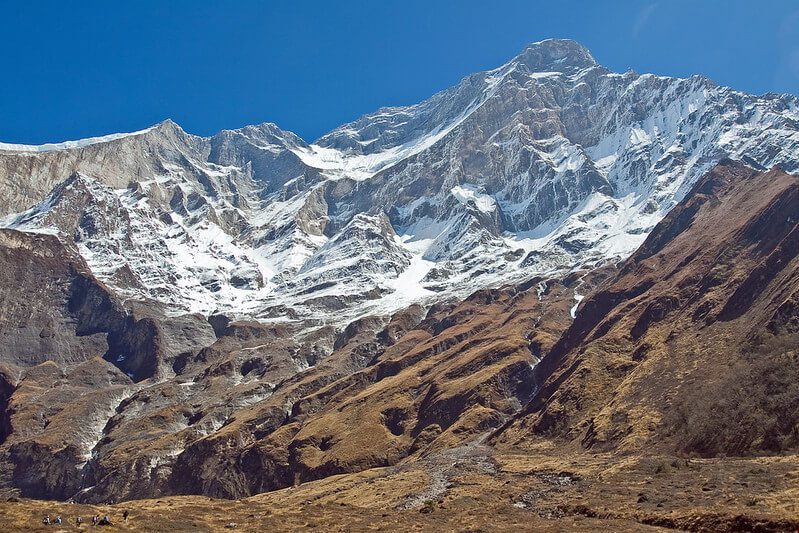
The best time to trek the Dhaulagiri Circuit is during spring (March–May) and autumn (September–November). These seasons offer the perfect balance of stable weather, moderate temperatures, and clear mountain views and all essential for a successful high-altitude expedition.
The Dhaulagiri Circuit takes you across two high passes, French Pass (5,360m) and Dhampus Pass (5,200m), and requires multiple nights of camping above 4,000 meters. Safe and predictable weather is not optional, it’s mandatory.
Trekking in Spring and Autumn ensures better safety vehicle crossing passes with the clear visibility of Dhaulagiri, tukuche peak and the Annapurna Range. The trails will be more stable with lesser snowfall and fewer chances of landslides also giving the ideal conditions for acclimatization. For the photographers and vloggers it is the best time to visit as the clearer peaks have the best opportunity for photography. This is why 90% of trekkers choose these two seasons.
Spring (March – May): One of the Best Seasons for Dhaulagiri Circuit
Spring is one of the most popular times to trek the Dhaulagiri Circuit and once you’re on the trail, you instantly understand why.
The temperatures are gentle and comforting, creating the perfect environment for long trekking days.
At the lower elevations, daytime temperatures range between 10°C to 15°C, while high-altitude areas hover around –5°C to –10°C, cool but manageable.
The best part? You get beautifully clear skies, stable weather patterns, and breathtaking Himalayan sunrises and sunsets. Every morning opens up with pleasant views of the Dhaulagiri Range which are crisp, sharp, and picture-perfect.
Spring also turns the trail into a natural art gallery.Forests burst into vibrant hues as rhododendrons and wildflowers bloom in full glory, adding a magical charm to your journey. The colorful landscape gives life to every step, making this season incredibly scenic and captivating for nature lovers and photographers.
Acclimatization is easier in spring too. The moderate temperatures allow your body to adjust gradually to the increasing altitude, reducing the risk of AMS and making the high passes more manageable.If you want a mix of color, warmth, and stable weather then, spring is undoubtedly your season.
Autumn (September – November): The Best Time to Trek Dhaulagiri
Autumn is widely considered the ultimate season for trekking in Nepal and the Dhaulagiri Circuit is no exception.After the monsoon rains fade, the mountains emerge under clear skies. Visibility is at its absolute best, offering incredible panoramas of the Dhaulagiri and Annapurna ranges throughout the trek.
The weather remains stable, with warm days and colder but manageable nights, especially as you rise above 4,000 meters. With dry, firm trails, high-altitude passes like French Pass and Dhampus Pass become safer and more accessible.
Autumn is also the best season for photography.The air feels crisp and clean, giving you sharp, dramatic mountain shots that truly capture the grandeur of the Himalayas.
Although rhododendrons don’t bloom during this time, the forests retain a lush green tone, refreshed by the monsoon rains.If you want guaranteed mountain views, safe trails, and the best overall trekking conditions then, autumn is the season to choose.
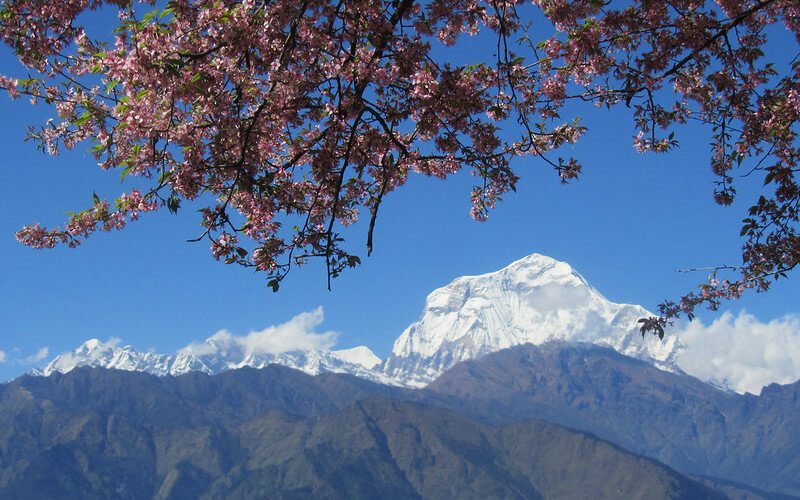
Hidden Valleys of the Dhaulagiri Circuit Trek
One of the reasons the Dhaulagiri Circuit Trek stands apart from every other trek in Nepal is its incredible collection of hidden valleys, vast untouched landscapes tucked deep inside the Himalayas. These valleys feel like secret worlds carved out by glaciers, wind, and ice over thousands of years.
As a travel blogger who has explored many Himalayan trails, I can say that nowhere else will you witness such raw, unfiltered wilderness. The hidden valleys of Dhaulagiri are the soul of this trek which is quiet, surreal, and unbelievably remote.For adventure lovers, photographers, and anyone searching for a raw Himalayan experience, these valleys are the reason the Dhaulagiri Circuit remains a bucket-list journey.
Hidden Valley (5,000m+): The Heart of the Dhaulagiri Circuit
If there’s one place that defines the Dhaulagiri Circuit, it’s this one: Hidden Valley, a vast, isolated plateau completely cut off from civilization.
After the long, challenging climb over French Pass (5,360m), the landscape opens up into an expansive bowl of rock, snow, and silence. This is where the world feels like it stops.
Why Hidden Valley Feels Out of this world:
Stepping into Hidden Valley feels like entering another world. You’re surrounded by 360° views of towering peaks of Dhaulagiri, Tukuche, and Dhampus, stretching in every direction. There are no villages, no roads, just the whisper of wind, the crunch of snow, and an overwhelming sense of silence that makes the Himalayas feel infinite. Camping here is surreal, almost like being on another planet, especially when the golden hour sunlight spills across the valley, turning rocks and snow into a glowing, magical landscape. Every moment feels like a scene straight out of a dream.
The first time you step into this valley, you’ll understand why early explorers described it as “a lost land” beyond the snow.If you’re writing a travel diary, this will be your most unforgettable chapter.
Myagdi Valley: The Lush, Forested Gateway to the Circuit
The Dhaulagiri Circuit begins in the dense, wildly beautiful Myagdi Valley, an underrated gem that most trekkers overlook.From Darbang to Italian Base Camp, the trail takes you through a lush, untouched Himalayan world. You’ll wander beneath deep pine and bamboo forests, hear waterfalls crashing down sheer cliffs, and pass through warm, welcoming Magar villages that tourism hasn’t touched. The narrow gorges carved by the Myagdi Khola add a sense of adventure and drama to every step, making this stretch of the trek feel both wild and incredibly alive.
This valley is the perfect warm-up for the epic journey ahead.It’s the kind of trail where kids wave from the rooftops, farmers smile as you pass, and the air smells like wet forest and fresh earth.The Myagdi Valley is the green heartbeat of the Dhaulagiri region.
Chhonbardan Glacier Valley: Where Ice Walls Rise Above You
Once you leave Italian Base Camp, the landscape shifts dramatically. Forest disappears, replaced by the massive Chhonbardan Glacier Valley which is one of the rawest glacial corridors in Nepal.As you enter the Chhonbardan Glacier Valley, the Dhaulagiri Icefall looms ahead, crashing down like a frozen tsunami. Walking here feels like stepping into a raw, icy kingdom. You move carefully between black-and-white moraines as glacial rivers cut through cracked ice. Towering seracs, deep crevasses, and frozen cliffs surround you, creating a dramatic, almost surreal landscape. Every step brings you closer to Dhaulagiri Base Camp, and the approach itself is an unforgettable spectacle of Himalayan power and beauty.
This valley feels like entering a frozen kingdom. It’s harsh, wild, and breathtakingly beautiful.For photographers, this valley is a goldmine of textures, contrasts, and dramatic Himalayan light.
Tukuche Valley: The High Himalayan Desert Beyond Dhampus Pass
After crossing Dhampus Pass (5,200m) is one of the most challenging days of the trek. You descend into the wide, windy, and wonderfully isolated Tukuche Valley. This is where the trek transitions from the icy, high-altitude world of Dhaulagiri into the drier Trans-Himalayan landscapes leading toward Mustang. The valley is a breathtaking mix of snow-covered plateaus stretching to the horizon, high-altitude pastures dotted with yak herders, and crisp, clean air that frames panoramic views of Nilgiri, Tukuche Peak, and Annapurna. It’s a silent, remote world that few travelers ever experience, a place where the Himalayas feel vast and untamed. The trail eventually leads toward Marpha and Jomsom, where civilization returns, but you’ll carry the memory of the valley’s serene, high-altitude magic long after you leave.
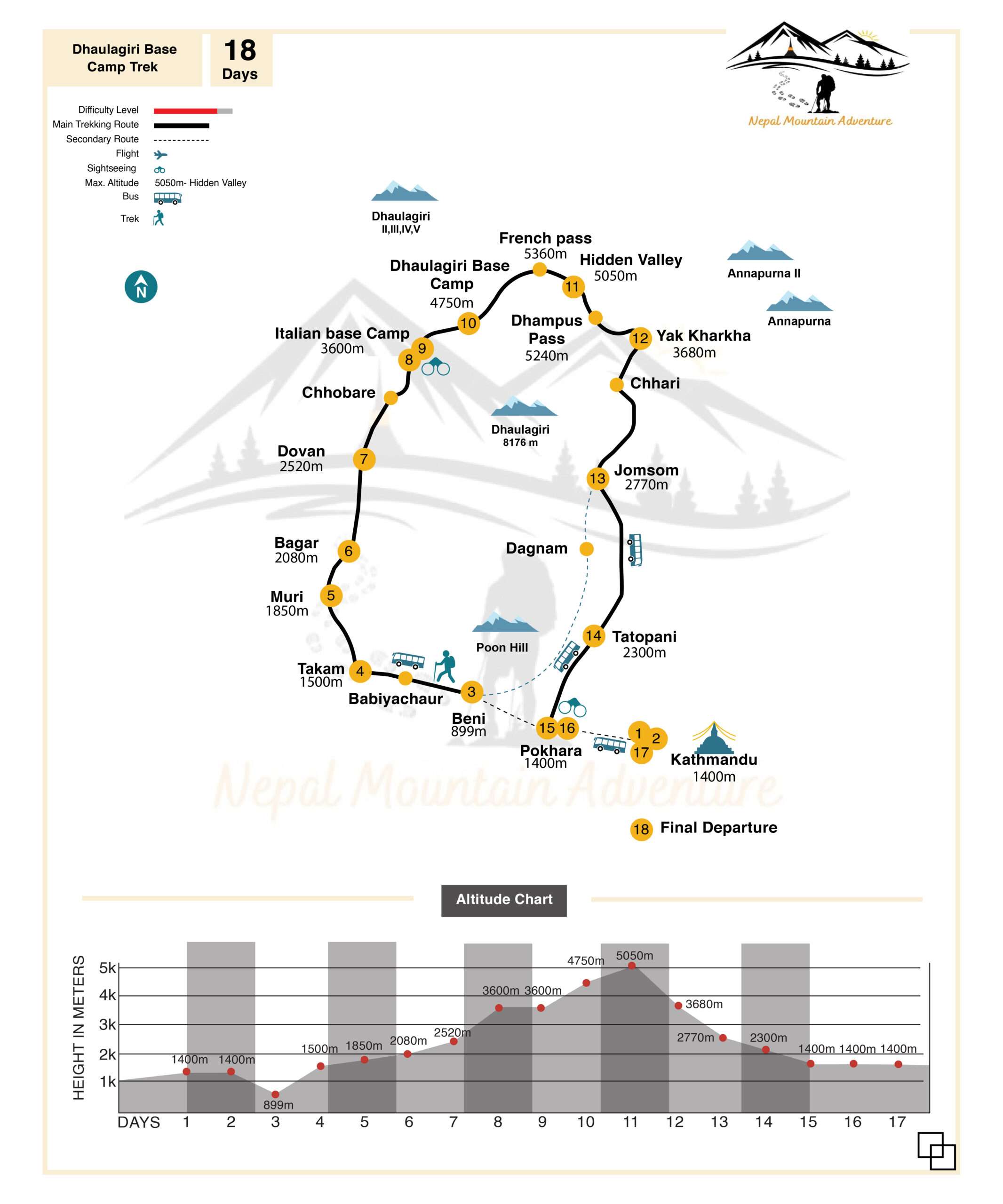
Dhaulagiri Circuit Trek Route Map
FAQs,
Is Dhaulagiri Circuit harder than Annapurna Circuit?
Yes, the Dhaulagiri Circuit is much harder than the Annapurna Circuit. Dhaulagiri demands greater physical endurance with higher passes like French Pass (5,360m) and Dhampus Pass (5,250m), longer daily walks on exposed, technical terrain requiring ice axes and crampons, and fully remote camping routes without teahouse support.
Can beginners do this trek?
Yes, beginners can undertake the Dhaulagiri Circuit Trek with a certified guide, porter support for heavy loads, and proven physical/mental fitness from prior moderate hikes.
Do you need camping gear?
Yes. After Italian Base Camp, there are no teahouses, so trekking gear like sleeping bags, warm clothes, tents, and cooking equipment are needed for the remote sections of the trek.
What is Dhaulagiri Circuit trek highest point ?
The maximum height on the Dhaulagiri Circuit Trek is French Pass at 5,360 meters (17,585 feet), the highest point crossed after base camp.
What are essential gears for Dhaulagri Circuit Trek ?
Pack warm layers, down jacket, waterproof clothes, sturdy trekking boots, sleeping bag rated to -20°C, tent, crampons, ice axe, poles, sunglasses, sunscreen, and first aid kit and medicines for sickness.
Can you complete Dhaulagiri Circuit in 10-15 days?
Yes, it is possible to complete the Dhaulagiri Circuit Trek in 10-15 days, but this shorter itinerary is recommended only for physically fit and experienced trekkers who have prior high-altitude trekking experience.
Is travel insurance mandatory for Dhaulagiri Circuit?
No, it is not mandatory by the government, but highly recommended for medical support, rescue operations, and high-altitude coverage up to 5,500m, plus trip cancellation protection.
Can we do Solo Dhaulgiri Circuit Trek ?
No solo traveling is advised due to its remote and challenging nature; guides and porters are strongly recommended for safety and navigation.
Can we arrange permits ourselves without an agency?
ACAP and RAP need to be done or recommended through a licensed agency for restricted areas like Dhaulagiri, while TIMS can be obtained independently.


