

So you want to trek to Everest Base Camp. You have been dreaming about it, watching videos, maybe even told a few friends about it. And then the big question hits you, how much is this actually going to cost?
The honest answer is the Everest Base Camp trek can cost you anywhere from $1,300 to $3,500 or more, depending entirely on how you choose to do it. That is a wide range, and it can feel confusing at first. But by the end of this guide, you will know exactly where every dollar goes, what a fair price looks like, and how to plan a budget that works for you without any surprises along the way.
One important thing before we start: this guide covers every cost you will encounter, including some things your trekking package will cover and some things you will pay for yourself. We will be very clear at every step about which is which, so there is no confusion when you arrive.
Let us break it all down, step by step.
What Is the Total Everest Base Camp Trek Cost in 2026/27?
Before we go into the details, here is a simple overview to give you the big picture:
| Trek Style | Estimated Total Cost (Excluding International Flights) |
| Budget (Group Departure) | $1,300 to $1,600 |
| Standard (Guided with Teahouses) | $1,700 to $2,100 |
| Luxury (Private Guide, Premium Lodges) | $2,200 to $3,500+ |
These numbers cover everything from your visa and permits to your food, accommodation, guide, and a buffer for unexpected costs on the trail. International flights to Kathmandu are not included because they vary so much depending on where you are flying from.
Now let us look at what actually makes up these costs.
Nepal Visa Cost for EBC Trekkers in 2026
This is something you arrange yourself. It is not part of any trekking package.
Your Nepal tourist visa is obtained independently on arrival at Kathmandu’s Tribhuvan International Airport. Your trekking agency handles your permits and trek logistics, but the visa is your own responsibility and is paid directly to Nepal Immigration at the airport.
Here is what you will pay:
- 15-day visa: $30
- 30-day visa: $50
- 90-day visa: $125
Most EBC treks take between 12 and 16 days. A 30-day visa gives you enough time for the trek plus buffer days in Kathmandu before and after, which you will almost certainly want.
(Important note: Indian nationals do not need a visa at all. Citizens of other SAARC countries (Bangladesh, Bhutan, Maldives, Pakistan, Sri Lanka) receive a free 30-day visa on arrival on their first visit each calendar year. Chinese nationals are also exempt from visa fees. A small number of nationalities cannot get a visa on arrival and must apply at a Nepali embassy before travelling. Always check the current list at immigration.gov.np before booking your flights.)
Tip: Carry a passport photo and exact USD cash for the visa counter. It speeds up the queue significantly, especially during peak season.
Everest Base Camp Permits in 2026/27
Everyone who enters the Everest region needs two official permits. No exceptions.
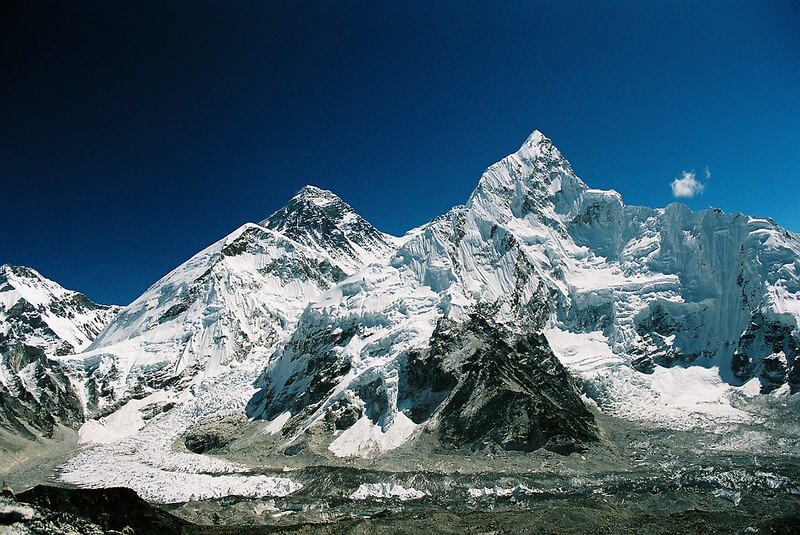
Sagarmatha National Park Entry Permit Official fee confirmed by the Nepal Tourism Board is NPR 3,000 per person, approximately $22 -25 USD. This gives you access to Sagarmatha National Park, a UNESCO World Heritage Site. You will have it checked multiple times on the trail, so keep it somewhere easy to reach.
Khumbu Pasang Lhamu Rural Municipality Permit Fee: NPR 2,000, approximately $15 USD. This is the local government permit for the Khumbu region. It is checked at entry points in Lukla and Monjo.
Total permit cost: roughly $37 to $40 per person.
Both permits are payable in Nepali Rupees cash only. Cards are not accepted at trail checkpoints. If arranging independently, get them at the Nepal Tourism Board office in Kathmandu, or at the Lukla permit counter and Monjo checkpoint on the trail.
Note on TIMS: The old TIMS card (Trekkers Information Management System) is no longer required or enforced in the Khumbu and Everest region as of 2026. You do not need one for the standard EBC route.
Permit fees are reviewed annually. Always confirm the current NPR fee with your agency or at ntb.gov.np before you travel.
If you book with Nepal Mountain Adventure, all Everest Base Camp permits are arranged for you before the trek, so there is no need to handle the permit process yourself.
Lukla Flight Cost
The EBC trek starts in Lukla, a small mountain town with one of the most dramatic airports in the world. The runway is only 527 meters long and is surrounded by mountains, which is why Lukla Airport is famous among trekkers. Despite its reputation, flights operate regularly and safety standards are closely regulated.
- Kathmandu to Lukla round trip: $350 to $450 per person
- Ramechhap to Lukla round trip: $280 to $400 per person
During the busy spring and autumn seasons, many Lukla flights operate from Ramechhap Airport instead of Kathmandu to reduce air traffic congestion. Ramechhap is a 4 to 6 hour drive from Kathmandu on mountainous roads. Your agency will arrange the transfer vehicle if required, but budget an extra $25 to $40 for the road transfer. Flights from Ramechhap are sometimes more reliable during peak season.
Lukla flights are heavily weather-dependent. Delays of one to three days are common. Many experienced trekkers build extra days into the start of their itinerary for this reason. Extra hotel nights and meals in Kathmandu during a delay add $50 to $150 to your total, and these costs are not covered by your package.
Helicopter alternative: Flying to Lukla by helicopter costs around $400 to $500 per person one way. It skips the weather uncertainty of small prop planes but drops you at altitude very quickly, which is not ideal for acclimatisation.
Guide and Porter Costs for the EBC Trek
The guide rule: The Nepal Tourism Board made licensed guides mandatory for foreign trekkers on the EBC route in April 2023. This is actively enforced at the Sagarmatha National Park checkpoint in Monjo, where trekkers without a verifiable guide credential from a registered agency are turned back. Your guide must hold a valid Nepal Tourism Board license and you must book through a TAAN-registered agency.
A good guide does far more than show you where to walk. They monitor your altitude sickness symptoms daily, carry emergency medication, handle teahouse logistics, and make the entire experience significantly richer.
If you are arranging your guide independently rather than through a package:
- Guide cost: $25 to $45 per day
- Porter cost: $18 to $30 per day
- Plus their food and accommodation: roughly $15 to $20 per day per person on top of the day rate
- Realistic total for a 14-day trek with one guide and one porter: $700 to $1,200
This is one of the main reasons a full-service package from a local agency works out better value than arranging everything independently. The agency covers all staff costs in one price.
Porter welfare: When choosing an agency, ask about their porter welfare policy. Ethical agencies follow TAAN guidelines: a maximum carry weight of 20 to 25 kilograms, proper warm clothing for porters at altitude, and insurance coverage. Any reputable agency will answer this without hesitation.
Tipping: Tips are not included in any package. They are separate and expected. The standard is $10 to $15 per day for a guide and $5 to $10 per day for a porter, around $150 to $200 total for a 14-day trek. Tips are best given in cash, in small denominations. For the full breakdown on amounts, timing, and how to handle it in a group, read our guide: How Much to Tip Trekking Guides and Porters in Nepal
If you book a full-service package, your guide and porter costs, including their meals, accommodation, salary, transportation, and insurance, are all included. You do not pay these separately. The only thing not included in packages is your tip for the guide and porter at the end of the trek.
At Nepal Mountain Adventure, all Everest Base Camp treks are led by licensed trekking guides with extensive experience in the Khumbu region.
Teahouse Accommodation on the EBC Trek
Standard teahouse accommodation is included in most full-service trekking packages. If you are booking independently, you pay teahouses directly each night.
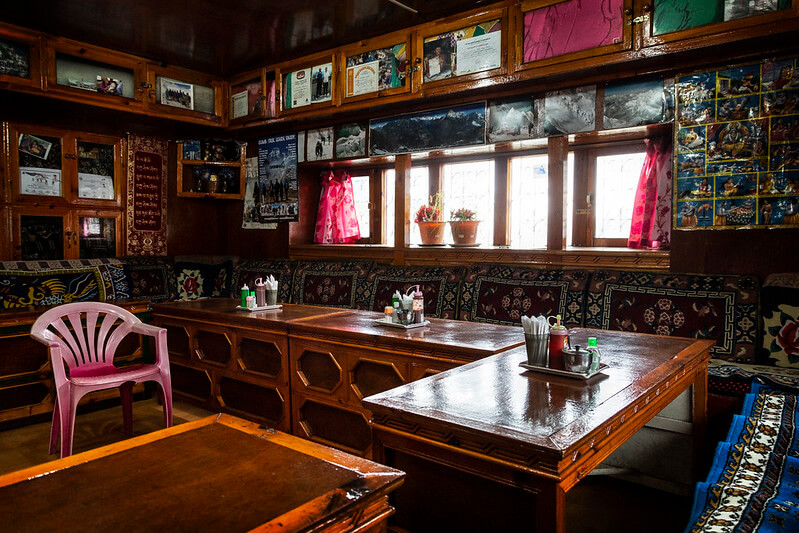
A teahouse is a small guesthouse run by local Sherpa families along the trail. You will typically get a simple twin room with thin walls, basic bedding, and a shared bathroom. As you climb higher, rooms get more basic and prices go up.
| Elevation Zone | Teahouse Cost Per Night |
| Lower villages (Phakding, Monjo) | $5 to $15 |
| Namche Bazaar, Tengboche | $15 to $30 |
| Higher elevations (Dingboche, Lobuche) | $20 to $40 |
| Gorak Shep (last stop before Base Camp) | $25 to $50 |
All prices are approximate in USD and may vary by season and lodge standard. Total accommodation for 12 to 14 nights: $150 to $400.
Many teahouses offer rooms at a reduced rate if you agree to eat dinner and breakfast there. This is a standard arrangement. If you eat at a different teahouse, expect your room price to rise.
Food Costs on the EBC Trek
You will eat every meal at teahouses along the trail. Dal Bhat, a lentil soup served with rice and vegetables, is the local staple. It is warm, high in carbohydrates, one of the best things you can eat at altitude, and most teahouses refill your plate for free.
Typical meal costs for reference (if booking independently or paying for extras):
- Breakfast (eggs, porridge, toast): $5 to $10
- Lunch (pasta, noodles, soups): $6 to $12
- Dinner (dal bhat, stir fry): $8 to $15
- Tea or coffee: $2 to $4 per cup
Prices rise with elevation because everything above Lukla is carried up by porters. A plate of noodles costing $6 in Namche Bazaar can cost $10 in Gorak Shep. This is normal and expected.
Drinks budget: If you drink three cups of tea or coffee per day across 14 days, that is $84 to $168 in drinks alone. Plan for $3 to $8 per day on drinks minimum, more if you prefer juices or soft drinks.
Three meals per day on the trek (breakfast, lunch, and dinner) AND A CUP OF TEA OR COFFEE are included in most full-service trekking packages. However, all drinks, including water, EXTRA tea, coffee, juice, soft drinks, and beer, are not included in any package and are paid separately at each teahouse.
Travel Insurance for Everest Base Camp
This is not optional. An emergency helicopter evacuation from the Everest region can cost $3,000 to $10,000 depending on your location on the trail, the operator, and conditions. Altitude sickness can develop quickly and without warning. Every season, trekkers are airlifted out.
A solid policy needs to cover:
- High-altitude trekking specifically above 5,000 meters
- Emergency helicopter evacuation
- Medical treatment abroad
- Trip cancellation or curtailment
Cost: roughly $180 to $350 for a three to four week trip.
What to check when comparing policies: Look for the exact phrase “trekking above 5,000 meters.” Many standard travel policies cap coverage at 4,000 meters, which is not enough for Everest Base Camp at 5,364 meters. Also check your helicopter evacuation cover limit specifically. Some policies cap evacuation cover at $50,000 while others go much higher. Confirm both the altitude limit and the evacuation limit before you buy, not after.
Travel insurance is never included in any trekking package. It is always your own responsibility to arrange before you travel.
Gear for the EBC Trek: What to Buy & What to Rent in Kathmandu
What you still need to bring yourself regardless of your package,
- Good quality trekking boots, broken in before you arrive. Stiff new boots at altitude cause blisters that cannot be fixed on the trail. This is the single most important personal item.
- Thermal base layers
- Warm gloves, hat, and neck gaiter
- Sunscreen, quality lip balm, and good UV sunglasses. UV intensity at altitude is significantly higher than at sea level.
If you are not on a package and need to source your own gear:
Items you can rent in Kathmandu’s Thamel neighbourhood:
- Down sleeping bag: $1 to $3 per day
- Down jacket: $1 to $3 per day
- Trekking poles: $1 to $2 per day
Rough gear budget if buying:
- Buying most gear from scratch: $400 to $800
- Renting most items in Kathmandu: $100 to $200
- Already have most gear: $50 to $150 for smaller personal items
Most full-service trekking packages include equipment rental as part of the package. This typically covers sleeping bags, down jackets, duffle bags, walking poles, and crampons. These items are provided for the duration of the trek and returned at the end. You do not pay extra for these.
Budget, Standard, and Luxury EBC Trek
What Does Each Price Actually Get You?
Budget Trek ($1,300 to $1,600 all-in)
Best for experienced travelers comfortable managing logistics and sleeping in basic conditions. You join a group departure through a local Kathmandu agency.For the complete day-by-day itinerary and full inclusions list, see the Everest Base Camp Budget Trek.
Typically included: Permits, licensed guide, porter, basic teahouse accommodation, meals on trek, domestic flights. Typically not included: Equipment rental, Kathmandu hotel nights, city sightseeing, drinks, tips, personal expenses, travel insurance.
Standard Trek ($1,700 to $2,100 all-in)
This is the most popular choice and the one that offers the best balance of comfort and cost. You get a licensed guide, a porter to carry your main bag, decent teahouse accommodation with meals included, and proper support throughout the trek.See everything that is covered day by day on the Everest Base Camp Standard Trek.
What is included: Permits, guide, porter, teahouse accommodation, breakfast and dinner daily, Lukla flights, Kathmandu airport transfers. What is not: Lunches, personal gear, tips, Wi-Fi, hot showers, travel insurance.
Luxury Trek ($2,200 to $3,500+ all-in)
For travelers who want maximum comfort throughout. Private guides, premium lodge rooms with attached bathrooms, better food, and usually a helicopter return from Gorak Shep to Kathmandu at the end.Full details including lodge names and helicopter arrangements are on the Everest Base Camp Luxury Trek .
Typically included: Everything in the standard package, plus private accommodation with attached bathrooms, premium meals, and helicopter return from the mountain. Not included: Nepal visa, travel insurance, personal expenses, drinks, tips.
Nepal Mountain Adventure offers budget, standard, and luxury Everest Base Camp trekking packages to suit different travel styles and budgets.
Local Agency vs International Platform
Why Does the Same Trek Have a $2,000 Price Gap?
International agencies based in the UK, USA, or Australia typically charge $3,000 to $5,000 for a standard EBC package. A significant portion goes toward their home-country overheads, marketing, and profit margins. The actual trek logistics are handled by a local Nepali operator regardless of who you booked with.
Local Kathmandu-based agencies registered with TAAN charge $1,300 to $2,100 for a comparable package. You are paying the people who actually run the trek, directly.Nepal Mountain Adventure is a Kathmandu-based trekking company that operates directly in Nepal, allowing trekkers to avoid international reseller markups while receiving local expertise and on-the-ground support.
The difference is typically $1,000 to $2,000 per person for the same experience on the ground.
We have covered the full agency selection process in our dedicated guide: Why Book Your Everest Trek with a Local Nepalese Agency?
What Are the Hidden Costs of the Everest Base Camp Trek?
These are the expenses that no package covers and that most trekkers underestimate. Budget for all of them.
Wi-Fi: $3 to $5 per day at most teahouses. Above Namche Bazaar, some places charge up to $8 per hour for a slow connection. Not included in any package.
Hot showers: Not included in any package. $2 to $5 per shower at lower elevations, $8 to $10 higher up. Most trekkers skip showers above Namche entirely.
Charging devices: $1 to $3 per device per charge at most teahouses. Bring a good power bank. Not included in any package.
Drinks on the trail: All drinks are excluded from packages. Tea, coffee, mineral water, juice, soft drinks, and beer are all paid separately at each teahouse. Budget $3 to $8 per day minimum.
Bottled water: A one-liter bottle costs $2 to $5 depending on altitude. A purification tablet or filter bottle costs $10 to $20 total and is a far smarter choice. It also reduces plastic waste on the trail.
ATMs and cash: Namche Bazaar has ATMs but they are unreliable during peak season and sometimes out of cash. Above Namche there are no ATMs at all. Bring enough Nepali Rupees cash from Kathmandu to cover all trail extras, tips, and your emergency buffer before you leave the city.
Snacks: Chocolate bars and packaged snacks at Gorak Shep cost $5 to $8. Budget a small daily amount.
Guide and porter tips: $150 to $200 total. Always in cash. Not included in any package.
Weather delays: Extra nights in Kathmandu or Lukla from a cancelled Lukla flight add $50 to $150. These costs are not covered by your package unless your agency specifically states otherwise.
Altitude medication (Diamox): Discuss with your doctor before the trip. If you need it on the trail, it costs $5 to $20 in Namche Bazaar. Better to bring it from home.
Extra Kathmandu hotel nights: If you return from the trek earlier than planned, additional hotel nights in Kathmandu are at your own expense. Your package covers the pre-trek Kathmandu nights only.
Emergency buffer: Always carry at least $200 to $300 cash for anything unexpected. There are no ATMs above Namche.
Does the Time of Year Change How Much You Pay for the EBC Trek?
Yes, significantly. Season affects the price of almost every line item.
Spring (March to May) and Autumn (September to November) are peak seasons. Weather is most stable, views are clearest, and demand drives up prices for flights, teahouses, and packages. Expect $1,700 to $2,100 for a standard guided trek. Book domestic flights and your package three to six months ahead for spring.
Winter (December to February) brings spectacular clear skies and far fewer crowds, but temperatures above 4,000 meters drop to minus 20 degrees Celsius at night. You need significantly warmer gear. Expect $1,300 to $1,900 .
Monsoon season (June to August) means heavy rain, muddy trails, and limited mountain visibility. It is the cheapest time and offers a quieter, very different experience. Expect $1,300 to $1,700
How to Do the EBC Trek on a Tight Budget Without Putting Yourself at Risk
Trek in shoulder season: Late March or November gives decent weather at slightly lower prices than peak months.
Join a group departure: Sharing a guide, porter, and transport with other trekkers cuts $200 to $400 off a private package for the same route.
Rent gear: If your package does not include equipment, rent from Thamel shops rather than buying new. Only buy what you will genuinely use again.
Share a porter: On a 2:1 porter ratio, one porter carries for two trekkers. If arranging independently, sharing a porter cuts that per-person cost roughly in half.
Use water purification: Tablets or a filter bottle save $50 to $200 versus buying bottled water throughout.
Eat dal bhat: Cheap, filling, free refills at most teahouses, and the best high-altitude fuel on the menu.
Book directly with a local Kathmandu agency: Cutting out international middlemen saves $1,000 to $2,000 for the same experience.
Never cut these: Travel insurance with helicopter evacuation cover above 5,000 meters, a licensed guide, and your emergency cash buffer. These exist to protect you when something goes wrong at altitude.
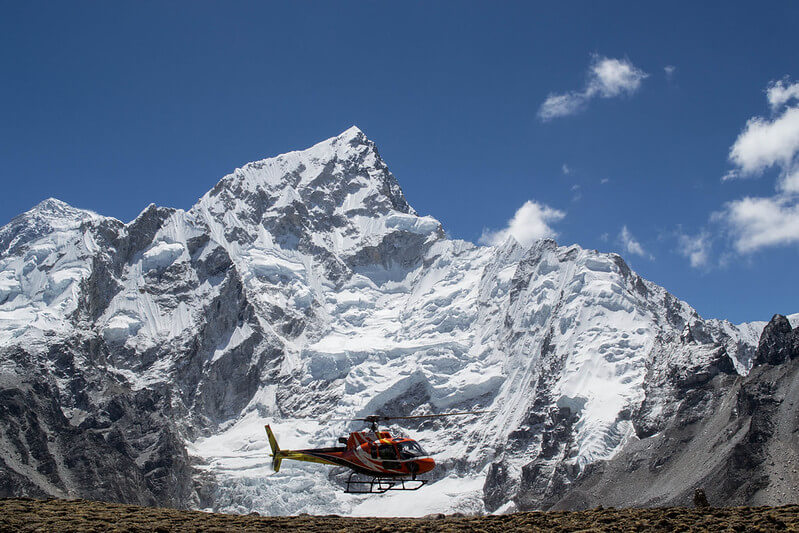
Helicopter Return from Gorak Shep
Cost: $800 to $1,500 per person depending on the package and operator.
A helicopter return is not included in standard packages. It is an optional add-on paid separately.
What you get: A 45-minute flight back to Kathmandu instead of 4 to 5 days of descending on foot.A helicopter return also gives you a completely different perspective of the Khumbu region that most trekkers never see from the ground. You also arrive in Kathmandu with functional legs and a memorable finale.
Who it makes sense for: Travelers with limited time, anyone with a fixed departure flight from Kathmandu, and those who want a dramatic end to the journey.
Who can skip it: Trekkers who enjoy the quieter descent and anyone on a tighter budget who has the extra days.
Want to See More of the Everest Region?
The standard Everest Base Camp trek isn’t the only way to experience the Everest region. If you have extra days and want to go deeper into the Khumbu, a few extensions are worth considering before you book.
EBC with Gokyo Lake via Cho La Pass. This route adds the turquoise Gokyo Lakes and the high altitude Cho La Pass crossing (5,420m) onto the classic EBC trail, usually over 17 to 18 days. It’s a good middle ground if you want more than the standard trek without committing to the full Three Passes circuit. See the full EBC with Gokyo Lake via Cho La Pass itinerary and cost.
Everest Three Passes Trek. The most demanding option, crossing all three major passes, Kongma La, Cho La, and Renjo La, each above 5,000 meters, while still visiting Everest Base Camp, Kalapatthar, and Gokyo Ri. It runs 18 to 21 days, and our standard package for this route is priced between $1,450 and $1,650. Check the Everest Three Passes Trek page for current pricing and the full itinerary.
Gokyo Lake Trek (standalone). If Cho La Pass feels too technical, or you’d rather skip base camp itself, the Gokyo Lake Trek is a quieter and slightly easier alternative that still reaches Gokyo Ri for some of the best mountain views in the Khumbu.
Each of these adds extra days, permits, and guide or porter costs on top of the standard EBC numbers in this guide, so if one of them interests you, it’s worth getting a specific quote rather than estimating from the EBC figures above.
Planning Your Everest Base Camp Trek in 2026 or 2027?
If you’re comparing Everest Base Camp trek costs, make sure you compare what’s actually included. A cheaper package may exclude flights, meals, porter services, or permits, which can significantly increase your final cost.
At Nepal Mountain Adventure , our Everest Base Camp Trek packages include experienced licensed guides, required permits, accommodation, domestic flights, and on-trek support, with no hidden costs.
Whether you’re looking for a budget group departure, a standard guided trek, or a luxury Everest experience, our team can help you choose the right option based on your budget and travel dates.
Everest Base Camp Trek: Frequently Asked Questions
How much does the Everest Base Camp trek cost in 2026/27?
A standard guided 14-day trek costs approximately $1,700 to $2,100 for the package, with an additional $700 to $900 for your personal costs including visa, insurance, tips, drinks, and trail extras. Total realistic budget: $2,500 to $3,200 per person excluding international flights.
What is the cheapest way to do the Everest Base Camp trek?
Book a group departure with a local Kathmandu agency in shoulder season (late March or November), rent gear in Thamel, use water purification instead of bottled water, and eat dal bhat at teahouses. The realistic minimum for a safe guided experience in 2026 is around $1,900 to $2,100 all-in including your personal costs.
Is a guide mandatory for the EBC trek in 2026/27?
Not strictly, but it is strongly recommended. Trekking to Everest Base Camp without a guide at altitudes above 5,000 meters carries real risks. Altitude sickness can develop quickly and without warning. There are no hospitals above Namche Bazaar. A licensed guide monitors your health daily, recognises early signs of altitude sickness, manages logistics, and can arrange a helicopter evacuation when it matters most.
How many days does the EBC trek take?
The standard itinerary is 12 to 14 days from Lukla. The extra days exist for acclimatisation, which is not optional above 4,000 meters. Rushing the ascent is the most common reason trekkers turn back before reaching base camp.
What permits do I need for Everest Base Camp in 2026?
Two permits: the Sagarmatha National Park Entry Permit (NPR 3,000, approximately $22 USD) and the Khumbu Pasang Lhamu Rural Municipality Permit (NPR 2,000, approximately $15 USD). Both are included in full-service packages. The TIMS card is no longer required. Confirm current fees at ntb.gov.np.
What are the hidden costs of the Everest Base Camp trek?
Drinks on the trail, Wi-Fi, hot showers, device charging, tips for guide and porter, altitude medication, weather delay nights in Kathmandu, and an emergency cash buffer. Budget at least $700 to $900 above your package cost to cover all personal expenses comfortably.
Do I need to arrange my Nepal visa through my trekking agency?
No. Your Nepal tourist visa is arranged entirely by yourself on arrival at Kathmandu airport. Your trekking agency handles all trekking permits, but the visa is between you and Nepal Immigration. Cost is $50 for a 30-day visa for most nationalities.
What travel insurance do I need for Everest Base Camp?
A policy that explicitly covers trekking above 5,000 meters and includes emergency helicopter evacuation. Standard policies often cap at 4,000 meters. An evacuation without proper insurance can cost $3,000 to $10,000. Travel insurance is never included in any trekking package.
How much does the Lukla flight cost in 2026?
Round trip from Kathmandu costs $350 to $450. During peak season some flights operate from Ramechhap (4 to 6 hour road transfer), costing $280 to $400 plus transfer. Lukla flights are included in most full-service packages. Delays of one to three days are common and extra accommodation during delays is at your own cost.
Is the helicopter return from Everest Base Camp included in packages?
Only in luxury packages. Standard packages do not include helicopter return. It is an optional add-on costing $800 to $1,500 per person, arranged separately with your agency.
Does trekking season affect the cost?
Yes. Peak season (March to May, September to November) is the most expensive across flights, teahouses, and packages. Shoulder season (late March, November) is slightly cheaper. Winter and monsoon are the cheapest but come with colder temperatures or wetter trails.
Can I do the EBC trek without a full package?
You can arrange things independently, but you must still have a licensed guide from 2023. Arranging everything separately (guide, porter, permits, flights, teahouses) is often more expensive than a full-service local package and significantly more stressful, especially for first-time trekkers.


