

Everest Base Camp Trek Difficulty
“Is Everest Base Camp too hard for me?” is one of the first questions almost every prospective trekker asks, usually right after seeing photos of the trail and before doing any real research into what the trek actually involves day to day. The honest answer sits in the middle of most people’s assumptions, harder than a weekend hike, but nowhere near mountaineering, and genuinely achievable for most reasonably fit adults who prepare properly and respect the altitude.
This guide breaks down exactly where the difficulty comes from, what a typical day actually feels like, who this trek suits and who it does not, and how the different route variations compare in difficulty. If you’re deciding whether to train for this at all, our Everest Base Camp Trek Training Guide picks up exactly where this guide leaves off.
How hard is Everest Base Camp Trek?
- Difficulty rating: moderate to challenging, not technical
- No climbing skills, ropes, or specialized mountaineering equipment required on the standard route
- The real challenge is altitude, not the trail surface or gradient
- Daily walking time: 5 to 7 hours on most days, occasionally 7 to 8 hours
- Roughly 90 percent of trekkers who prepare adequately and follow proper acclimatization reach Base Camp successfully
- Both complete beginners and highly experienced trekkers do this trek every season, fitness level changes how comfortable it feels, not whether it’s possible
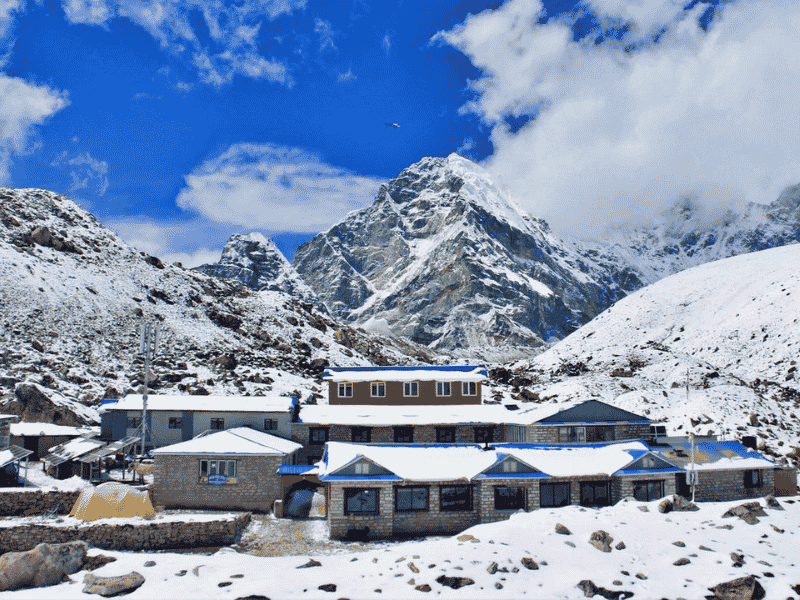
Why People Often Misjudge the Difficulty ?
Two opposite misconceptions cause most of the confusion around this trek. The first pictures Everest Base Camp as basically mountaineering, ice axes, ropes, technical climbing, because it shares a name with the world’s tallest mountain. This is not accurate. The standard route to Everest Base Camp Trek is entirely a walking trail, well-established and maintained, with no climbing gear used at any point, no glacier travel, and no technical terrain.
The second misconception goes the other way, treating it as “just a long walk” because it involves no technical skill. This underestimates what sustained high-altitude walking actually does to the body. Altitude does not care how many marathons you have run at sea level. Fitness helps with endurance and recovery, but it does not prevent altitude sickness, and trekkers who arrive extremely fit but rush their acclimatization schedule get sick just as often as unfit trekkers who do the same.
The accurate picture sits between these two extremes, a non-technical trek that is genuinely demanding because of cumulative altitude exposure, daily walking hours, and multiple consecutive days of exertion, not because of any single extreme obstacle.
Where Does the Difficulty Actually Come From ?
- Altitude
This is the dominant factor, by a wide margin. Everest Base Camp sits at approximately 5,364 meters, and Kala Patthar, which most itineraries include as a summit viewpoint, reaches around 5,545 meters. At these elevations, the air holds significantly less oxygen than at sea level, roughly half as much at Base Camp’s altitude. The body has to work harder for tasks as ordinary as walking slowly, eating a full meal, or sleeping through the night. This is precisely why proper acclimatization scheduling, not raw fitness, is the single biggest factor in whether someone completes this trek comfortably. Our Everest Base Camp Trek Altitude & Acclimatization guide covers the specific warning signs and pacing rules in depth.
- Daily Walking Hours
Most trekking days run 5 to 7 hours, with the longest single day, from Gorak Shep to Everest Base Camp and back, running 7 to 8 hours. This is not technical hiking, but it is sustained effort done on ten or more consecutive days with only two full rest days built in on the standard itinerary. See our Everest Base Camp Trek Itinerary guide for the exact day-by-day breakdown of walking times across every stage.
- Trail Terrain
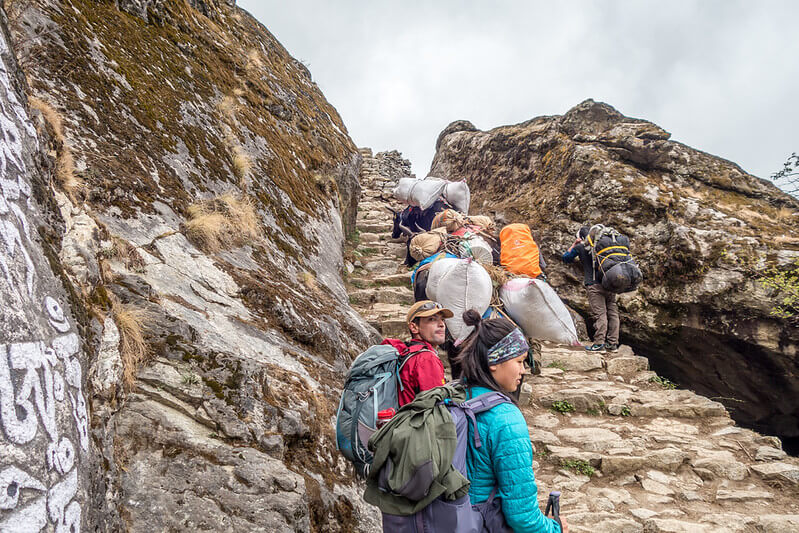
The trail itself involves stone staircases, suspension bridges, rocky and sometimes icy sections at higher elevation, and steady uphill and downhill grades rather than flat walking. None of this requires technical skill, but stone steps and loose rocky descent sections put real strain on knees and ankles, especially with a loaded daypack, which is why leg strength training matters as much as cardiovascular fitness.
- Exhaustion
The difficulty builds rather than hits all at once. The first two or three days rarely feel especially hard. By the second week, walking day after day at increasing altitude, sleeping poorly due to thinner air, and eating a more limited diet all compound into a tiredness that surprises trekkers who felt completely fine early on. This is a normal, expected part of the trek, not a sign something is wrong, but it is worth mentally preparing for rather than being caught off guard by it.
- Weather and Cold
Mornings and evenings at altitude get genuinely cold, often well below freezing at the higher villages, even outside winter. Weather can also shift quickly, clear mornings sometimes turning cloudy or snowy by afternoon. Choosing the right season for your trip meaningfully affects how much of this you deal with, our Everest Base Camp Trek Best Time guide breaks down what to expect month by month.
- Mindset
The mental challenge often surprises trekkers more than the physical one. You’re signing up for 12+ days of early starts, basic teahouse living, cold nights, and long stretches away from normal comforts. That sustained discomfort tests patience and adaptability as much as leg strength.
Success comes from breaking long days into tiny goals (“just to the next ridge”), staying present, and accepting that you can’t control weather, delays, or basic facilities. Trekkers who stay flexible, keep a sense of humor, and celebrate small daily wins tend to thrive, while those expecting comfort or linear progress often find the trek harder than it needs to be. In short, mental stamina and the will to keep going one step at a time is as important as physical fitness on the way to Everest Base Camp.
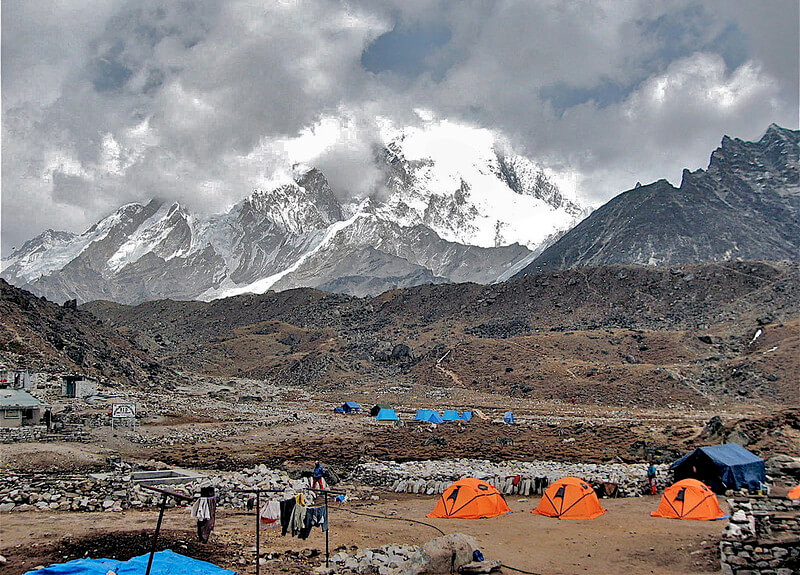
What Does a Typical Trekking Day Actually Feels Like?
Understanding the daily rhythm helps put the difficulty in real context. A standard trekking day starts early, often before 7 AM, with breakfast at the teahouse. You then walk for the bulk of the morning, break for lunch at a village or lodge along the route, and continue walking into the early afternoon, aiming to reach that night’s stop before the weather shifts. Evenings are spent resting in a teahouse dining room, often the only heated space, before an early night’s sleep in an unheated room. For a fuller picture of accommodation standards along the route, see our Everest Base Camp Tea Houses & Accommodation guide.
This routine repeats for ten to twelve days with only brief acclimatization hikes breaking the pattern on rest days. The mental repetition, as much as the physical exertion, is part of what trekkers find harder than expected, this is an endurance experience more than a single hard obstacle to overcome.
Who is this Trek for ?
This trek genuinely suits a wide range of people. Trekkers in their 60s and 70s complete it regularly, as do capable children on some itineraries, and complete beginners with zero prior trekking experience succeed every season when they train properly and follow their guide’s pacing.
- Good fit: reasonably fit adults who can comfortably walk 5 to 6 hours on hilly terrain, are willing to train for 8 to 12 weeks beforehand, and can mentally handle a repetitive daily routine over 12 or more days
- Needs extra care: anyone with pre-existing heart, lung, or blood pressure conditions should consult a doctor before booking, since altitude places real stress on these systems regardless of general fitness
- Should reconsider or choose a shorter alternative: trekkers looking for a light, short holiday activity with no training required, this is not that kind of trek, and treating it as one is where most difficulties on the trail start
If the standard route still feels like more than you want to take on, it helps to know that the Everest Base Camp Budget Trek-12 Days, the standard Everest Base Camp Trek, and the Everest Base Camp Luxury Trek all carry the same difficulty profile. What changes between them is pace and comfort, not the underlying challenge.
How Difficulty Compares Across Route Variations?
Not every Everest region itinerary carries the same difficulty. If you’re still deciding between routes, this comparison is worth reading alongside our full Everest Base Camp Trek Itinerary guide.
| Route | Difficulty vs Standard | Why |
| Budget Trek, 12 Days | Slightly harder | Same distance, less time, longer daily walking hours |
| Standard EBC Trek, 14 Days | Baseline | The reference point this guide describes |
| EBC with Gokyo via Cho La Pass | Noticeably harder | Adds a technical glacier and rock pass crossing |
| Everest Three High Pass Trek | Significantly harder | Three passes above 5,300 m, far more days at extreme altitude |
| EBC Luxury Trek | Same physical difficulty | Better comfort does not reduce altitude exposure |
If you’re curious about the Gokyo route specifically, our Everest Base Camp With Gokyo Lake Via Chola Pass page has the full itinerary. And if the Three High Pass Trek sounds appealing, it’s worth reading through the full Everest Three High Pass Trek itinerary carefully first, since it’s a meaningfully different commitment from the standard route.
How Season Affects Difficulty in EBC Trek ?
The route and altitude stay constant year-round, but the season you choose meaningfully changes how hard the trek feels in practice.
- Spring (March to May): generally favorable conditions, warming temperatures, though trails can be busier and afternoon cloud is common
- Autumn (late September to November): widely considered the most reliable season, stable weather and the clearest mountain views, also the busiest period on the trail
- Winter (December to February): significantly colder, especially overnight at higher villages, with some teahouses closing at the very highest points, but far fewer crowds and often the clearest daytime skies
- Monsoon (June to early September): generally avoided for this trek, persistent cloud cover obscures views, trails become muddy and leech-prone at lower elevations, and Lukla flight disruption rises substantially
Winter cold and monsoon wet conditions both add a layer of difficulty beyond the baseline altitude and terrain challenge described above. Our Everest Base Camp Trek Best Time guide breaks down exactly what to expect month by month if you’re still choosing your dates.
What Actually Helps Beyond Fitness ?
- Following your itinerary’s acclimatization days exactly as planned, resisting the urge to skip them to save time
- Walking at a deliberately slow, steady pace rather than trying to keep up with faster trekkers in your group
- Staying properly hydrated, dehydration worsens altitude symptoms significantly
- Eating enough even when appetite drops at altitude, which is common and normal but still needs to be worked against
- Trekking with an experienced guide who can recognize early altitude symptoms before they become serious
- Packing the right gear for genuinely cold conditions, worth checking against our Everest Base Camp Trek Packing List before you go
None of this requires elite athleticism. It requires consistency, patience, and a willingness to move slower than your instincts suggest, which is genuinely the opposite of what most physically confident trekkers expect going in.
Altitude Sickness is the Real Risk Behind the Difficulty
It’s worth spending a little more time here, since altitude sickness is the actual reason this trek carries real risk, far more than the walking itself. Acute Mountain Sickness, the mild and common form, typically shows up as headache, nausea, fatigue beyond what the day’s walking would explain, and disturbed sleep. It affects a meaningful proportion of trekkers to some degree, and mild symptoms are not unusual or alarming on their own.
What matters is how symptoms are handled. Mild AMS that is monitored, rested, and not pushed through with further ascent almost always resolves on its own within a day or two. The danger comes specifically from ignoring worsening symptoms and continuing to climb regardless, which is how mild AMS can, in rare cases, progress toward the far more serious High Altitude Pulmonary or Cerebral Edema. This progression is genuinely rare among trekkers who follow a sensible itinerary and listen to their guide, and it is almost entirely preventable through proper pacing rather than something that strikes unpredictably.
This is precisely why the acclimatization days at Namche Bazaar and Dingboche are treated as non-negotiable on every reputable itinerary, and why “the trek felt harder than expected” so often traces back to altitude symptoms rather than physical fatigue in isolation. Our Everest Base Camp Trek Altitude & Acclimatization guide goes into the specific warning signs, the standard descent protocol if symptoms worsen, and how a good guide manages this on the trail.
How is Difficulty Compared to Other Popular Treks?
Trekkers researching EBC often weigh it against a handful of other well-known routes, and the comparison helps calibrate expectations.
- Annapurna Base Camp: generally considered somewhat easier, lower maximum altitude (around 4,130 m) and a shorter overall duration, though still a genuine multi-day trek
- Langtang Valley Trek: comparable difficulty to EBC in terms of terrain and altitude exposure, but typically shorter in total duration
- Manaslu Circuit: broadly similar difficulty tier to standard EBC, crossing one high pass (Larkya La) partway through
- Everest Three High Pass Trek: substantially harder than any of the above, extended time above 5,300 meters across three separate pass crossings
None of these comparisons should be taken as a precise equivalence, individual response to altitude varies enormously and matters more than any general trek-to-trek ranking. They’re useful mainly for calibrating expectations if you’ve done one of these routes before and are wondering how EBC will compare.
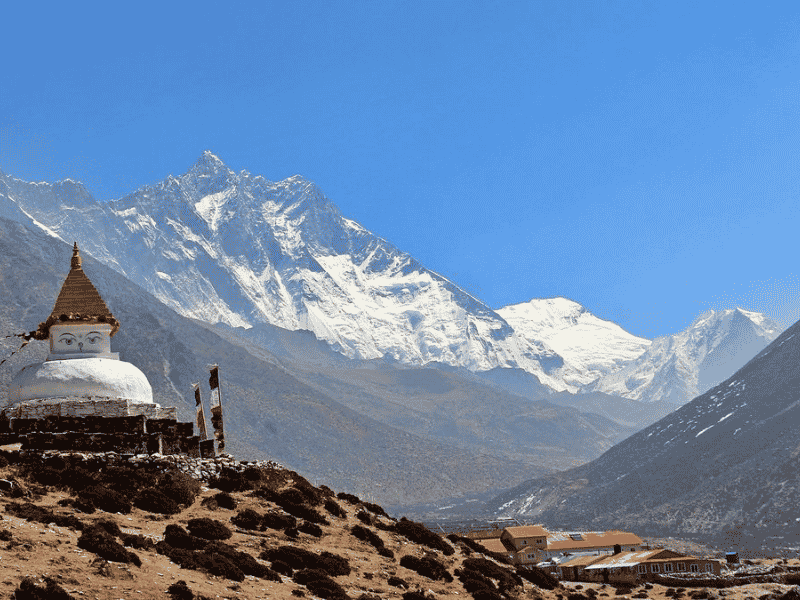
Ready to Trek?
Everest Base Camp is hard in the way that matters, altitude and sustained effort over many days, not in the way people often fear technical climbing danger. With honest preparation and the right pacing, it is genuinely achievable for most healthy adults.
If you’d like an honest read on whether your current fitness and timeline suit this trek, or help choosing between the route variations covered here, contact the Nepal Mountain Adventure team and we’ll walk you through it, then handle the permits, insurance guidance, flights, and guide once you’re ready.
Frequently Asked Questions
Can a complete beginner with no trekking experience do this?
Yes, as long as you commit to real training beforehand, usually 8 to 12 weeks, and pick an itinerary with proper acclimatization days built in. Plenty of people who reach Base Camp each season have never done a multi day trek before this one.
What is the single hardest day on the standard route?
For almost everyone, it’s the Gorak Shep to Everest Base Camp day, followed by the early Kala Patthar sunrise climb the next morning. These two days hit you with the highest altitude and the longest walking hours at the same time.
Do I need prior high altitude experience?
No. EBC is commonly done as someone’s first high altitude trek. Prior experience helps you understand how your own body reacts to altitude, but it isn’t a requirement here the way it genuinely is for the Three High Pass Trek.
How likely am I to actually reach Base Camp?
Success rates around 90 percent are commonly reported across the industry for trekkers who prepare properly and follow a sensible acclimatization schedule. Most people who turn back do so because of altitude symptoms, not because their body gave out physically.
Is the Everest Three High Pass Trek too difficult for a first timer?
Generally, yes. It’s built for trekkers who already have high altitude experience and strong fitness, since it crosses three passes above 5,300 meters and keeps you at extreme altitude for much longer. The standard route is the smarter place to start.
Does age limit who can do this trek?
Not really. Trekkers in their 60s and 70s complete EBC regularly, and children have done it too on itineraries paced for them. Your general health and a doctor’s clearance matter far more than your age on paper.
What should I do if I start feeling symptoms of altitude sickness?
Tell your guide immediately, even if the symptoms feel mild. Stop ascending, rest, and let your body catch up before continuing. Pushing through worsening symptoms is how minor altitude sickness turns into something serious, so speaking up early is always the right call.
Is it normal to feel worse as the trek goes on, even if I started out fine?
Yes, this is common and doesn’t necessarily mean something is wrong. Poor sleep, reduced appetite, and general tiredness tend to build up the higher you go, even when you’re acclimatizing well. It’s part of why pacing matters more than raw fitness.
Can I skip an acclimatization day if I’m feeling strong?
No, and this is one of the more common mistakes trekkers make. Feeling good on a given day doesn’t tell you much about how your body is handling the altitude internally. Acclimatization days are built in for everyone on the itinerary, not just people who feel tired.
Will trekking poles actually make a difference?
Yes, more than most first timers expect. They take real pressure off your knees on the long descents, which is often where people feel the most strain, and they help with balance on loose or uneven sections of the trail.


