

Everest Base Camp Itinerary: 12, 14, 18 & 21-Day Routes Compared.
Search “Everest Base Camp itinerary” into Google and you will find a 10-day version, a 12-day version, a 14-day version, and a handful of 17 to 21-day versions that add Gokyo Lakes or high passes into the mix. None of these agencies are lying to you, they are just describing different routes and different paces, and almost nobody explains clearly which one is actually right for which kind of trekker.
This guide lays out the standard EBC itinerary day by day, explains why acclimatization days sit exactly where they do, then shows exactly how the route changes across the Budget 12-Day Trek, the Gokyo Lake via Cho La Pass route, the Everest Three High Pass Trek, and the Luxury Trek, so you can see the real differences side by side rather than guessing from five different sales pages.
Before you commit to dates, it’s worth confirming your paperwork is straightforward too. Our Everest Base Camp Trek Permits and Insurance Guide covers exactly what you need and what it costs, and our Everest Base Camp Trek Best Time guide will help you settle on which month actually fits the itinerary you pick.
Why Do Some Everest Treks Take Longer ?
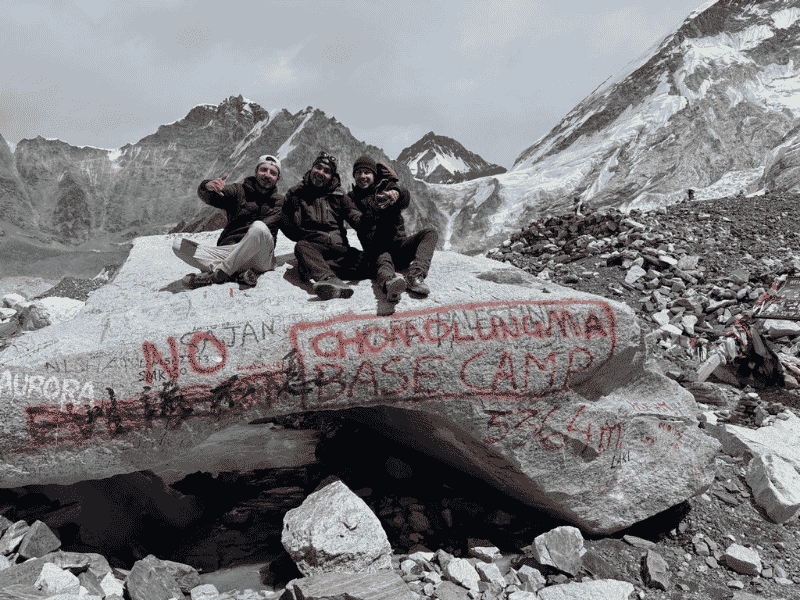
All five of these treks are in the same region, heading toward the same base camp. The reason the day counts differ comes down to one simple thing, how much of the Everest region you’re actually walking through.
| Trek | Same Trail as Standard? | What the Extra Days Actually Buy You |
| Budget Trek, 12 Days | Yes, same route | Nothing new to see, just a faster pace and less buffer for delays |
| Standard EBC Trek, 14 Days | This is the baseline route | Lukla, Phakding, Namche Bazaar, Tengboche, Dingboche, Lobuche, Gorak Shep, Everest Base Camp, and Kala Patthar, the classic out-and-back route |
| Gokyo Lake via Cho La Pass, 16-18 Days | No, genuinely different route | Everything in the Standard route, plus the Cho La Pass crossing, the Gokyo valley, the turquoise Gokyo Lakes, and a second sunrise summit at Gokyo Ri |
| Everest Three High Pass Trek, 18-21 Days | No, the longest and most complete route | Everything Gokyo has, plus two more high passes, Kongma La and Renjo La, looping through all four valleys of the Khumbu instead of one or two |
The simple way to think about it: Budget and Standard are the same trek at two different paces. Gokyo and Three Pass are longer because they physically go to more places, not because they add more rest. The Luxury Trek isn’t in this table since it follows the exact same trail as the Standard route step for step, the entire difference there is comfort, covered in its own section below.
Details Every EBC Itinerary Works Around
Whichever version you choose, these figures stay constant, since the trail itself does not change. It helps to see them laid out before going further, since duration alone does not tell you much without distance and altitude attached to it.
| Detail | Figure |
| Round-trip distance from Lukla | Approximately 130 km (80 miles) |
| One-way distance to Everest Base Camp | Approximately 65 km |
| Everest Base Camp altitude | 5,364 m (17,598 ft) |
| Highest point on the Everest Route | Kala Patthar, 5,545 m (18,192 ft) |
| Daily walking time | 4 to 8 hours depending on the day |
| Typical trekking days (standard route) | 8 to 10 days of actual hiking |
The hardest single day on almost every itinerary is the same regardless of which package you book, the early morning push from Gorak Shep to Kala Patthar, followed by the long descent toward Pheriche or Dingboche. That day runs 7 to 8 hours at the trek’s highest and thinnest air, whichever itinerary brought you there. For a deeper, honest look at exactly how demanding this trek is day to day, see our Everest Base Camp Trek Difficulty guide, and for exact daily distances broken down by stage, our Everest Base Camp Trek Distance guide is worth reading alongside this one.
Standard Everest Base Camp Trek Itinerary (14 Days)
This is the most commonly booked version, and the one most other itineraries are built by adding to or trimming from. It includes both acclimatization days at the altitudes described above and a full day of contingency built into most agency versions.
| Day | Route | Elevation | Duration |
| Day 1 | Fly Kathmandu to Lukla, trek to Phakding | 2,840 m to 2,610 m | 3-4 hours |
| Day 2 | Trek Phakding to Namche Bazaar | 3,440 m | 5-6 hours |
| Day 3 | Acclimatization Day in Namche Bazaar | 3,440 m | Rest day |
| Day 4 | Trek Namche Bazaar to Tengboche | 3,860 m | 5-6 hours |
| Day 5 | Trek Tengboche to Dingboche | 4,410 m | 5-6 hours |
| Day 6 | Acclimatization Day in Dingboche | 4,410 m | Rest day |
| Day 7 | Trek Dingboche to Lobuche | 4,910 m | 5-6 hours |
| Day 8 | Trek Lobuche to Gorak Shep, hike to EBC, return to Gorak Shep | 5,170 m / 5,364 m (EBC) | 7-8 hours |
| Day 9 | Sunrise hike to Kala Patthar, trek down to Pheriche | 5,545 m / 4,371 m | 6-7 hours |
| Day 10 | Trek Pheriche to Namche Bazaar | 3,440 m | 6-7 hours |
| Day 11 | Trek Namche Bazaar to Lukla | 2,840 m | 6-7 hours |
| Day 12 | Fly Lukla to Kathmandu | 1,400 m | 35-40 mins |
Some itineraries extend this to 14 or 15 days by adding a Kathmandu arrival day at the start and a contingency day at the end for weather delays, which is the more realistic way to book it given how often Lukla flights get pushed by weather. Our Kathmandu to Lukla Flight Guide explains exactly why this buffer matters and what causes those delays in the first place. If you’d like the exact version we run, our Everest Base Camp Trek page has the full day-by-day breakdown with inclusions.
How Do Route Variations Actually Differ?
This is the part most comparison articles get vague about, treating every longer itinerary as simply “the same trek with more days.” That is true for some variations and completely wrong for others. Here is what genuinely changes between each version, and what stays the same.
Everest Base Camp Budget Trek, 12 Days
This trims the standard itinerary by combining some walking days and tightening the schedule, without removing either acclimatization day, both are non-negotiable for safety regardless of budget. What changes is pace and buffer, not the destinations you reach. Daily walking hours run slightly longer to make up the difference, and there is less slack built in for a weather delay at Lukla, so a shorter holiday window comes with a slightly narrower margin for error.
This suits trekkers who are reasonably fit, have limited holiday time, and are comfortable with longer walking days and a tighter schedule. It does not suit trekkers who are nervous about altitude or have never done a multi-day trek before, since it offers less room to slow down if you are not adjusting well. See the full Everest Base Camp Budget Trek-12 Days itinerary for the day-by-day plan and what is included at this price point.
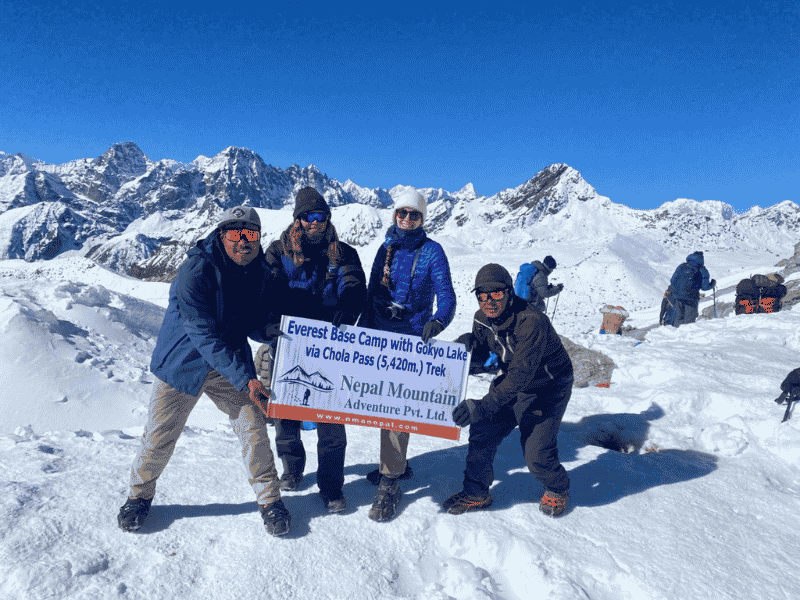
Everest Base Camp with Gokyo Lake via Cho La Pass, 16 to 18 Days
This is a genuinely different route, not just a longer version of the same one. The itinerary follows the standard trail up to Everest Base Camp and Kala Patthar exactly as described above, but instead of retracing your steps back down the same valley, you cross the 5,420 meter Cho La Pass into the Gokyo valley. This is a glacier and rock crossing, meaningfully more technical than anything on the standard route, and it links two separate valleys of the Khumbu rather than the simple out-and-back most trekkers picture.
Once across, you visit the turquoise Gokyo Lakes, cross Nepal’s longest glacier at Ngozumpa, and climb Gokyo Ri for a second sunrise summit with views of four of the world’s six tallest peaks in one frame, before looping back down through Namche to Lukla. It covers roughly 70 km more than the standard route and adds a genuine high-altitude pass crossing that the standard itinerary never touches.
This suits trekkers who have already done some EBC research and specifically want more than the out-and-back experience, or who are drawn to the idea of seeing Everest from two different valleys rather than one. It is a meaningfully harder itinerary than the standard route or the budget version, so prior trekking experience helps. Full details on our Everest Base Camp With Gokyo Lake Via Chola Pass page.
Everest Three High Pass Trek, 18 to 21 Days
This is the most demanding version covered here, linking all four major valleys of the Khumbu, the Khumbu valley itself, Chhukung, Gokyo, and Bhote Koshi, into one continuous loop. On top of the Cho La Pass crossing described above, this itinerary adds Kongma La (5,535 meters, often considered the hardest of the three due to loose rocky terrain) and Renjo La (5,360 meters, known for one of the best panoramic views of Everest and the Gokyo Lakes together from a single vantage point).
Total distance runs roughly 160 to 175 kilometers, and the itinerary spends far more consecutive days above 5,000 meters than any other version in this comparison. This is built for experienced high-altitude trekkers with strong fitness and no time constraints, genuinely not a first Himalayan trek, and not something to attempt without having completed at least one shorter high-altitude trek beforehand. Full itinerary on our Everest Three High Pass Trek page.
Everest Base Camp Luxury Trek
The route and day count on this version closely mirror the standard itinerary described above, the difference is entirely in comfort, not distance or altitude gain. Expect upgraded lodges with private bathrooms where available, better food options with more variety at altitude, and sometimes a helicopter return from Gorak Shep or Lobuche in place of the multi-day walk back to Lukla, which can shorten the total trip by three to four days if you choose that option.
This suits trekkers who want the same achievement and the same views without teahouse-basic conditions along the way, and who have the budget to prioritize comfort over cost. It is worth noting that comfort does not reduce altitude risk, the acclimatization schedule stays identical to the standard route for good reason. See our Everest Base Camp Luxury Trek page for exactly what is included at this tier.
Why Are Acclimatization Days There in Everest Base Camp Treks?
Looking back at the day-by-day breakdown above, it helps to understand why every credible itinerary places its rest days at Namche Bazaar and Dingboche specifically, rather than anywhere else along the route. This is not arbitrary pacing, it follows the widely used mountaineering guideline of not increasing sleeping altitude by more than roughly 300 to 500 meters per day once above 3,000 meters, with a full rest day built in every 800 to 1,000 meters of net gain.
Namche Bazaar sits at 3,440 meters, the first point on the trek where altitude sickness risk becomes genuinely relevant, which is why it is universally used as the first rest stop, regardless of which of the five itineraries in this guide you choose. Dingboche at 4,410 meters serves the same function a second time, since the jump from Namche’s altitude to Everest Base Camp’s 5,364 meters is too large to make safely without a second adjustment period.
Itineraries that remove or shorten these specific rest days to save time are the ones associated with meaningfully higher altitude sickness rates, which is worth remembering when a very short itinerary looks appealing purely on price or duration. Our Everest Base Camp Trek Altitude & Acclimatization guide covers the warning signs and pacing logic in far more depth than fits here, and is worth reading before you lock in dates.
How to Choose the Right Itinerary for You
With five reasonable-sounding options, the decision usually comes down to three questions worth answering honestly before you book.
- How much time do you actually have? If your holiday window is fixed at 12 to 14 days including flights, the Budget or Standard route is the realistic choice, the Gokyo, Three Pass, and most Luxury itineraries need more runway
- Is this your first high-altitude trek? If so, the Standard 14-day route with both acclimatization days intact is the safer starting point, regardless of how appealing the Gokyo or Three Pass routes look in photos
- What matters more, cost, comfort, or scenery variety? The Budget route optimizes for cost, the Luxury route for comfort, and the Gokyo or Three Pass routes for seeing more of the Khumbu (also known as the Everest Region) beyond the standard trail
If you are still unsure after weighing these, it is worth reading our Everest Base Camp Trek Training Guide to get an honest sense of your own readiness before committing to one of the more demanding options, and our Everest Base Camp Trek Packing List to see what gear differs between a standard trek and a high pass crossing.
Ready to Trek?
The itinerary you choose depends on how much time you have, how much altitude experience you have, and how much comfort matters to you along the way, not on which agency’s page you happened to land on first. All five routes reach the same iconic destination, they simply take different paths and different numbers of days to get you there.
If you would like help matching an itinerary to your fitness level, dates, and budget, contact the Nepal Mountain Adventure team and we will walk you through which of these routes actually fits your trip, then handle the permits, insurance guidance, flights, and guide once you have decided.
Frequently Asked Questions
How many days do I actually need for Everest Base Camp?
Most trekkers need 12 to 14 days total, including the Lukla flights. Shorter 10-day itineraries exist but cut acclimatization time, which raises altitude sickness risk. Longer 18 to 21-day itineraries add Gokyo Lakes or high passes rather than more rest.
What is the shortest possible EBC trek?
On foot, 8 to 10 trekking days is close to the practical minimum without cutting acclimatization. Heli-trek combinations that mix a few trekking days with a helicopter return can shorten the total trip to around 5 days, though this comes at a much higher cost and skips much of the trail experience.
Why do some itineraries take three weeks when others take 12 days?
This is not padding for profit in most reputable itineraries, it typically reflects a genuinely different route. A three-week itinerary usually includes Gokyo Lakes or a high pass crossing, which adds real distance and technical days, not just extra rest built into the same trail.
Which itinerary is best for a first-time high-altitude trekker?
The standard 14-day EBC route with both acclimatization days intact is the safest starting point. Save the Gokyo, Cho La, or Three Pass variations for a return trip once you know how your own body handles altitude.
Can I customize any of these itineraries to add extra rest days?
Yes, most agencies, including ours, can add buffer or acclimatization days to any of these itineraries if you would rather move slower than the standard pace. Contact our team and we can adjust any of these packages to your fitness level and schedule.
Does the Luxury Trek follow a different trail than the standard route?
No, it follows the same trail as the standard route. The differences are in accommodation quality, food, and the option of a helicopter return, not the path itself or the altitude reached.
How much harder is the Three Pass Trek compared to the standard route?
Considerably harder. It crosses three passes above 5,300 meters instead of none, covers 30 to 45 kilometers more, spends far more time above 5,000 meters, and requires stronger fitness and prior high-altitude experience to attempt safely.
Can I switch between these itineraries partway through my trek?
To a limited extent, yes. A trekker on the standard route who is acclimatizing well can sometimes extend into the Gokyo variation at Dingboche or Lobuche if arranged with their guide in advance, though this depends on permit and logistics planning done ahead of time rather than a spontaneous decision on the trail.
Do all five itineraries require the same permits?
Yes. Every route covered in this guide requires the same two permits, the Sagarmatha National Park Entry Permit and the Khumbu Pasang Lhamu Rural Municipality Permit, regardless of duration or which valleys you pass through. Full details in our Everest Base Camp Trek Permits and Insurance Guide.


