

What to Actually Bring, What to Rent, and What to Leave Behind
The hardest part of packing for Everest Base Camp isn’t knowing what gear exists, it’s knowing what you actually need versus what every gear shop would love to sell you. This trek doesn’t require technical climbing equipment, no ice axes, no crampons on the standard route, no ropes. What it does require is a genuinely effective layering system, a sleeping bag warm enough for unheated teahouse rooms, and the discipline to keep your duffel bag light enough for the Lukla flight’s strict weight limit.
This guide covers exactly what to pack, organized by category, with honest guidance on what’s worth buying before you fly versus renting cheaply in Kathmandu. For how this gear actually gets used day to day, our Everest Base Camp Trek Itinerary guide shows the route this list is built around, and our Everest Base Camp Trek Difficulty guide explains why some of these items matter more than they might seem to on paper.
The Weight Limit That Shapes Everything
Before getting into categories, it’s worth understanding the constraint every packing decision runs into: the Kathmandu to Lukla flight enforces a strict 15 kg total baggage limit per person, split as 10 kg for your duffel bag (carried by your porter) and 5 kg for your daypack (carried by you). Exceeding this isn’t just an inconvenience, overweight bags can be bumped to a later flight, which is the last thing you want during an already weather-dependent journey. Our Kathmandu to Lukla Flight Guide covers this limit and what happens if you exceed it in more detail.
This is exactly why the “rent in Kathmandu” strategy below isn’t just about saving money, it’s a genuine packing strategy. Thamel, Kathmandu’s trekking gear district, rents and sells everything from sleeping bags to down jackets at a fraction of home-country prices, and gear bought or rented there never has to travel in your original luggage from home.
Clothing: The Layering System
A 3-layer system is the standard approach for this trek, and it works because it adapts to temperature swings of 20 degrees or more between a sunny midday climb and a freezing evening at altitude.
Base Layers
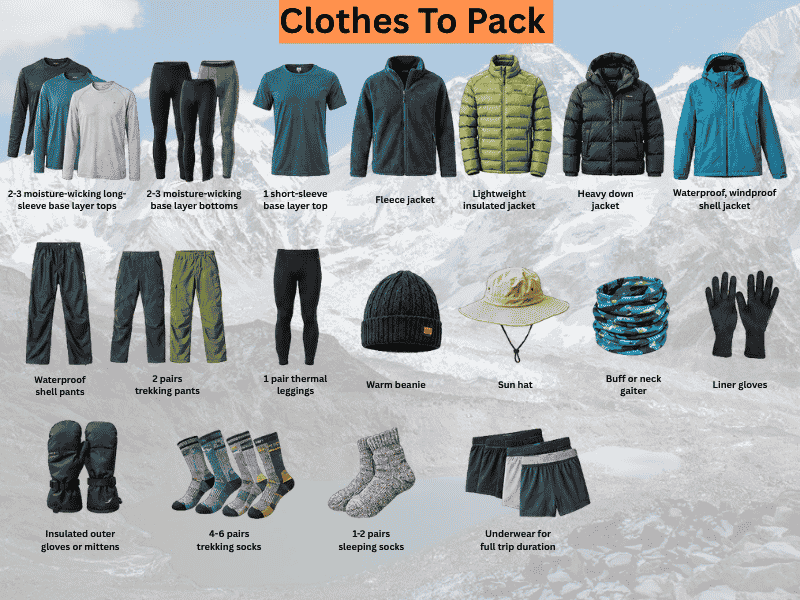
- 2-3 moisture-wicking long-sleeve base layer tops, merino wool or synthetic, never cotton
- 2-3 moisture-wicking base layer bottoms
- 1 short-sleeve base layer top for warmer, lower-altitude days
Mid Layers
- A fleece jacket for general insulation
- A lightweight insulated jacket (synthetic or light down) for layering underneath your heavier jacket
- A heavier down jacket, essential once you’re above Dingboche, this is one of the items most worth renting in Kathmandu rather than buying new
Outer Layers
- A waterproof, windproof shell jacket
- Waterproof shell pants
- 2 pairs of trekking pants, quick-drying, not jeans or heavy cotton
- 1 pair of thermal leggings for cold evenings and the Kala Patthar sunrise push
Headwear and Hands
- A warm beanie
- A sun hat with a wide brim
- A buff or neck gaiter, useful for sun, wind, and dust
- Lightweight liner gloves for general use
- Insulated, waterproof outer gloves or mittens for the higher, colder stretches
Socks and Underwear
- 4-6 pairs of medium to heavyweight trekking socks, wool or synthetic
- 1-2 pairs of warm sleeping socks, kept dry and separate from your daytime socks
- Comfortable, quick-drying underwear for the full trek duration
Footwear
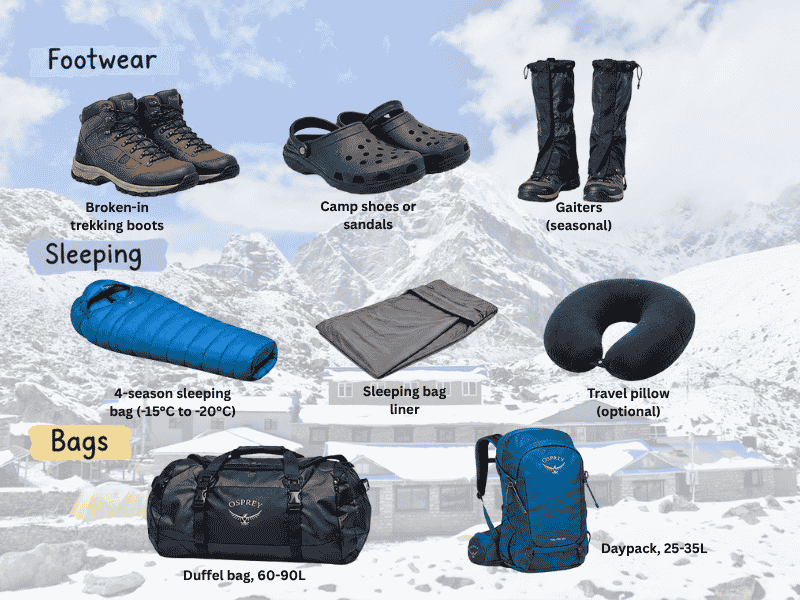
- Sturdy, waterproof trekking boots with good ankle support, broken in well before you fly, new boots on day one of a 12-day trek is a recipe for blisters
- Camp shoes or sandals for evenings at the teahouse, giving your feet a break from boots
- Gaiters, useful in winter or after fresh snowfall, optional the rest of the year
Boots are the one major item we’d always recommend bringing from home rather than renting, since fit matters enormously and a rental boot that doesn’t suit your feet can derail the whole trek. Everything else on this list has far more flexibility.
Sleeping Gear
Teahouse rooms are not heated, and nighttime temperatures at higher elevations regularly drop well below freezing, even outside winter. This makes your sleeping bag one of the two or three items on this entire list that genuinely cannot be compromised on.
| Item | Recommendation |
| Sleeping bag | 4-season bag rated to -15°C to -20°C comfort rating |
| Sleeping bag liner | Adds 3-5°C of warmth, also keeps the bag cleaner over the trek |
| Inflatable travel pillow | Optional, but a genuine comfort upgrade over a stuffed jacket |
A good sleeping bag is one of the highest-value rental items in Kathmandu, renting one there avoids both the expense of buying a -20°C bag you may never use again and the bulk of packing it from home. For a sense of what the rooms themselves are actually like, our Everest Base Camp Tea Houses & Accommodation guide covers it in full.
Bags: The Two-Bag System
- Duffel bag, 60-90 liters, carried by your porter, this holds everything you don’t need during the day’s walk
- Daypack, 25-35 liters, carried by you, holding water, snacks, extra layers, camera, sunscreen, and anything you want access to without stopping your porter
Many agencies, ours included, provide a duffel bag as part of the trek package, worth checking before you buy one specifically for this trip.
Essential Gear and Equipment
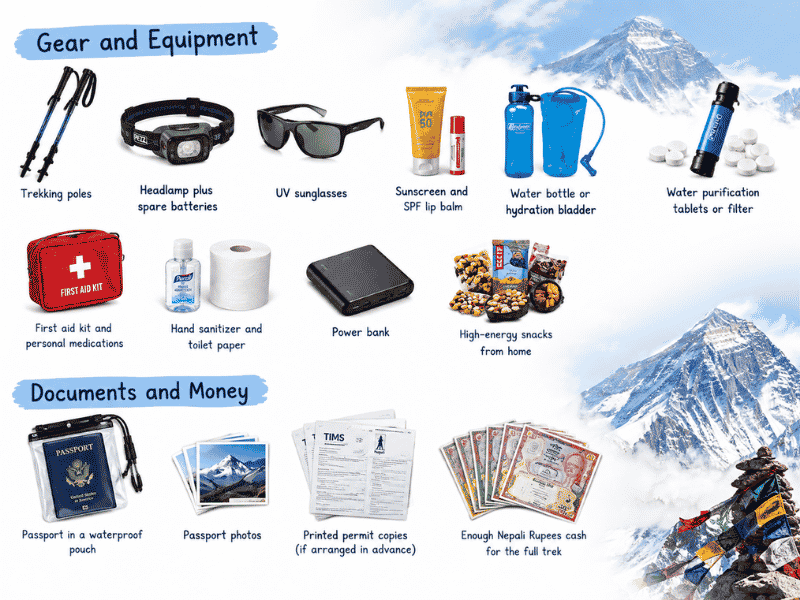
- Trekking poles, genuinely useful for balance and for reducing knee strain on long descents, not just a nice-to-have
- Headlamp with spare batteries, essential for the early morning Kala Patthar sunrise hike and any pre-dawn starts
- UV-protective sunglasses, sun glare at altitude and on snow is intense enough to cause real eye strain without them
- High-SPF sunscreen and lip balm with SPF
- A reusable water bottle or hydration bladder, 2-3 liters of daily capacity
- Water purification tablets or a filter, since bottled water becomes expensive and wasteful the higher you go
- A basic first aid kit, blister treatment, pain relievers, any personal prescriptions, and altitude sickness medication if recommended by your doctor
- Hand sanitizer and a small quantity of toilet paper
- A power bank for charging devices, since charging at teahouses often costs extra the higher you climb
- High-energy snacks from home, nuts, energy bars, dried fruit, familiar food that’s easy to manage if your appetite drops at altitude
Documents and Money
- Passport, kept in a waterproof pouch or ziplock bag
- Passport photos for permits, two is generally enough
- Printed permit copies if arranged in advance
- Enough Nepali Rupees in cash to cover the full trek, ATMs are scarce and unreliable past Namche Bazaar
Our Everest Base Camp Trek Permits and Insurance Guide covers exactly what documentation you’ll need at each checkpoint.
What You Do Not Need
Just as useful as knowing what to pack is knowing what not to bother with on the standard route.
- Technical climbing gear, ice axes, crampons, and ropes are not required for the standard Everest Base Camp trek
- Heavy cotton clothing, cotton holds moisture and dries slowly, a genuine liability at altitude
- An oversized suitcase or hard-shell luggage, duffel bags are far easier for porters to carry and pack onto mules or into teahouse storage
- A tent or camping stove, teahouse accommodation is available at every stop on the standard route
Microspikes are worth a mention as a genuine exception, not strictly necessary most of the year, but useful during winter treks or after fresh snowfall. If you’re considering the Everest Three High Pass Trek, which crosses higher, more technical terrain, it’s worth packing these regardless of season.
Packing Differences by Season
| Season | Packing Focus |
|---|---|
| Spring (March-May) | Standard layering system, lighter gloves often sufficient |
| Autumn (late Sept-Nov) | Standard layering system, the most predictable season to pack for |
| Winter (Dec-Feb) | Heavier down jacket, warmer sleeping bag rating (-20°C), microspikes worth carrying |
| Monsoon (June-early Sept) | Rain gear becomes critical, quick-drying fabrics matter more than insulation |
Our Everest Base Camp Trek Best Time guide covers month-by-month conditions in more depth if you’re still finalizing your dates.
Buy, Rent, or Skip: A Straight Answer
Thamel’s gear shops are well-stocked and significantly cheaper than buying new ones at home, which makes a hybrid approach the smartest packing strategy for most trekkers. Rather than a vague “it depends,” here’s a direct call on every major item.
| Item | Buy (bring from home) | Rent in Kathmandu | Skip entirely |
|---|---|---|---|
| Trekking boots | Yes, fit matters too much to risk a rental | ||
| Sleeping bag (-15 to -20°C) | Yes, best value rental on the list | ||
| Down jacket | Yes, bulky and rarely used again at home | ||
| Trekking poles | Optional if you already own a pair | Yes, cheap and widely available | |
| Duffel bag | Check if your agency provides one first | Yes, if not provided | |
| Base layers | Yes, fit and personal comfort matter | ||
| Waterproof shell jacket/pants | Yes, better to own quality rain gear | Possible, quality varies more here | |
| Gaiters | Yes, only needed seasonally | ||
| Microspikes | Yes, only needed in winter or after snowfall | ||
| Personal medications | Yes, always bring your own | ||
| Water filter/purification | Yes, inexpensive and worth owning | ||
| Ice axe, crampons, rope | Yes, not needed on the standard route | ||
| Tent, camping stove | Yes, teahouses cover accommodation and meals | ||
| Hard-shell suitcase | Yes, duffel bags are far more practical for porters |
This approach keeps your home packing list shorter, your luggage lighter on the international flight, and your budget intact for the parts of your kit where fit and personal comfort genuinely matter.
The Complete Checklist
Everything above, condensed into one printable list. Tick items off as you pack rather than trying to hold the full list in your head.
Clothing
- ☐ 2-3 moisture-wicking long-sleeve base layer tops
- ☐ 2-3 moisture-wicking base layer bottoms
- ☐ 1 short-sleeve base layer top
- ☐ Fleece jacket
- ☐ Lightweight insulated jacket
- ☐ Heavy down jacket
- ☐ Waterproof, windproof shell jacket
- ☐ Waterproof shell pants
- ☐ 2 pairs trekking pants
- ☐ 1 pair thermal leggings
- ☐ Warm beanie
- ☐ Sun hat
- ☐ Buff or neck gaiter
- ☐ Liner gloves
- ☐ Insulated outer gloves or mittens
- ☐ 4-6 pairs trekking socks
- ☐ 1-2 pairs sleeping socks
- ☐ Underwear for full trip duration
Footwear
- ☐ Broken-in trekking boots
- ☐ Camp shoes or sandals
- ☐ Gaiters (seasonal)
Sleeping
- ☐ 4-season sleeping bag (-15°C to -20°C)
- ☐ Sleeping bag liner
- ☐ Travel pillow (optional)
Bags
- ☐ Duffel bag, 60-90L
- ☐ Daypack, 25-35L
Gear and Equipment
- ☐ Trekking poles
- ☐ Headlamp plus spare batteries
- ☐ UV sunglasses
- ☐ Sunscreen and SPF lip balm
- ☐ Water bottle or hydration bladder
- ☐ Water purification tablets or filter
- ☐ First aid kit and personal medications
- ☐ Hand sanitizer and toilet paper
- ☐ Power bank
- ☐ High-energy snacks from home
Documents and Money
- ☐ Passport in a waterproof pouch
- ☐ Passport photos
- ☐ Printed permit copies (if arranged in advance)
- ☐ Enough Nepali Rupees cash for the full trek
You can download the packing list.
Ready to Trek?
The best Everest Base Camp packing list isn’t the longest one, it’s the one built around a solid layering system, a warm sleeping bag, broken-in boots, and the discipline to stay within the 15 kg Lukla flight limit. Everything beyond that is refinement, not necessity.
If you’d rather not sort rental logistics in Kathmandu on your own, contact the Nepal Mountain Adventure team and we’ll point you toward reliable gear rental in Thamel and answer any specific packing questions for your dates, whether you’re booked on our Everest Base Camp Trek or the more comfort-focused Everest Base Camp Luxury Trek.
Frequently Asked Questions
What sleeping bag rating do I actually need?
A 4-season bag with a comfort rating of -15°C to -20°C covers the standard trekking seasons. Winter trekkers should lean toward the colder end of that range.
Do I need crampons or an ice axe for Everest Base Camp?
No, the standard route requires no technical climbing gear. Microspikes can be useful in winter or after fresh snowfall, but this is a walking trek, not a mountaineering expedition.
What’s the baggage weight limit, and what happens if I exceed it?
15 kg total, split as 10 kg for your porter-carried duffel and 5 kg for your daypack. Overweight bags can incur extra fees or, worse, get bumped to a later Lukla flight.
Should I buy gear at home or rent it in Kathmandu?
A hybrid approach works best for most trekkers, bring boots and personal medication from home, rent bulkier items like a sleeping bag, down jacket, and duffel bag in Thamel, where prices are a fraction of what you’d pay buying new elsewhere.
How many pairs of socks should I pack?
4 to 6 pairs of trekking socks plus 1 to 2 dedicated pairs of warm sleeping socks kept separate and dry.
Is a water filter or purification tablets necessary?
Yes, bottled water becomes expensive and generates significant plastic waste the higher you climb. A filter or purification tablets let you safely treat boiled or tap water from teahouses instead.
Do I need to bring my own trekking poles?
Not necessarily, poles are also easy to rent cheaply in Kathmandu if you don’t already own a pair, but they’re genuinely worth using given how much they reduce strain on long descents.
What should I pack in my daypack versus my duffel bag?
Your daypack should hold anything you need access to during the day’s walk, water, snacks, camera, sunscreen, an extra layer, and your permits and passport. Everything else goes in the porter-carried duffel.


