

If you are planning a Nepal trek in 2026 and trying to decide between the Everest Base Camp Trek and the Everest Three Passes Trek, you are asking exactly the right question. Both are world class high altitude trekking experiences in the Khumbu region. Both will change the way you see the mountains forever. But they are not the same experience, and choosing the wrong one for your fitness level or available time is a mistake you will feel on every single day of the trail.
This is the complete honest EBC vs Everest Three Passes Trek comparison guide covering cost, difficulty, scenery, itinerary, best season and everything in between, so you can make the right call before you book.
EBC vs Everest Three Passes Trek: Quick Comparison
Before diving deep, here is a full side by side comparison of the Everest Base Camp Trek and the Everest Three Passes Trek Nepal.
| Feature | EBC Trek | Everest Three Passes Trek |
| Duration | 12-14 Days | 18-20 Days |
| Total Distance | 130 km approx | 166 km approx |
| Maximum Altitude | 5,550m (Kala Patthar) | 5,550m (Kala Patthar) |
| High Passes Crossed | None | 3 passes above 5,000m |
| Glacier Crossing | No | Yes (Cho La Pass) |
| Trek Difficulty | Moderate to Challenging | Moderate to Challenging |
| Trail Crowd Level | Heavy in peak season | Light to moderate |
| Cost | From USD 1,350-$1,500 | From USD 1,600- $1,800 |
| Best For | First time Himalayan trekkers | Experienced altitude trekkers |
| Best Trekking Season | Spring and Autumn | Spring and Autumn |
Everest Base Camp Trek vs Everest Three Passes Trek: How Difficult Are These Treks?
Difficulty is the most important factor when choosing between these two Nepal trekking routes . Here is the honest breakdown.
Everest Base Camp Trek Difficulty
The Everest Base Camp Trek is rated moderate, but moderate at 5,000 metres above sea level feels very different from moderate at home. You will walk 5 to 7 hours every single day on steep, rocky and uneven Himalayan terrain. By day seven or eight of the EBC trek, most trekkers are sleeping above 4,000 metres where the air holds only around 60 percent of the oxygen you breathe at sea level.
Headaches, fatigue and reduced appetite at altitude are normal symptoms. They are not a reason to panic. They are a reason to slow down and let your body adjust.
The two built in acclimatization days on the Everest Base Camp Trek itinerary, one in Namche Bazaar at 3,440m and one in Dingboche at 4,410m, are not optional rest days. They are what keep you healthy and on the mountain. Do not skip them. The hardest section of the entire EBC trek is the stretch from Lobuche to Gorak Shep to Base Camp is cold, thin air and relentless rocky ground.
People in their 60s and 70s complete the Everest Base Camp Trek every year. You do not need to be a high performance athlete. You need to be fit, willing to train consistently for 8 to 12 weeks before your Nepal trek, and mentally prepared for days that are harder than anything you have done before.

Everest Three Passes Trek Difficulty
The Everest Three Passes Trek Nepal is a completely different challenge. Everest Three separate days involve crossing high mountain passes above 5,000 metres, placing it firmly in the challenging to serious category of Nepal high altitude trekking.
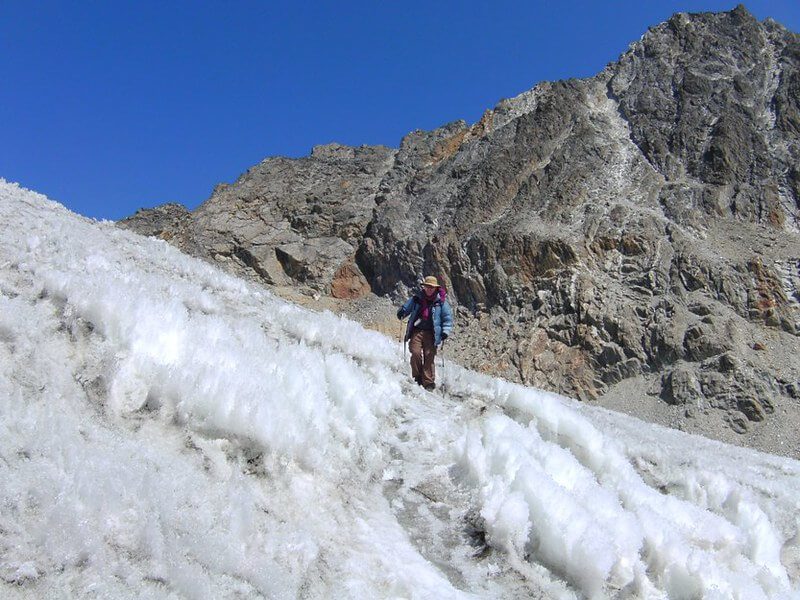
Kongma La Pass at 5,535m is a long, steep, rocky scramble that takes most trekkers 4 to 5 hours just to reach the summit. Cho La Pass at 5,420m involves crossing a live glacier where microspikes are not optional gear, they are essential safety equipment. Renjo La Pass at 5,360m involves major climbing effort from both sides of the pass.
Between the passes, the Everest Three Passes Trek route travels through remote sections of the Khumbu region with few teahouses, meaning you cannot simply stop whenever you feel tired. Some walking days push eight hours of continuous trekking. If you have never trekked at high altitude before, the combined demand of altitude and physical exertion can overwhelm your body, not because the trek is technically impossible, but because your system will not yet know how to cope.
If you have already completed the EBC trek, the Annapurna Circuit Trek, or any comparable high altitude trekking experience, you are ready for Everest Three Passes. If this is your first serious Himalayan trek, do the Everest Base Camp Trek first and come back for Everest Three Passes on your next Nepal trip. You will get far more out of both experiences that way.
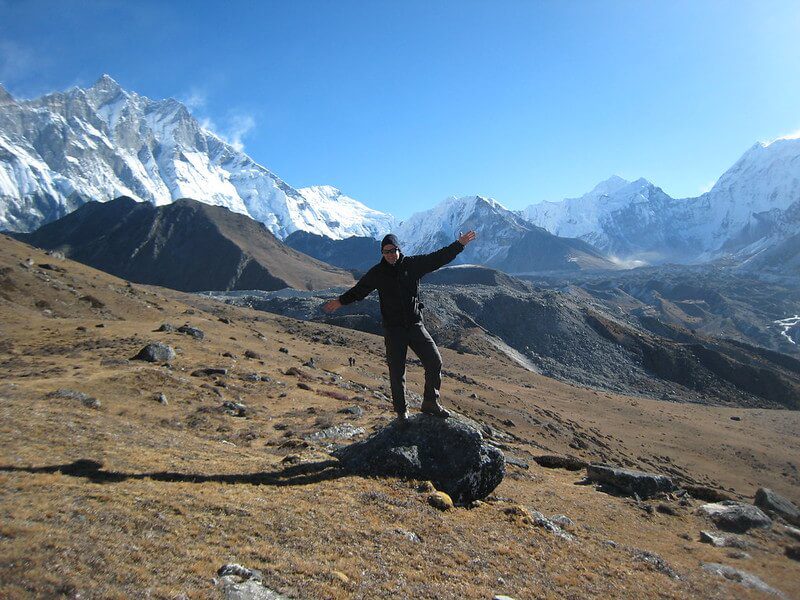
EBC Trek and Everest Three Passes Trek Scenery: Major Viewpoints in the Khumbu Region
This is where the Everest Three Passes Trek shows its true value over the EBC trek alone. Here is every major viewpoint on both Nepal trekking routes.
Everest Base Camp Trek Viewpoints
Namche Bazaar (3,440m): Your First Himalayan Panorama
Namche Bazaar is the gateway to the Everest region and the first place where the full scale of the Khumbu mountains becomes real. The moment you crest the hill into Namche, Thamserku (6,618m) and Kwangde (6,187m) rise above the valley and stop you in your tracks. On the acclimatization day hike up to Hotel Everest View at 3,880m, Mount Everest appears for the very first time. For most Everest Base Camp trekkers, this is the moment the adventure truly begins.
Tengboche Monastery (3,860m): The Most Photographed View in Nepal
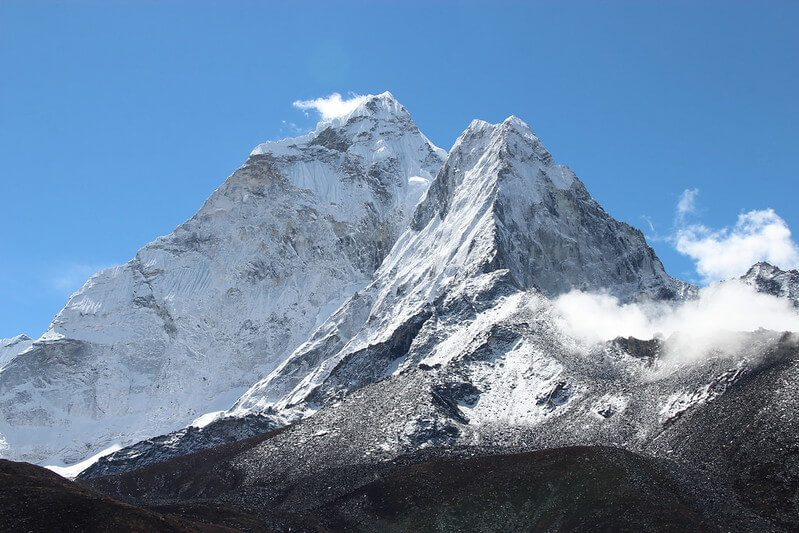
Tengboche Monastery is one of the most iconic viewpoints on any Nepal trek. After descending into a deep river gorge and climbing back up a forested ridge, the monastery appears suddenly with Ama Dablam (6,812m) rising directly behind it. In morning light with prayer flags moving in the wind, this is a scene that stays with every Khumbu region trekker for life. Peaks visible from Tengboche include Everest, Lhotse, Nuptse, Ama Dablam, Thamserku and Kantega.
Dingboche (4,410m): High Alpine Valley Views
After Tengboche the EBC trek leaves the forested lower Khumbu behind. Dingboche sits in a wide open alpine valley surrounded by Himalayan giants. Island Peak (6,189m) rises directly above the village. The acclimatization hike to Nangkartsang Peak at 5,083m delivers a full 360 degree panorama of the Everest region with Lhotse’s south face filling the entire eastern horizon alongside Makalu, Ama Dablam and Cho Oyu.
Khumbu Glacier Trail (4,900m to 5,300m): Walking Beside a Living Glacier
Between Lobuche and Gorak Shep the Everest Base Camp Trek route runs alongside the world famous Khumbu Glacier. Above it looms the Khumbu Icefall, the constantly shifting and collapsing ice towers that every Everest summit team must navigate. You hear the glacier before you see it. Deep cracking and groaning sounds echo down the Khumbu Valley as thousands of tonnes of ice slowly move.
Everest Base Camp (5,363m): Standing at the Foot of the World
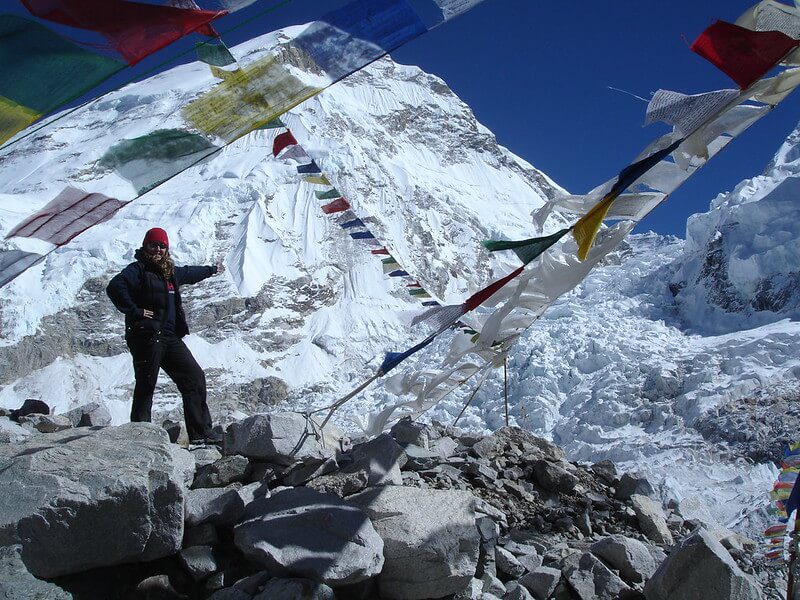
The view of Mount Everest from Base Camp is actually obscured by surrounding ridgelines. What you see is the Khumbu Icefall up close, the vast glacial moraines stretching in every direction, and during spring trekking season the colourful expedition tents of summit climbing teams. The EBC experience is not about what you see. It is entirely about where you are standing and what it means to be there.
Kala Patthar (5,550m): The Best View of Mount Everest on Earth
Kala Patthar is the defining moment of the entire Everest Base Camp Trek. You climb this rocky peak before sunrise by headtorch, moving slowly in thin cold air. Then the sun rises and Everest’s southwest face turns gold and orange while Lhotse and Nuptse glow on either side. Peaks visible from Kala Patthar include Mount Everest (8,848m), Lhotse (8,516m), Nuptse (7,861m), Changtse (7,583m) and Pumori (7,161m). This is the most famous Everest viewpoint on earth and it earns that reputation completely.
Everest Three Passes Trek Viewpoints
The Everest Three Passes Trek Nepal includes every single viewpoint described above for the EBC trek. It then adds all of the following.
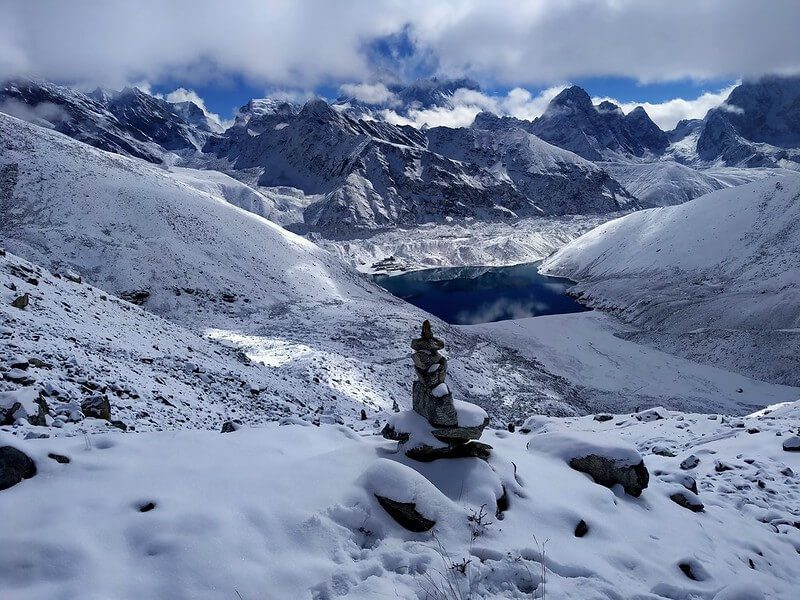
Gokyo Lakes (4,700m to 5,000m): The Most Beautiful Lakes in the Himalayas
The six Gokyo Lakes are unlike anything else in Nepal trekking. The water is a deep turquoise green that perfectly mirrors the surrounding Himalayan peaks on still mornings. The Sherpa people of the Khumbu region consider these lakes sacred. The third and fourth Gokyo Lakes offer the most dramatic mountain reflections, with Cho Oyu (8,201m) and Gyachung Kang (7,952m) mirrored in the water at dawn.
Gokyo Ri (5,357m): Four 8,000 Metre Peaks in a Single View
From the summit of Gokyo Ri you see four mountains above 8,000 metres simultaneously: Mount Everest, Lhotse, Makalu and Cho Oyu. The Ngozumpa Glacier, the longest glacier in the entire Himalayas at 36 kilometres, stretches below you. All six Gokyo Lakes glitter in the valley floor. Many experienced Nepal trekkers who have completed both the EBC trek and the Everest Three Passes Trek consider Gokyo Ri the single greatest viewpoint in the entire Khumbu region, placing it above even Kala Patthar.
Renjo La Pass (5,360m): The Viewpoint That Makes Trekkers Stop and Stare
Renjo La Pass is the most emotionally powerful viewpoint on the Everest Three Passes Trek. Looking south from the top, all six Gokyo Lakes are laid out below you in a perfect line with Everest and Lhotse rising behind them. Looking north, the Tibetan Plateau stretches into the far distance. This pass sees a fraction of the foot traffic of the main EBC trail, meaning you often share this extraordinary view with nobody at all. Trekkers who have completed both the EBC trek and the Everest Three Passes Trek consistently name Renjo La as the single greatest moment of either journey.
Cho La Pass (5,420m): Glacier Crossing Drama
The Cho La Pass crossing is the most technically demanding section of the Everest Three Passes Trek. The ascent from Dzongla is dramatic from the very first step. Crossing the glacier at the top requires crampons or microspikes. Views sweep across the Rolwaling Valley to the west and toward Ama Dablam to the southeast. Start the Cho La crossing before 6am as the glacier surface deteriorates significantly in afternoon sun.
Kongma La Pass (5,535m): The Highest Pass on the Everest Three Passes Trek
Kongma La is the highest of the Everest Three passes at 5,535 metres and the most technically demanding to climb. The ascent from Chhukung is long and steep on rocky terrain with frozen lakes appearing along the trail. From the Kongma La summit you see Lhotse, Lhotse Shar, Makalu, Baruntse and Ama Dablam. The descent drops back into the Khumbu Valley and rejoins the classic Everest Base Camp trek trail at Lobuche.
Everest Base Camp Trek Itinerary for 2026 : Day by Day(12 Days)
- Day 01: Flight to Lukla (2,840m / 9,318ft) and Trek to Phakding (2,610m / 8,562ft), 4-5 Hrs Trek
- Day 02: Trek to Namche Bazaar (3,440m / 11,286ft), 5-6 Hrs Trek
- Day 03: Hike & Acclimatization Day in Namche Bazaar (3,440m / 11,286ft), 4-5 Hrs Hike
- Day 04: Trek to Tengboche (3,860m / 12,664ft), 5-6 Hrs Trek
- Day 05: Trek to Dingboche (4,410m / 14,468ft), 5-6 Hrs Trek
- Day 06: Hike & Acclimatization Day in Dingboche (4,410m / 14,468ft), 4-5 Hrs Hike
- Day 07: Trek to Lobuche (4,910m / 16,109ft), 5-6 Hrs Trek
- Day 08: Trek to Gorakshep (5,170m / 16,962ft) and Visit Everest Base Camp (5,363m / 17,595ft), 7-8 Hrs Trek
- Day 09: Early Morning Hike to Kalapatthar (5,550m / 18,209ft) and Trek to Pheriche (4,371m / 14,340ft), 6-7 Hrs Trek
- Day 10: Trek to Namche Bazaar (3,440m / 11,286ft), 6-7 Hrs Trek
- Day 11: Trek to Lukla (2,860m / 9,383ft), 6-7 Hrs Trek
- Day 12: Fly Back to Kathmandu (1,360m / 4,462ft), 30 Minute Flight
Everest Three Passes Trek Itinerary for 2026: Day by Day (17 Days)
- Day 01: Flight to Lukla (2,840m / 9,318ft) and Trek to Phakding (2,610m / 8,562ft), 4-5 Hrs Trek
- Day 02: Trek to Namche Bazaar (3,440m / 11,286ft), 5-6 Hrs Trek
- Day 03: Hike & Acclimatization Day in Namche Bazaar (3,440m / 11,286ft), 4-5 Hrs Hike
- Day 04: Trek to Tengboche (3,860m / 12,664ft), 5-6 Hrs Trek
- Day 05: Trek to Dingboche (4,410m / 14,468ft), 5-6 Hrs Trek
- Day 06: Hike & Acclimatization Day in Dingboche (4,410m / 14,468ft), 4-5 Hrs Hike
- Day 07: Trek to Chhukung Village (4,730m / 15,518ft) and Hike to Chhukung Ri (5,546m / 18,196ft), 7-8 Hrs Trek & Hike
- Day 08: Trek to Lobuche (4,910m / 16,109ft) via Kongma La Pass (5,535m / 18,159ft), 7-8 Hrs Trek
- Day 09: Trek to Gorakshep (5,170m / 16,962ft) and Visit Everest Base Camp (5,363m / 17,595ft), 7-8 Hrs Trek
- Day 10: Early Morning Hike to Kalapatthar (5,550m / 18,209ft) and Trek to Dzonla (4,830m / 15,850ft), 6-7 Hrs Trek
- Day 11: Trek to Dragnag (4,700m / 15,420ft) via Cho La Pass (5,368m / 17,612ft), 8-9 Hrs Trek
- Day 12: Trek to Gokyo Lake (4,790m / 15,715ft), 3-4 Hrs Trek
- Day 13: Early Morning Hike to Gokyo Ri (5,357m / 17,575ft) for Sunrise and Mountain Views, 4-5 Hrs Hike
- Day 14: Trek to Lungden (4,380m / 14,370ft) via Renjo La Pass (5,360m / 17,585ft), 7-8 Hrs Trek
- Day 15: Trek to Namche Bazaar (3,440m / 11,286ft), 6-7 Hrs Trek
- Day 16: Trek to Lukla (2,840m / 9,318ft), 6-7 Hrs Trek
- Day 17: Fly Back to Kathmandu (1,360m / 4,462ft), 30 Minute Flight
Best Time for the EBC Trek and Everest Three Passes Trek
Spring Trekking Season: March to May
Spring is the most popular Nepal trekking season for good reason. Daytime temperatures are warm on the Khumbu trail, the rhododendron forests of the lower Everest region are in full bloom through March and April, weather windows are stable and mountain visibility is at its clearest. The EBC trail is at peak season capacity in April and May. If you prefer fewer crowds on your Nepal trek, the Everest Three Passes route through the Gokyo Valley sees significantly less foot traffic during spring. The best month for the Everest Base Camp Trek is late April to early May. The best window for the Everest Three Passes Trek is mid March to late April.
Autumn Trekking Season: September to November
Autumn is actually preferred by many experienced Nepal trekking veterans over spring. The monsoon clears the Himalayan air completely, producing extraordinary visibility and deep blue skies throughout the Khumbu region. Mountain views in autumn are sharper and cleaner than at any other time of year. For the Everest Three Passes Trek, note that the Cho La Pass glacier becomes dangerously icy in late October and November. September to early October is the optimal window for the Everest Three Passes Trek in autumn.
Monsoon Season: June to August
Monsoon season should be avoided entirely for both the Everest Base Camp Trek and the Everest Three Passes Trek. Heavy daily rainfall, impenetrable cloud cover, slippery muddy trail sections and genuine landslide risk on upper sections make monsoon trekking in Nepal an experience without upside.
Winter Trekking Season: December to February
The Everest Base Camp Trek is achievable in winter for properly prepared and experienced Nepal trekkers. Trails are very quiet and accommodation costs drop significantly. However temperatures fall to between minus 15 and minus 20 degrees Celsius at night above Namche Bazaar. Serious cold weather gear is non-negotiable. The Everest Three Passes Trek in winter is not recommended as the Kongma La and Cho La passes are frequently covered in dangerous ice and snow, and several remote teahouses close completely during the winter months.
Who Should Do the Everest Base Camp Trek?
The Everest Base Camp Trek is the right Nepal trekking choice for you if you exercise regularly at least Everest Three to four times per week, this is your first or second high altitude trekking experience, you have 15 days available, your budget is from USD 1,350 per person, and standing at the base of the world’s highest mountain is one of your life goals. The EBC trek is well marked, well serviced with teahouses throughout the Khumbu region, busy with fellow trekkers in peak season and fully achievable with proper training.
Who Should Do the Everest Three Passes Trek ?
The Everest Three Passes Trek is the right Nepal trekking choice for you if you have previously trekked at altitude above 3,000 metres, you have completed the Everest Base Camp Trek or a comparable Himalayan trek before, you are training seriously for 12 or more weeks, you have 20 days available, your budget is from USD 1,600, and you want the complete Everest region experience in a single trip. The Everest Three Passes Trek delivers Gokyo Lakes, Everest Three passes above 5,000 metres, Kala Patthar sunrise and Everest Base Camp all in one journey.
EBC vs Everest Three Passes Trek
Choose the Everest Base Camp Trek if:
This is your first Himalayan trekking adventure, you have 15 days and a budget from USD 1,350, and your single greatest goal is to stand at the foot of Mount Everest. The EBC trek will deliver exactly that and then exceed every expectation you arrived with.
Choose the Everest Three Passes Trek Nepal if:
You have previous high altitude trekking experience, 20 days available and a budget from USD 1,500, and you want the most complete Khumbu region trekking experience possible in a single trip. Gokyo Lakes, all Everest Three passes above 5,000 metres, Kala Patthar at sunrise and Everest Base Camp in one epic Nepal trek. There is no other trekking experience in the world quite like it.
The single most important thing to know before you decide: the Everest Three Passes Trek already contains the entire Everest Base Camp Trek within its route. Everest Base Camp, Kala Patthar, Tengboche Monastery, Namche Bazaar, all of it is built into the Everest Three Passes itinerary. You are not choosing between two different treks. You are choosing between doing everything the Khumbu region has to offer or doing part of it.
If you have the fitness and the time in 2026, the answer is clear.
Book Your Nepal Trek with Nepal Mountain Adventure Nepal
Both the Everest Base Camp Trek and the Everest Three Passes Trek are available to book now for Spring and Autumn 2026 departures with Nepal Mountain Adventure , a local Kathmandu based trekking agency with no extra booking fees.
Email: info@nmanepal.com | Phone and WhatsApp: +977 9851159317
Frequently Asked Questions,
Is Everest Base Camp Trek suitable for beginners?
Yes, with 8-12 weeks training; it’s moderate but demands acclimatization at Namche (3,440m) and Dingboche (4,410m).
What’s the biggest difference between EBC and Three Passes Trek?
Three Passes adds three 5,000m+ crossings (Kongma La 5,535m, Cho La 5,420m, Renjo La 5,360m), Gokyo Lakes, and glacier work, making it 50% longer and tougher.
Best time for Everest treks in 2026?
Spring (late March-May) for blooms and views; autumn (Sep-early Oct) for clarity. Avoid monsoon (Jun-Aug) due to landslides.
Do I need prior experience for Three Passes Trek?
Yes, prior EBC or similar high-altitude trek recommended; crampons or microspikes essential for Cho La glacier, plus strong fitness for steep passes.
What’s the cost breakdown for Everest Base Camp and Three Pass Trek ?
EBC: $1,350-1,500 (permits $40, guide $30/day, flights $460); Three Passes: $1,600-1,800, plus gear rental ($100).
Can I combine both treks?
Three Passes includes a full EBC route (Base Camp, Kala Patthar), so do it for everything in one 18-20 day trip if fit.
What gear is essential beyond basics?
For Three Passes: crampons or microspikes for Cho La glacier, down jacket (-20°C nights), trekking poles. EBC needs sturdy boots.
What are microspikes and do I need crampons too?
Microspikes are lightweight chain spikes strapped over boots for icy trails/glaciers like Cho La, crampons are heavier, rigid 10-12 point versions for steeper ice use microspikes for Three Passes, crampons if technical.
How to prepare fitness-wise for these treks?
Train 3-6 months: cardio (hiking 5-7hrs), leg strength (squats, lunges), stairs with 10kg pack. Acclimatize strictly.


