

Kathmandu to Lukla Flight Guide
Cost, Ramechhap Diversions, Delays, and What to Actually Expect
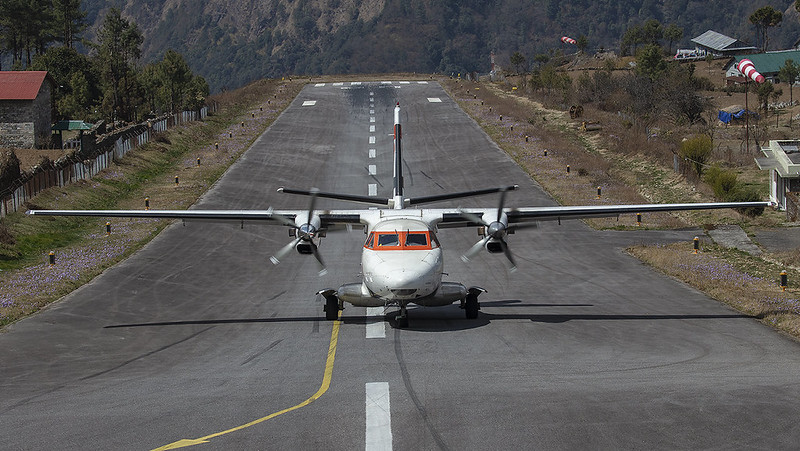
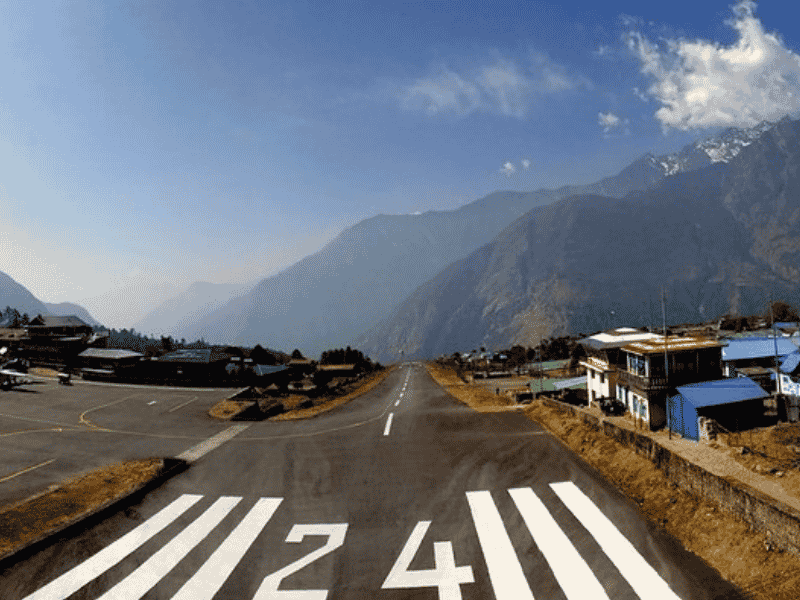
Almost every Everest Base Camp trek, whichever itinerary you choose, begins with the same 25 to 35 minute flight into Tenzing-Hillary Airport in Lukla, one of the world’s most talked-about short flights, and for good reason. The airstrip is short, sits on a hillside at 2,860 meters, and slopes uphill to help planes slow down on landing and gain speed on takeoff. What trips up first-time trekkers is not the flight itself so much as two things nobody explains clearly in advance: it often does not leave from Kathmandu at all, and weather delays are the rule rather than the exception on this route.
This guide covers what the flight actually costs in 2026, how the Ramechhap diversion works and why it exists, how delays and cancellations are handled, and how to plan around all of it without losing days from your trek. Once you know what to expect here, the rest of your planning gets easier, our Everest Base Camp Trek Itinerary guide shows exactly where this flight fits into the standard route and its variations, and our Everest Base Camp Trek Permits and Insurance Guide covers the paperwork you will want sorted before you get to the airport.
Quick Glance: What to Expect ?
- Flight time: approximately 25 to 35 minutes in the air
- One-way cost for foreign nationals: approximately $175 to $260 USD, depending on season, departure point, and airline
- Departure point: Kathmandu in the off-season, Manthali Airport in Ramechhap during peak spring and autumn months
- Airlines operating the route: Tara Air, Summit Air, and Sita Air
- Delays: common and weather-driven, not a sign anything is wrong, buffer days are the standard safeguard
- Helicopter alternative: available, typically $500 to $600 one-way per person depending on season
- Airstrip elevation: 2,860 meters, with a short, sloped runway that has no instrument landing system
What Does Lukla Flight Actually Cost in 2026 ?
| Route | One-Way Cost (Foreign Nationals) |
| Direct Kathmandu to Lukla (off-peak) | Around $215 to $260 USD |
| Ramechhap (Manthali) to Lukla (peak season) | ~$175 to $230 USD |
| Helicopter charter, one-way | ~$500 to $600 USD per person |
Prices vary slightly between Tara Air, Summit Air, and Sita Air, and between booking platforms, but stay fairly consistent across the industry within these ranges. SAARC and Nepali nationals pay significantly less, generally in the range of NPR 7,000 to 22,000 depending on nationality and role, since licensed guides and porters are charged separately from tourist fares. If your trek is being arranged through an agency, this flight cost is usually already built into your package price rather than billed separately, worth checking against our Everest Base Camp Trek Cost guide for the full budget breakdown across every category of the trek, not just the flight.
Fares also tend to climb the closer you book to your travel dates, particularly in the two peak seasons when seat availability tightens fast. Booking your Lukla flight, or your full trek package, several months ahead rather than a few weeks out generally secures both a better price and a wider choice of departure times.
Why Does This Flight Not Always Leave From Kathmandu ?
This surprises a lot of first-time trekkers who booked expecting a straightforward Kathmandu departure and only discover the Ramechhap arrangement once they are deep into pre-trip logistics, or worse, the night before departure. During the peak spring (roughly mid-March to mid-May) and autumn (late September to late November) trekking seasons, Kathmandu’s Tribhuvan International Airport gets too congested with the sheer volume of small Lukla flights layered on top of regular international traffic, all sharing a single runway.
To keep the Lukla schedule reliable during these peak windows, Nepal’s Civil Aviation Authority reroutes fixed-wing Lukla flights to depart from Manthali Airport in Ramechhap district instead, a smaller, less congested airfield roughly 130 kilometers east of Kathmandu. This has been the standard peak-season arrangement since 2019, so it is not a new, occasional, or emergency disruption, it is simply how the route runs for a large part of the trekking calendar, and treating it as an exception rather than the norm is where most planning mistakes start.
It is worth knowing this before you even book flights into Nepal, since it affects what time your trek can realistically begin and how much sleep you get the night before your first trekking day.
What the Ramechhap Diversion Actually Means for Your Trip?
If your dates fall in peak season, here is what changes compared to the straightforward Kathmandu departure most trekkers picture:
- You will need an early-morning departure from Kathmandu, typically between 1 and 3 AM, to reach Ramechhap in time for a dawn flight, since morning departures see the calmest, clearest mountain weather
- The drive from Kathmandu to Ramechhap takes 4 to 5 hours over hilly, occasionally rough roads, usually in the dark
- The Ramechhap to Lukla flight itself is shorter, around 20 to 25 minutes, and tends to run more on time than direct Kathmandu departures precisely because the airfield is quieter
- Most agencies, including ours, arrange this transport as part of your package, so this is one less logistic to sort out yourself at an hour when you would rather be asleep
- The return flight, Lukla to Ramechhap, means your trek technically ends with another 4 to 5 hour drive back into Kathmandu, worth factoring into any same-day onward international flight plans
If you are trekking with a guide or agency, this transfer is arranged for you as part of the standard service, down to the pickup time and vehicle. If you are booking independently, factor the pre-dawn departure and long road transfer into your Kathmandu accommodation plans and sleep schedule the night before, and confirm directly with your flight operator whether your specific dates fall inside the Ramechhap window before you finalize any other bookings around them.
Understanding Flight Delays
Lukla’s airstrip is short, sits on a hillside, and depends entirely on clear visibility, there is no instrument landing system to fall back on in poor weather the way larger airports have. This makes delays genuinely common, not a rare inconvenience reserved for unlucky trekkers, and it is worth planning for one from the outset rather than treating it as a worst-case scenario that surely will not happen to you.
- Morning flights are the most reliable, since mountain weather typically deteriorates through the day as cloud builds over the peaks,
- Afternoon flights carry a meaningfully higher cancellation risk due to increasing cloud cover, wind, and reduced visibility,
- Adding one or two extra days to your itinerary gives you room to handle unexpected delays without affecting the rest of your trip,
- During extended weather backlogs of several days, shared helicopter transfers are often offered as a paid alternative to clear the backlog faster, splitting the cost among stranded trekkers heading the same direction,
- Monsoon season, roughly June through early September, sees the highest disruption rates and is generally avoided for this reason, alongside visibility concerns.
This is also where proper travel insurance earns its cost. A policy with trip interruption and flight delay coverage can reimburse costs if weather pushes your return home past your planned dates, or if you need to rebook onward international flights as a result. Our Everest Base Camp Trek Permits and Insurance Guide covers exactly what to look for in a policy, including the altitude and evacuation coverage that matters even more once you are actually on the trail.
What Happens If Your Flight Is Cancelled ?
- You are typically rebooked automatically onto the next available flight if traveling with an agency, often without needing to do anything yourself beyond waiting at the airport or your hotel
- Independent travelers may face more difficulty securing a seat during high-demand periods, since seats on the next available flight fill quickly once a backlog builds
- Reschedule fees are sometimes applied by airlines directly, though agencies often absorb or avoid these entirely through direct, established airline relationships built over repeated bookings
- A multi-day backlog is rare but possible in extended poor weather, which is exactly why buffer days at the end of a trek matter far more than people expect before they experience one firsthand
- Hotels near both Kathmandu’s domestic terminal and Ramechhap’s airport cater specifically to delayed trekkers, so an unplanned overnight is inconvenient rather than a genuine crisis
The single best protection against a cancelled flight derailing your trip is simply not booking your international departure flight for the same day, or even the day immediately after, your planned Lukla return. Building in that buffer costs nothing and solves the vast majority of worst-case scenarios trekkers worry about.
Booking Flight Yourself vs Through an Agency
| Issues | Independent Booking | Booking Through an Agency |
| Rebooking | You contact the airline yourself and handle it | Your agency can communicate with the airline and help coordinate rebooking. Confirm its cancellation and rebooking policy before payment. |
| Seat priority during a backlog | Competing with every other independent traveler for the same limited seats | An agency may be able to follow up with airline contacts and coordinate options, but it cannot guarantee an earlier seat when flights are disrupted. |
| Rescheduling fees | You may be responsible for fare differences, transport changes, or other costs, depending on the airline’s rules and your ticket conditions. | Whether fees are covered, reduced, or passed on depends on the package and the agency’s written terms. |
| Updates and communication | You monitor airline staff, messages, your booking contact, and local weather/airport updates yourself. | A guide or agency may provide updates and practical advice, depending on the service level and communication arrangements. |
| Accommodation during a delay | You arrange and pay for accommodation unless your fare, insurer, or booking provider covers it. | An agency may help arrange accommodation, but whether it is included or paid for should be confirmed in advance. |
| Shared-helicopter option | You may need to locate available shared seats and agree on the cost directly, often at short notice. | An agency may help identify or coordinate a shared-helicopter option, subject to weather, aircraft availability, group size, and additional cost. |
| Itinerary impact | You may need to rearrange accommodation, guides, permits, and onward transport yourself. | An agency may help adjust guide, accommodation, and transport arrangements where possible; changes remain subject to availability and any extra costs. |
What is the Alternative to Flying to Lukla?
Walking In From Jiri or Salleri
There is no road to Lukla itself, so if you would rather not fly at all, or want a genuinely different trekking experience from the outset, the classic alternative is driving to Jiri or Salleri and walking in over five to eight extra days through lower altitude hills and traditional Sherpa and Rai villages before ever reaching the standard EBC trail. This was the original approach to Everest before Lukla’s airstrip existed in the 1960s, and it remains a meaningful option for trekkers who want to avoid flight uncertainty entirely or simply prefer a slower, more gradual approach into the mountains.
This route requires its own separate Gaurishankar Conservation Area Permit alongside the two standard EBC permits, covered in full in our Everest Base Camp Trek Permits and Insurance Guide. It also adds meaningfully to your overall trip duration, so it suits trekkers with more time available rather than those working around a fixed two-week holiday window.
Practical Tips for a Smoother Lukla Flight Experience
- Pack light and know the baggage allowance in advance, small aircraft on this route enforce strict weight limits, typically around 15 kilograms combined checked and hand luggage for trekkers
- Book morning flights whenever you have a choice, even if it means an earlier alarm, since afternoon slots carry meaningfully higher cancellation risk
- Keep valuables, medication, and a change of clothes in your hand luggage rather than checked bags, in case checked luggage is delayed onto a later flight during a backlog
- Confirm with your agency well in advance whether your specific travel dates fall inside a Ramechhap diversion window, so the early departure is not a surprise the night before
- Build at least one, ideally two, buffer days into your return schedule, and avoid booking an international departure flight on the same day you land back in Kathmandu
- Check what you are packing against our full Everest Base Camp Trek Packing List before you fly, since Kathmandu is a far easier place to sort a forgotten item than Lukla or anywhere further up the trail
What Lukla Itself Is Like ?
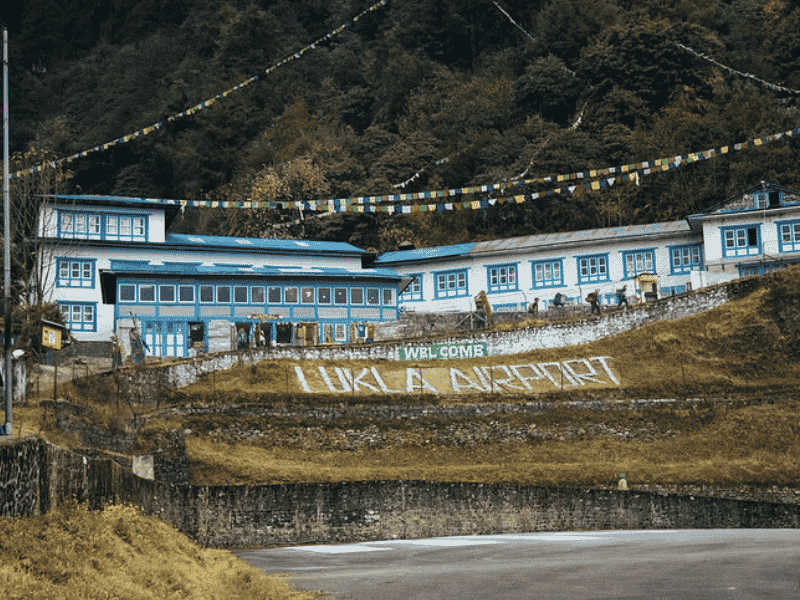
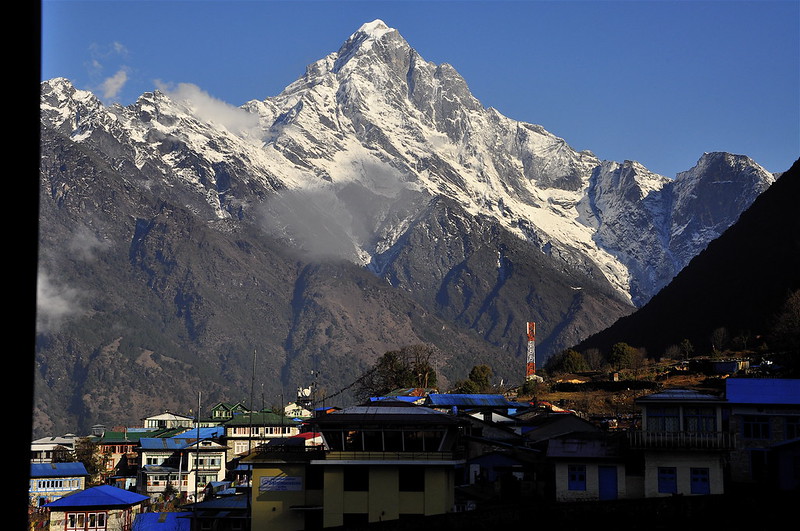
Landing in Lukla is often trekkers’ first real glimpse of the Khumbu, a small mountain town built almost entirely around the trekking economy, with guesthouses, gear shops, and the airstrip itself as the town’s central feature. Most itineraries begin walking the same day you land, heading toward Phakding rather than spending a night in Lukla, since the altitude gain to Phakding is gentle and it makes better use of the day. For a sense of what accommodation looks like once you are further up the trail, our Everest Base Camp Tea Houses & Accommodation guide covers what to expect at each stage.
Ready to Trek?
The Lukla flight, wherever it departs from, is simply the opening move of the trek, not something to over-plan around once you understand how it actually works. Book with buffer days, expect the possibility of a Ramechhap departure during peak season, pack within the weight limit, and the rest tends to sort itself out.
If you would rather have this entire logistic, along with your permits, insurance, and guide, handled for you, contact the Nepal Mountain Adventure team and we’ll take care of the flight booking, weather monitoring, and rebooking if it comes to that, so your trek starts smoothly regardless of which airport you actually fly out of.
Frequently Asked Questions
Is the Lukla flight actually safe?
Yes, daily flight operations on this route have a strong overall safety record. The vast majority of disruption comes from weather-related delays and cancellations rather than safety incidents, and airlines are conservative about flying in marginal conditions precisely because of the airstrip’s demands.
Why did my flight get moved to Ramechhap without warning?
This is standard peak-season practice, not an error or a bait-and-switch by your agency. Kathmandu’s single runway cannot handle the volume of small aircraft during high season, so authorities reroute flights to Ramechhap as a matter of course during those months, and this has been the case since 2019.
How much extra time should I budget for the Ramechhap drive?
Plan for a 1 to 3 AM pickup from Kathmandu and a 4 to 5 hour drive, meaning very little sleep the night before your flight. Most trekkers treat this as one long travel day rather than trying to rest properly beforehand, and adjust their first trekking day’s pace accordingly.
Can I avoid Ramechhap entirely?
Only by traveling outside peak season, or by chartering a helicopter directly from Kathmandu, which is considerably more expensive but does bypass the diversion entirely.
How many buffer days should I add to my itinerary for flight delays?
One to two buffer days at the end of your trek is the standard recommendation, enough to absorb a short weather delay without risking a missed international flight home.
Is the helicopter option worth the extra cost?
It depends on your priorities. It is faster, generally more reliable in marginal weather, and offers better aerial views, but costs roughly two to three times more than a fixed-wing flight. It becomes especially worth considering if your dates are tight and you cannot absorb a multi-day delay.
What is the baggage allowance on the Lukla flight?
Typically around 15 kilograms combined checked and hand baggage for trekkers, though this can vary slightly by airline. Excess baggage can usually be left safely at your Kathmandu hotel or agency office for the duration of your trek.
Do I need travel insurance specifically for the Lukla flight?
General trip interruption and flight delay coverage, part of the same policy you need for altitude and evacuation coverage on the trail itself, is worth having and can reimburse costs from a significant delay. See our Everest Base Camp Trek Permits and Insurance Guide for what a suitable policy should include.
Can solo, independent trekkers still book this flight easily?
Yes, though during peak season seats can sell out further in advance than many independent trekkers expect, and rebooking after a cancellation can take longer without an agency’s direct airline relationships working on your behalf.


