

Price, Permits, Guide, Porter and What Your Money Actually Covers
Most trekkers who book the Manaslu Circuit through a registered agency pay between USD 900 and 1,500 per person for a standard 12 to 14 day trip. Budget group departures can come in a little lower, around USD 800 to 1,000, while private and solo trips usually land between USD 1,200 and 2,200. That is a wide spread, and the reason is simple: Manaslu is a restricted area, so your price depends heavily on group size, season, the transport you choose and how much comfort you want.
This guide breaks the cost down line by line so you can see exactly where the money goes, what a package should include, what is not covered, and how to save without cutting corners on safety. All figures are estimates for the 2026 and 2027 seasons, based on what agencies are currently quoting. Exchange rates and permit fees can change, so your agency will confirm final numbers when you book.
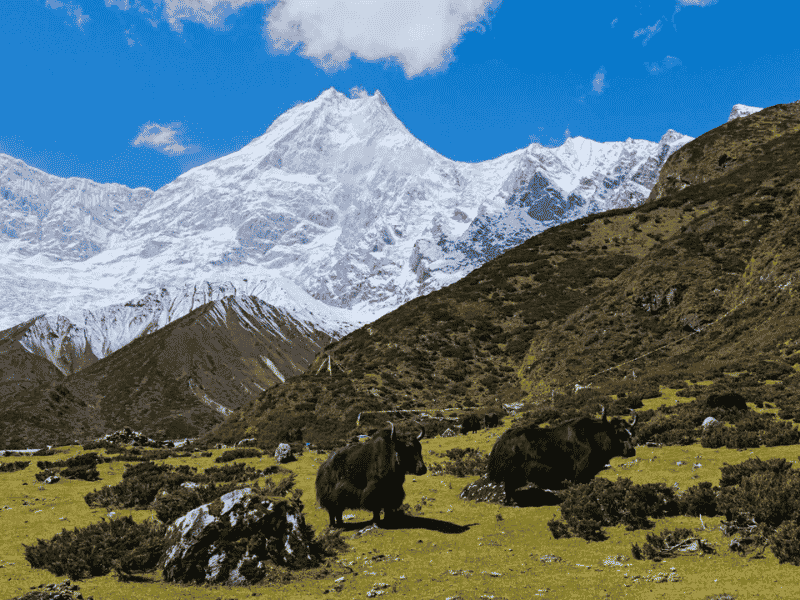
Manaslu Circuit Trek Cost at a Glance
| Trek Style | Typical Cost Per Person | What It Usually Means |
| Budget group departure | USD 900 to 1,100 | Larger group, shared guide, local bus or shared jeep, basic teahouses |
| Standard small group | USD 1,000 to 1,500 | Small group of 2 to 6, guide and porter shared, comfortable shared transport |
| Private or solo trek | USD 1,300 to 2,200 | Your own guide and schedule, private jeep, more flexibility |
| Manaslu with Tsum Valley | From about USD 1,500 to 1,900 and up | Longer trip, around 18 to 20 days, extra restricted area permit |
If you see a Manaslu package advertised far below this range, ask what has been left out. Very low prices often mean thin insurance for staff, no porter, rushed itineraries or hidden extras added later.
Choose Your Manaslu Trek
The route you select affects the number of days, the experiences included, and the cost. Here are seven options offered by Nepal Mountain Adventure; use the links to check the agency’s latest itinerary and booking details.
| Trek option | Best for | What changes from the classic route |
| Manaslu Circuit Trek | First-time visitors wanting the core circuit | The standard route through the Manaslu region and across Larkya La Pass |
| Short Manaslu Circuit Trek | Travellers with less time | A condensed schedule, check carefully how it handles acclimatization and walking days |
| Manaslu Circuit Trek with Serang Gompa Stay | Trekkers interested in a monastery stay | Adds a cultural visit and overnight experience |
| Manaslu Circuit Trek with Tibet Border Day Hike | Experienced trekkers wanting an extra high-altitude day | Adds a day hike from the Samdo area toward the Nepal-Tibet border region |
| Manaslu Circuit Trek through Pungyen Gompa | Trekkers who want a monastery side trip | Includes a route via Pungyen Gompa and time around Sama Gaun |
| Tsum Valley with Manaslu Circuit through Ganesh Himal | Trekkers seeking a longer route and added exploration | Combines Tsum Valley, the Manaslu Circuit, and a Ganesh Himal excursion |
| Manaslu Circuit with Tsum Valley | Trekkers with more time for culture and remote villages | Adds an exploration of Tsum Valley to the circuit |
What Affects the Cost of the Manaslu Circuit?
- Group size: the guide, porter and jeep costs are shared, so the more people in your group, the lower your price per person
- Number of days: every extra day adds guide wages, food, lodging and restricted area permit fees
- Season: autumn is the busiest time and the Restricted Area Permit costs more from September to November
- Transport: a local bus is cheapest, a shared jeep is the middle option, and a private jeep costs the most
- Porter or no porter: a porter adds roughly USD 250 to 350 to the trip, though it is usually split between two trekkers
- Comfort level: better lodges, extra rest days and private arrangements all raise the price
- Extras: Tsum Valley, extra Kathmandu nights, gear rental and insurance all sit on top of the base price
Full Cost Breakdown
Here is what a 14 day trek costs if you add up each part, with two trekkers sharing a guide and a porter. Packages bundle most of these into one price and often come in at the lower end, because agencies buy services in bulk.
| Expense | Rate | Estimated Cost Per Person |
| Permits (RAP, MCAP, ACAP) | Depends on season and days in the restricted area | USD 150 to 270 |
| Licensed guide (mandatory) | USD 25 to 40 per day, shared by two | USD 175 to 280 |
| Porter (optional but recommended) | USD 18 to 25 per day, shared by two | USD 125 to 175 |
| Food on the trail | USD 25 to 40 per day | USD 300 to 480 |
| Teahouse lodging | Simple twin share rooms, low cost | USD 75 to 120 |
| Ground transport, shared options | Bus or shared jeep, both directions | USD 58 to 90 |
| Travel insurance | Trekking and helicopter cover | USD 80 to 300 |
| Tips for guide and porter | USD 5 to 10 and USD 3 to 7 per day | USD 50 to 110 |
| Estimated total | ~USD 1,000 to 1,800 |
International flights, your Nepal visa, hotels in Kathmandu before and after the trek and personal spending are all extra, whether you book a package or arrange things yourself.
Permit Costs
Permits are government-set charges, but the total varies with season, the number of days in the restricted area, nationality, and the exchange rate., and they are a bigger line item here than on non restricted treks. You need a Restricted Area Permit, a Manaslu Conservation Area Permit and an Annapurna Conservation Area Permit.
| Permit | Approximate Cost |
| Manaslu Restricted Area Permit, autumn (September to November) | USD 100 for the first 7 days, then USD 15 per extra day |
| Manaslu Restricted Area Permit, other months | USD 75 for the first 7 days, then USD 10 per extra day |
| Manaslu Conservation Area Permit | About NPR 3,000, roughly USD 23 to 30 |
| Annapurna Conservation Area Permit | About NPR 3,000, roughly USD 23 to 30 |
Permit fees and exchange rates change, and sources do not always agree, so treat these as estimates. For a full explanation of the rules, the guide requirement and what changed in 2026, see our Manaslu Circuit Trek Complete Guide 2027. If you add Tsum Valley, a separate restricted area permit is needed on top of these which costs: USD 40 per person for the first week (Sept–Nov) or USD 30 (Dec–Aug), plus USD 7 per day thereafter.
(Note : A separate TIMS card may not be required for the standard Manaslu Circuit when the Department of Immigration’s restricted-area permit is used, but requirements can differ for Tsum Valley or itineraries that continue into other Annapurna routes. Ask your trekking agency to confirm the exact documents for your itinerary before booking..)
Guide and Porter Costs
A licensed guide is mandatory on the Manaslu Circuit, and permits are only issued through a registered agency. That means the guide fee is part of your cost no matter how you plan the trip.
- Licensed guide: USD 25 to 40 per day, which covers their wages, food, lodging, transport and insurance
- Porter: USD 18 to 25 per day, with one porter usually carrying the bags of two trekkers, up to about 20 kg combined
- Tips: customary at USD 5 to 10 per day for the guide and USD 3 to 7 per day for the porter, given at the end of the trek
Since March 2026, a solo traveler can apply for the restricted permit without a second person, but still has to walk with a guide. This is why solo and private trips cost more per person: you carry the full guide and jeep cost by yourself instead of splitting it with a group.
Food and Accomodation Costs
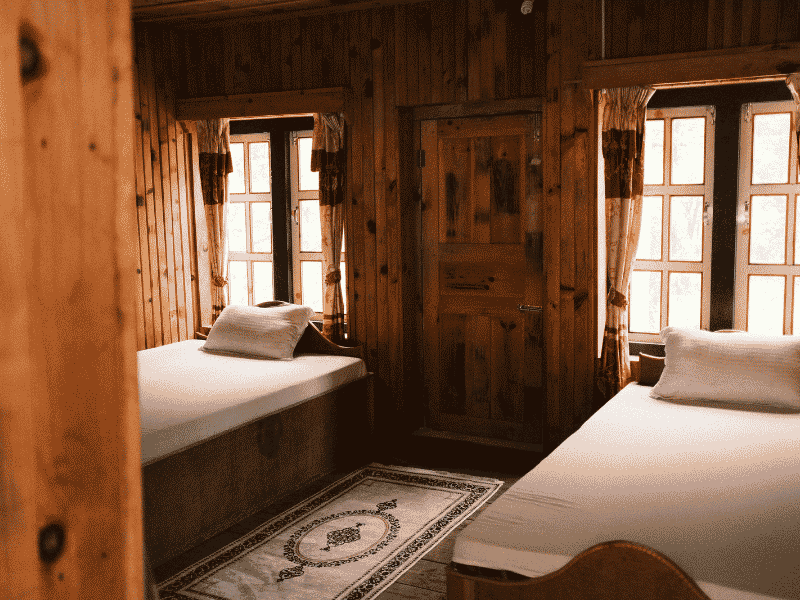
Teahouse rooms on the Manaslu Circuit are very affordable, often only a few dollars per night, and many lodges give a cheaper room rate if you eat your meals there. The real spending is on food, which gets more expensive the higher you climb because everything is carried in on foot or by mule.
- Meals: USD 25 to 40 per day for three meals, with dal bhat the best value and often with free refills
- Rooms: simple twin share rooms with shared bathrooms, cheap at lower altitudes and slightly higher at the top
- Paid extras: hot showers, device charging and wifi are all charged separately and cost more at altitude
- Drinks and snacks: tea, soft drinks, chocolate and bottled water add up quickly, so bring purification tablets and a few snacks from Kathmandu
Transport Costs
Roads now reach Machha Khola, and the trek ends at Dharapani, so you need transport at both ends. The option you choose changes your total by a surprising amount.
| Route | Local Bus | Shared Jeep | Private Jeep |
| Kathmandu to Machha Khola | USD 10 to 20 | USD 40 to 50 | USD 180 to 250 one way, split among the group |
| Dharapani to Besisahar | Limited | USD 15 to 20 | Depends on the group |
| Besisahar to Kathmandu | USD 8 to 12 | Higher than bus | Depends on the group |
Local buses are the cheapest, but the journey is long, crowded and rough. Many trekkers spend a bit more on a shared or private jeep to arrive in better shape for day one.
How Does the Season Change Your Price ?
The same trek can cost noticeably different amounts depending on when you go, mostly because of the restricted area permit and demand for guides and lodges.
| Season | Effect on Cost | Things to Know |
| Autumn (September to November) | Highest. Permit is USD 100 for the first 7 days, and demand is strong | Best weather and views, so book early for better group prices |
| Spring (March to May) | Slightly lower. Permit is USD 75 for the first 7 days | Good conditions, warm days, a very popular alternative to autumn |
| Winter (December to February) | Lower, with fewer groups | Cold, with snow risk on Larkya La and some lodges closed |
| Monsoon (June to August) | Lowest, but rarely recommended | Wet trails, landslides and poor views |
For most trekkers, spring offers the best balance of fair prices and good weather, while autumn is worth the extra cost if clear mountain views are your top priority.
How Much Cash Should You Carry?
There are no ATMs along the trail, so plan your cash before you leave Kathmandu. If your package covers meals, lodging, permits and transport, you only need cash for personal spending: drinks, snacks, hot showers, charging, wifi and tips. If food is not included, add USD 25 to 40 per day on top of that.
- Carry Nepali rupees in small notes, since change is hard to find in remote villages
- Keep tip money separate and ready for the end of the trek
- Add a small buffer for weather delays, which can mean an extra night or two
- Keep your cash in a waterproof pouch inside your daypack
What Is Usually Included and Not Included ?
Typically Included in a Package
- All required permits and trekking permit paperwork
- A licensed trekking guide and, usually, a porter for every two trekkers
- Teahouse accommodation and three meals a day during the trek
- Ground transport between Kathmandu and the trailheads
- Staff wages, food, lodging and insurance for your crew
- Airport pickup and drop, and often a hotel night in Kathmandu
Typically Not Included
- International flights and your Nepal visa
- Travel insurance, which you must arrange yourself and which must cover high altitude and helicopter evacuation
- Tips for the guide and porter
- Hot showers, charging, wifi, drinks and snacks
- Gear rental or purchase
- Extra nights in Kathmandu, or extra days caused by weather or road delays
On insurance, a good policy matters more on Manaslu than on busier routes, since you are further from help.
Sample Budgets: Budget, Standard and Comfort
| Budget | Standard | Comfort | |
| Typical total per person | USD 900 to 1,100 | USD 1,300 to 1,500 | USD 1,500 to 2,200 |
| Group setup | Larger group departure | Small group of 2 to 6 | Private or solo |
| Transport | Local bus or shared jeep | Shared jeep | Private jeep |
| Porter | Shared between two | Shared between two | Dedicated porter |
| Schedule | Fixed 12 to 13 days | 13 to 14 days with rest day | 14 to 16 days, flexible pace |
| Best for | Tight budgets, social trekkers | Most trekkers | Solo travelers, those wanting flexibility |
How to Save Money Without Cutting Safety?
- Join a group departure: sharing the guide, porter and jeep is the single biggest saving
- Travel in spring or late autumn: the restricted permit costs less outside September to November, and lodges are less crowded
- Share a porter with a friend: one porter can carry the bags of two trekkers
- Rent bulky gear in Kathmandu: a sleeping bag and down jacket cost far less to rent than to buy
- Bring purification tablets and snacks: water and chocolate bars get expensive with altitude
Our Nepal Trek Packing List has a clear breakdown of what to buy, rent or skip, and most of it applies to Manaslu too. Just as important is what not to save on: your guide’s quality, your insurance, and your acclimatization days. Skipping any of these to save a little money is how small savings turn into very expensive problems.
How Manaslu Compares With Other Treks on Cost
Manaslu usually costs a bit more than easier, unrestricted treks because of the restricted area permit and the mandatory guide. Compared with Everest Base Camp, it often works out cheaper in total, since there are no Lukla flights and teahouse prices are lower. If you are weighing the two, our Everest Base Camp Trek Cost guide gives the full breakdown for the Everest side.
Ready to Plan Your Manaslu Budget?
The cost of the Manaslu Circuit is easier to plan than it first looks. Expect roughly USD 1,000 to 1,500 for a standard group trip, more for private trips, and a little less for budget group departures. Add insurance, tips and extras on top, and keep a small buffer for weather delays.
If you would like a clear, itemized quote with permits, guide, porter and transport included, contact the Nepal Mountain Adventure team and tell us your dates and group size. You can also see what is included in our Manaslu Circuit Trek package.
Frequently Asked Questions
How much does the Manaslu Circuit Trek cost in 2027?
A standard group package usually costs USD 1,000 to 1,500 per person. Budget group departures can be a little cheaper, and private or solo trips usually run from about USD 1,200 to 2,200.
What is the cheapest way to do the Manaslu Circuit?
Join a group departure in spring or late autumn, share a porter, and use a local bus or shared jeep. This can bring the total close to USD 800 to 1,000.
Is a guide included in the cost?
Yes. A licensed guide is mandatory in the Manaslu restricted area, so the guide fee, usually USD 25 to 40 per day, is part of every package.
How much does a porter cost?
Between USD 18 and 25 per day, with one porter usually carrying the bags of two trekkers. That works out to roughly USD 125 to 175 each over a full trek.
How much are the Manaslu permits?
The Restricted Area Permit is USD 100 for the first 7 days in autumn (USD 75 in other months), plus a daily fee after that. The Manaslu and Annapurna conservation permits are each about NPR 3,000. Together, permits usually add up to USD 150 to 270.
Why does a solo trek cost more?
Even though solo travelers can now apply for the restricted permit without a second trekker, a guide is still required. You pay the full guide, porter and transport cost yourself instead of sharing it with a group.
How much should I tip my guide and porter?
A common range is USD 5 to 10 per day for the guide and USD 3 to 7 per day for the porter, given at the end of the trek.
How much does food cost on the trek?
About USD 25 to 40 per day for three meals, with prices rising as you go higher. If food is included in your package, you will not pay this separately.
Does the cost include travel insurance?
Usually not. You need to arrange a policy that covers trekking at high altitude and helicopter evacuation. Staff insurance is normally included, but yours is not.
Is Manaslu cheaper than Everest Base Camp?
It often works out cheaper overall, since there are no Lukla flights and teahouse prices are lower. The restricted area permit and mandatory guide keep it above the cheapest treks in Nepal.
How much does it cost to add Tsum Valley?
Tsum Valley adds several days, an extra restricted area permit and more guide and lodging costs. Packages that include it typically start from around USD 1,500 to 1,900, depending on length and group size.
Can I save money by trekking without a guide?
No. A licensed guide is legally required in the Manaslu restricted area, and permits are only issued through a registered agency, so there is no independent option to save money.
Are there extra costs I should plan for?
Yes. International flights, your visa, Kathmandu hotel nights, travel insurance, tips, hot showers, charging, wifi, snacks, gear rental and any extra days caused by weather or road delays are not usually included.


