

Ten years ago, planning a trek in Nepal meant buying a guidebook and calling a travel agent. Today, it means scrolling through Instagram, watching YouTube vlogs, and asking questions in Facebook groups.
Everything changed. Not just how people book treks, but why they come, what they expect, and how they share their experiences.
This is the story of that transformation. We’ll look at what happened before social media took over. We’ll explore how each platform changed things. And we’ll examine where Nepal tourism stands today.
No complicated statistics. Just the real story of how digital platforms transformed an entire industry.

Nepal Tourism Before the Digital Era: Traditional Travel Planning
Let me paint you a picture of 2010-2014.
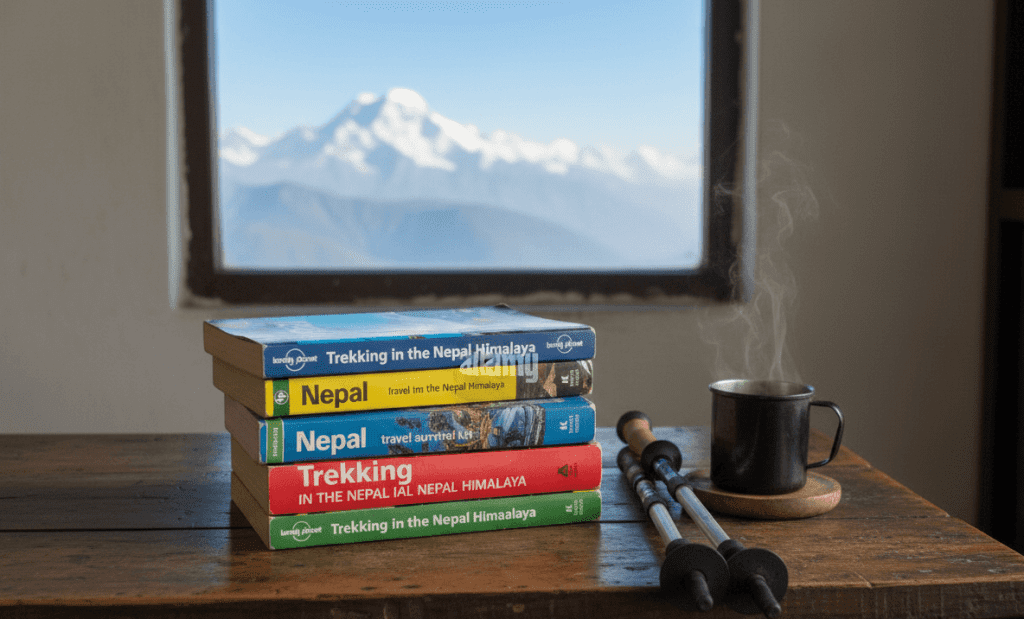
If you wanted to trek to Everest Base Camp, you started by going to a bookstore. You bought a Lonely Planet guidebook. The book was probably printed two years earlier, but it was your main information source. You read about the trail, the lodges, the villages, and the cultural sites.
When you got back from your trek, you may have uploaded a few photos to Facebook. You told your friends about it in person. Maybe you wrote a review on TripAdvisor. That was it. Your beautiful experience reached maybe 50-100 people maximum.
Traditional Booking Methods for Nepal Tourism
Next, you either called a travel agent in your home country or searched online for tour operators. You sent emails. You waited days for responses. You compared prices on basic websites that looked like they were designed in 1999. Eventually, you chose a company and paid a deposit, usually through bank transfer.
Nepal tourism operated through these traditional channels exclusively. Companies relied on word-of-mouth, travel agent partnerships, and basic websites that rarely ranked well on Google. There was no easy way to verify company credibility or read recent traveler reviews.
The whole process took weeks or months. You trusted the guidebook for trail information. You trusted the travel agent for company recommendations. You had very little direct contact with anyone in Nepal until you arrived.
Limited Trek Options Before Digital Discovery
Most trekkers chose from four main routes: Everest Base Camp, Annapurna Circuit, Annapurna Base Camp, or Langtang Valley. These were the routes in the guidebooks. Other trails existed, but if they weren’t documented in Lonely Planet, most international trekkers didn’t know about them.
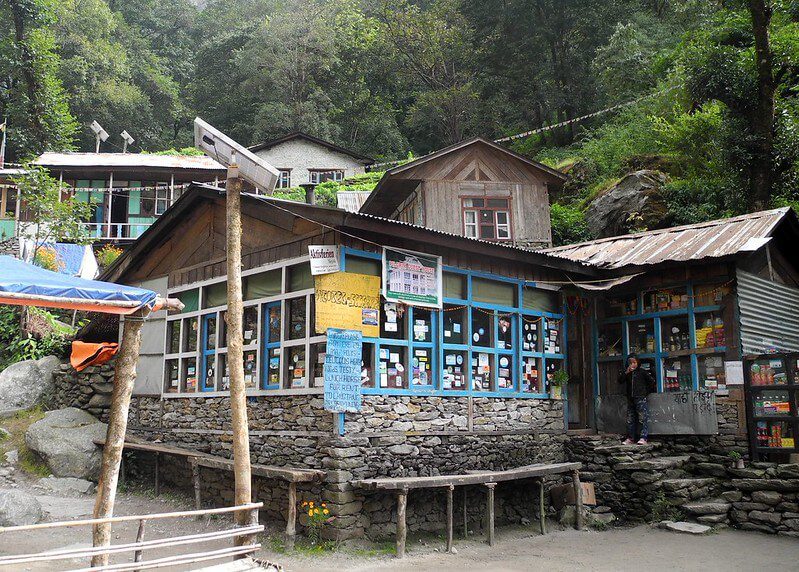
Lodges were simple. Really simple. You got a basic room with a bed and a blanket. Sometimes the room was free if you ate meals at the lodge. A room might cost two or three dollars if you paid. The meals were cheap. WiFi barely existed above certain altitudes. You couldn’t charge your phone in most places, or if you could, it was free.
The tourism industry grew slowly and steadily. Nepal was a special destination for serious trekkers and adventure travelers. It wasn’t for everyone. It took commitment to plan a trip there.
Then 2015 brought the devastating earthquake. Nepal tourism collapsed. The industry faced its worst crisis in decades. But even as Nepal recovered from the earthquake, something else was quietly changing the foundation of how tourism worked.
Social media was growing up. And traditional search engines and review platforms like Google and TripAdvisor were about to revolutionize Nepal tourism forever.
Facebook’s Impact on Nepal Tourism Growth: 2014-2017
Facebook groups started appearing around 2014. Groups like “Nepal Trekking Community” and “Everest Base Camp Trekkers” began attracting members. These weren’t official tourism groups. They were communities of real people who had trekked or wanted to trek.
This changed the game completely.
Suddenly, you could ask questions and get answers from someone who had just finished the trek last week. You could see photos that were posted yesterday, not two years ago when the guidebook was printed. You could read honest reviews from real trekkers who had nothing to sell you.
The trust factor was different. When a random person who had just completed Annapurna Circuit told you which lodges were good and which guide was helpful, you believed them. This felt more real than any brochure or official website.
How Nepal Tourism Companies Competed Through Facebook
The impact on small Nepal companies was huge. Before Facebook, a one-person trekking company in Kathmandu couldn’t compete with big international operators. They didn’t have marketing budgets. They didn’t have relationships with foreign travel agents. They couldn’t afford advertising.
Facebook leveled everything. A small company run by a former guide could join Facebook groups and answer questions. If they were helpful and honest, people trusted them. If their clients had good experiences and posted about it in the groups, the company’s reputation grew. No marketing budget needed. Just good service and genuine helpfulness.
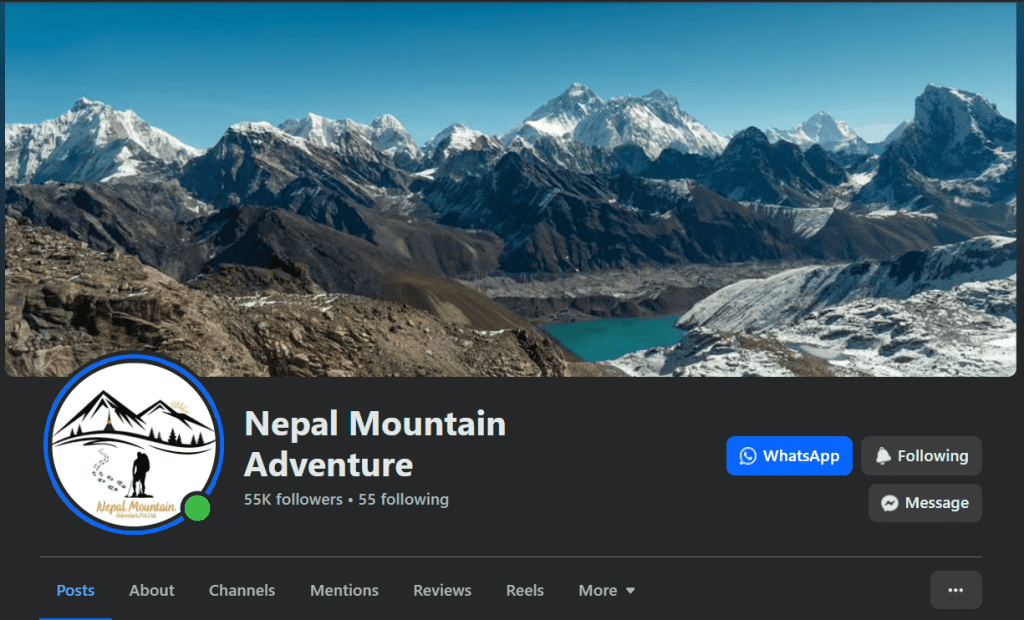
Meanwhile, Google Search was also transforming Nepal tourism. Companies that invested in basic SEO-optimized websites started appearing in search results when people typed “Nepal trekking” or “Everest Base Camp tour.” Suddenly, a well-designed website with good content could compete with established brands. Companies like Nepal Mountain Adventure began building online presence through both social media engagement and search engine visibility, creating a dual pathway for travelers to discover them.
Google Search and TripAdvisor Enter Nepal Tourism Market
Booking patterns shifted. People stopped automatically using travel agents in their home countries. Instead, they researched in Facebook groups, contacted companies directly through Messenger, and booked trips through email or WhatsApp. This meant lower prices because there were no agent commissions. It meant more flexible itineraries because you were talking directly to the people who would organize your trek.
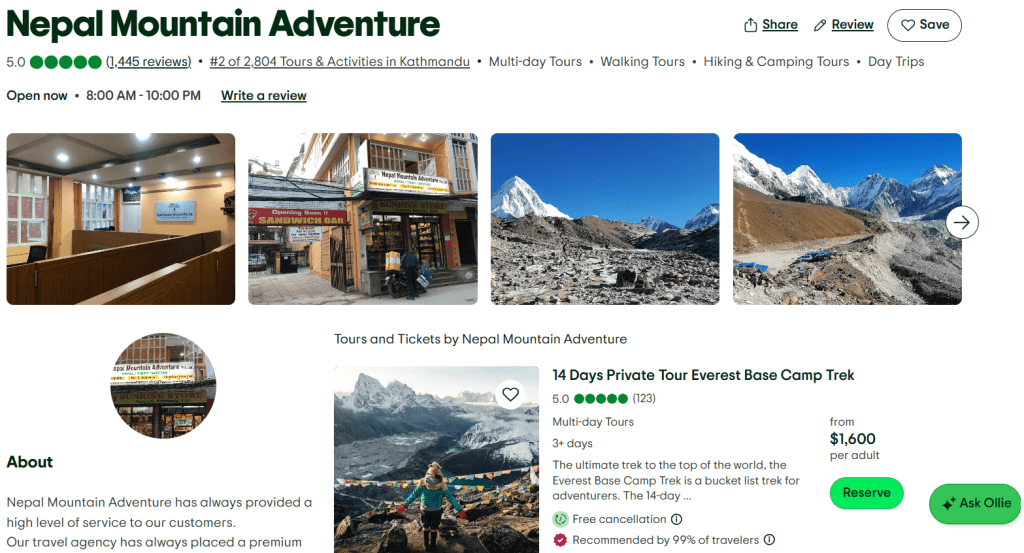
At the same time, TripAdvisor emerged as a crucial platform for Nepal tourism. Travelers started leaving detailed reviews of their experiences. Companies with consistently positive TripAdvisor ratings gained credibility. Smart operators encouraged satisfied clients to leave reviews, building trust with future travelers who were researching Nepal tourism options online.
The Earthquake Recovery and Facebook’s Role in Nepal Tourism
Tourism grew rapidly during these years. Nepal recovered from the earthquake faster than anyone expected. Part of that recovery was powered by Facebook. The platform spread the word that Nepal was safe again. It showed beautiful photos of mountains and smiling trekkers. It created trust and awareness much faster than traditional marketing ever could.
Revenue grew even faster than visitor numbers. This meant people weren’t just coming to Nepal in bigger numbers. They were staying longer and spending more. They were better informed about their options, so they chose experiences they actually wanted rather than whatever the travel agent sold them.
Facebook also changed what kind of information people valued. Guidebooks told you logistics: trail distances, altitude gains, permit requirements. Facebook groups told you experiences: which lodges had the friendliest owners, which viewpoints were worth the extra climb, which guides told amazing stories around the dinner table.
This experiential knowledge couldn’t be published in books. It only lived in community conversations. And Facebook groups became the place where this knowledge was shared, accumulated, and passed on to the next wave of trekkers planning their Nepal tourism adventures.
By 2017, Facebook had fundamentally restructured Nepal tourism. The barrier to entry was lower. Information was free and current. Small operators could compete with big ones. And trekkers arrived in Nepal better prepared and more excited than ever before.
But Facebook was just the beginning.
Instagram’s Role in Marketing Nepal Tourism: 2017-2020
Visual Storytelling Makes Nepal Tourism Irresistible
Then Instagram came along and changed everything again. But differently.
If Facebook made Nepal accessible and trustworthy through information, Instagram made Nepal irresistible through emotion.
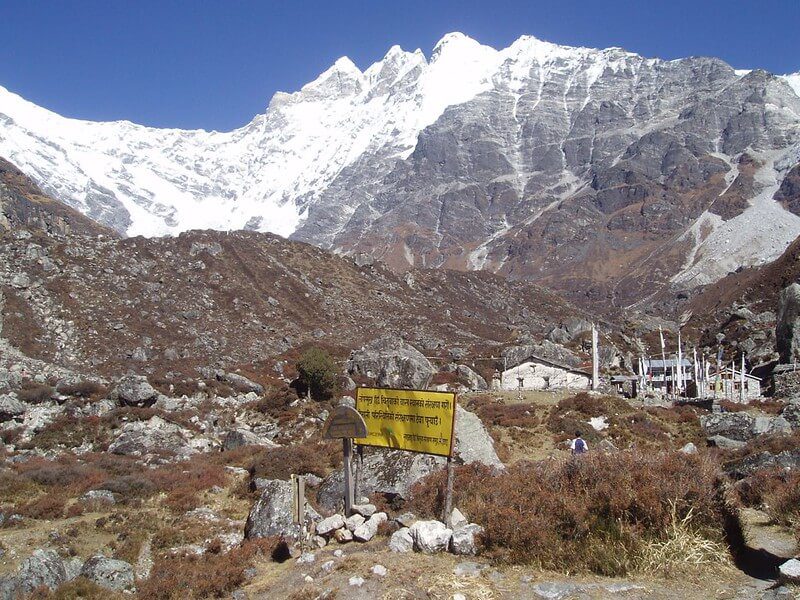
Instagram is a visual platform. It’s about beautiful images. Stunning landscapes. Moments that take your breath away. When people started posting photos from Nepal’s mountains, sunrise over Everest, colorful prayer flags against blue sky, dramatic mountain faces, the effect was powerful.
Nepal tourism stopped being just a trekking destination. It became a dream. A bucket-list must-do. Something you saw on your Instagram feed at midnight and immediately started googling flights for.
Instagram created desire in a way Facebook’s text-heavy groups never could. A single beautiful photo could inspire ten people to start planning trips. Those ten people would eventually post their own photos, inspiring fifty more people. The multiplication effect was enormous for Nepal tourism growth.
How Instagram Discovered Hidden Nepal Tourism Trails
Hashtags exploded. People searching #Nepal or #EverestBaseCamp found thousands of stunning images. Each image was a little advertisement for Nepal tourism. Each post said “look how incredible this place is, you should go there too.”
During this period, websites became increasingly important for converting that Instagram inspiration into actual bookings. When someone saw a beautiful Nepal tourism photo on Instagram, they’d Google “Nepal trekking companies” and land on company websites. Operators who had invested in professional websites with clear information, pricing, and online booking systems captured these interested travelers. Nepal Mountain Adventure and similar companies optimized their websites to appear in Google searches, ensuring that when Instagram created desire, their websites could fulfill it.
The good part was that Instagram discovered hidden trails. Before Instagram, almost everyone did the same four treks. Why? Because those were the only ones in the guidebooks and the only ones travel agents knew about.
Instagram changed this. Someone posted photos from Mardi Himal, a trek most foreigners had never heard of. The images were stunning, close-up views of Machapuchare (Fishtail Mountain), dramatic ridges, and intimate high camps. People saw those photos and wanted to go there. Within a few years, Mardi Himal went from virtually unknown to one of the most popular alternative treks.
The same thing happened with Pikey Peak, Khopra Danda, and other trails. Instagram gave them visibility. Suddenly there were ten or fifteen viable trekking options instead of four. This spread tourism out geographically. It brought income to communities that had never seen many foreign visitors. It gave trekkers more choices.
Instagram also empowered local guides in amazing ways. Smart guides started posting photos during their treks. Mountain views, cultural moments, happy clients, beautiful sunrises. Some guides built followings of thousands of people. They became recognized personalities. People wanted to trek specifically with them.
Tourism grew significantly during the Instagram years. More people came. They stayed longer. They spent more money. Mountain communities saw real economic benefits. New lodges were built. Trails were improved. Safety infrastructure got better. Guide and porter wages increased.

Websites and Booking Platforms Join Nepal Tourism Ecosystem
While Instagram was creating visual desire for Nepal tourism, a parallel digital revolution was happening through websites and booking platforms.
Nepal tourism companies began investing in professional websites with proper SEO optimization. These weren’t the basic 1999-style websites anymore. They featured detailed trek itineraries, transparent pricing, high-quality photos, customer testimonials, and most importantly, online booking systems.
When travelers Googled “Nepal trekking companies” or “Everest Base Camp tour,” these optimized websites started appearing in search results. Companies like Nepal Mountain Adventure built comprehensive websites that answered every question a potential trekker might have. This visibility in Google searches became crucial for converting interest into actual bookings.
Booking Platforms Enter the Market
Simultaneously, international booking platforms like Booking.com, TripAdvisor, etc entered the Nepal tourism market. These platforms brought instant credibility and trust. Travelers could now find and book accommodations in Kathmandu, Pokhara, and even some trekking lodges through the same familiar platforms they used for hotels worldwide.
The advantage was security and reliability. Booking platforms offered verified reviews, secure payment systems, cancellation policies, and customer support. For travelers nervous about booking with unknown Nepal tourism companies, these platforms provided peace of mind.
Here’s how it worked together: Social media created awareness. But when someone was ready to book, they turned to Google. They searched for companies, read reviews on TripAdvisor, visited company websites to see detailed information, and either booked directly through the website or through a trusted platform like Booking.com.
This ecosystem grew Nepal tourism revenue significantly. Companies with strong website presence and booking platform listings captured the majority of business. Those relying only on social media or outdated websites struggled to convert interest into confirmed bookings.
The Challenges: Overcrowding and Rising Nepal Tourism Costs
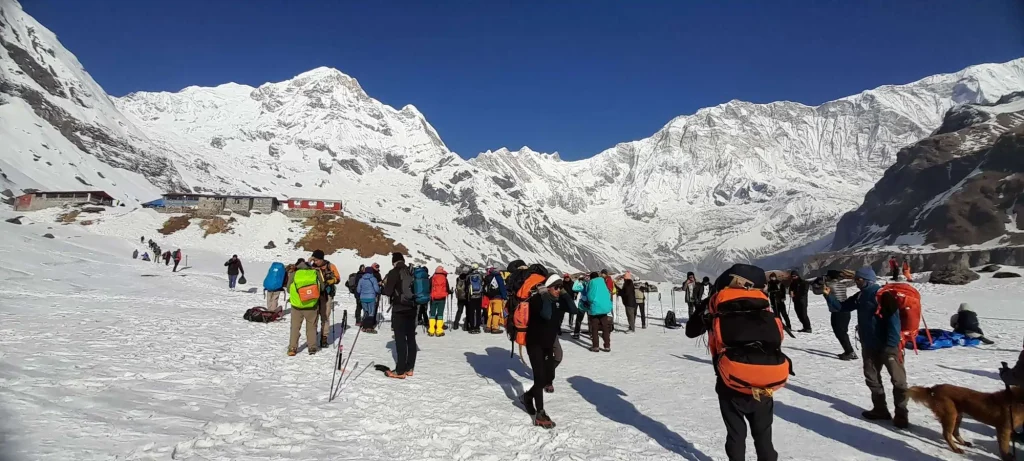
But Instagram also created problems.The biggest issue was overcrowding at specific “Instagram spots.” Everyone wanted the same photo. The sunrise from Poon Hill with the Annapurna range behind you. The sign at Everest Base Camp. The prayer flags at certain viewpoints. These places became extremely crowded.
During peak season, hundreds of people would gather at Poon Hill for sunrise. Everyone had their phones out. Everyone wanted their moment. What used to be a peaceful mountain experience became more like a concert or a stadium event. The view was still beautiful, but the experience was completely different.
Prices Started increasing gradually with increase in facilities .. This happened for a few reasons. Demand went way up while supply couldn’t grow as fast, there are only so many lodge locations on a mountain trail. Lodge owners invested in better facilities because Instagram showed trekkers what was possible. People saw photos of lodges with hot showers, WiFi, and comfortable dining rooms. They expected the same.
Installing satellite WiFi in a mountain lodge costs serious money. Adding hot water systems requires investment. Building better toilets and rooms requires capital. Lodge owners made these improvements to compete, and they needed to charge more to cover the costs and make a profit.
A room that cost three dollars in 2015 might cost ten dollars by 2020. A meal that cost two dollars became seven or eight dollars. WiFi that was free or cheap became one to two dollars per day. Charging your devices, which used to be free, became a paid service.
For trekkers on tight budgets, this was challenging. For the industry overall, it meant tourism was becoming more profitable but also more expensive to access.
Environmental concerns also increased. More trekkers meant more impact. More plastic bottles. More waste. More strain on water sources. More erosion on trails. Instagram brought awareness to these problems through viral photos of trash on Everest, which created pressure for better environmental management. But the pressure itself came from having more people on the mountains.
Instagram also changed why people trekked. Before, trekking was about personal challenge, cultural experience, and connecting with nature. Those motivations still existed, but Instagram added a new one: content creation. People wanted Instagram-worthy photos. They wanted to prove they’d done it. They wanted content for their feeds.
This isn’t necessarily bad. But it changed the atmosphere. Instead of everyone sitting quietly watching the sunrise, everyone was positioning themselves for the perfect photo. Instead of being present in the moment, people were thinking about how to capture and share it.
By 2020, right before COVID hit, Nepal tourism was at all-time highs. Instagram had made Nepal one of the most photographed mountain destinations on Earth. The industry was booming. New lodges were under construction everywhere. Guides were booked solid for entire seasons. And the integration of social media, Google search, and booking platforms had created a seamless digital ecosystem for discovering and booking Nepal tourism experiences.
Then the pandemic shut everything down overnight.

Social Media’s Role in Nepal Tourism During COVID-19
The Complete Shutdown of Nepal Tourism in 2020
March 2020 was devastating for Nepal tourism.
Nepal closed its borders. International flights stopped. Trekkers who were on the trails were evacuated. Everyone with bookings got cancellations. The Nepal tourism industry went from record success to complete shutdown in days.
The economic impact was total. Guides had zero income. Porters had no work. Lodges had no guests. Tour operators had no bookings. Thousands of families who depended on tourism income suddenly had nothing.
This was worse than the 2015 earthquake in some ways. The earthquake destroyed infrastructure, but recovery began within months. COVID kept borders closed for over a year with no clear timeline for when tourism could restart. The uncertainty was crushing.
How Digital Presence Saved Nepal Tourism Companies
But social media became a lifeline. Not financially, there was no money coming in. But as a connection to the future.
Nepal tourism companies couldn’t make money, but they couldn’t go completely silent either. If they disappeared from social media for a year or two, people would forget about them. When tourism eventually restarted, they’d be invisible on Google search results too, search engines favor recently updated, active websites.
So companies kept posting on Instagram and Facebook. They shared archive photos from previous treks. They posted cultural content about Nepal. They gave updates about mountain conditions. They maintained relationships with past clients. They built a community with people who wanted to trek in the future. Companies like Nepal Mountain Adventure maintained active blogs and social media presence, ensuring their websites remained visible in Google searches even without active bookings.
Some companies got creative. They offered virtual experiences like Zoom calls with guides, online cooking classes for Nepali food, virtual tours of Kathmandu. These didn’t generate much money, but they kept the company visible and maintained connections.
The messaging was important too. Companies that stayed positive and hopeful did better than those that seemed desperate or gave up. People responded to content that said “we’re here, we’re ready, and when you can travel again, we’ll make it amazing.”
Domestic Nepal Tourism Emerges During Pandemic
Something unexpected happened during COVID: domestic tourism emerged in Nepal.
Before the pandemic, very few Nepali citizens trekked for leisure. Trekking was what foreigners did, or what guides and porters did for work. Middle-class Nepalis rarely went trekking as a recreational activity.
But during COVID, international borders were closed. Nepalis couldn’t travel abroad. They looked for local adventures. Social media played a big role. Facebook groups and Instagram accounts in Nepali language started promoting trekking to Nepali audiences. They showed that trekking wasn’t just for foreigners, it was for everyone.
Trails near Kathmandu and Pokhara saw Nepali families and young people on weekend treks. Shorter routes became popular. This didn’t replace international tourism economically, but it created a new market that hadn’t existed before. It kept some guides and lodges in business. And it built trekking culture within Nepal itself.
The companies that maintained strong social media presence during COVID had a huge advantage when borders reopened. They had stayed visible. They had maintained relationships. When travel became possible again, they were the first companies people thought of. Their websites still ranked well on Google because they’d been regularly updated with fresh content.
Companies that went silent struggled. They had to rebuild awareness from scratch. They had lost momentum. Their social media algorithms had stopped favoring them because they hadn’t been active. Their Google rankings had dropped because their websites became stale.
COVID proved that digital presence wasn’t just a marketing tool. It was a relationship maintenance system. It was insurance against disruption. It was the bridge between the past and the future of Nepal tourism.

Nepal Tourism Recovery Through Digital Channels: 2022-2023
When Nepal fully reopened in 2022, the response was explosive.
People had waited two years to travel. They were tired of being stuck at home. They had built-up desire and savings. And social media had kept Nepal at the top of their bucket lists. All those Instagram posts they’d been seeing for two years, they were ready to experience them themselves.
The industry called it “revenge travel.” People making up for lost time with bigger, better trips.
Nepal tourism recovery happened incredibly fast. Much faster than global averages. Nepal bounced back to near pre-pandemic levels within two years, while many destinations took much longer.
Why did Nepal tourism recover so quickly? Social media maintained awareness during the lockdown. Nepal never disappeared from people’s feeds. Trekking companies, guides, travel bloggers, everyone kept posting content. When travel restrictions were lifted, there was a backlog of desire ready to convert into bookings.
Additionally, websites and Google search played crucial roles. People who had been dreaming about Nepal tourism during the lockdown immediately started searching “Nepal trekking 2022” and “is Nepal open for tourism.” Companies with updated websites that clearly communicated reopening information captured these eager travelers. Booking platforms quickly reinstated Nepal tourism options, making it easy for travelers to find and book accommodations.
The Multi-Platform Booking Journey for Nepal Tourism
The tourists who came back were different in some ways. They were less price-sensitive. After waiting two years, they cared more about experience quality than saving money. They booked longer treks. They chose better accommodations when available. They were willing to pay for premium experiences.
Booking patterns changed permanently. People started booking on shorter timelines. Before COVID, booking six to twelve months ahead was normal. After COVID, people booked four to eight weeks out. Everyone wanted flexibility in case restrictions changed again.
This shorter booking timeline actually helped smaller operators. They could fill trips closer to departure. They didn’t need to maintain expensive booking systems for reservations a year in advance. Direct website bookings and WhatsApp communication became standard.
Social media use for trip planning intensified. Almost everyone planning a Nepal tourism trip used Instagram, Facebook, or YouTube. The platforms became essential for research. But equally important was Google. The typical journey started with a Google search for “best Nepal treks” or “Nepal tour operators,” followed by reading reviews on TripAdvisor and Google Reviews, then checking Instagram for inspiration, and finally booking through company websites or platforms like Booking.com.
TikTok’s Impact on Young Nepal Tourism Demographics
TikTok emerged as a surprising new player during this period. The platform had existed before, but during and after COVID, it exploded for travel content.
TikTok brought a younger demographic to Nepal trekking. Short videos lasting about fifteen to sixty seconds went viral regularly. Someone would post a quick trek highlight video, it would get a million views, and suddenly people in their early twenties were googling how to trek in Nepal.
The content on TikTok was different from Instagram. Instagram was polished and beautiful. TikTok was raw and authentic. People posted themselves looking exhausted at high altitude. They showed the difficult moments, not just the perfect sunrises. Somehow this authenticity made trekking more appealing, not less.
TikTok also worked differently than other platforms. Content could go viral even from accounts with few followers. A random person could post a trek video that reached millions. This democratized visibility in ways Instagram’s algorithm didn’t allow anymore.
Young people discovered Nepal through TikTok challenges, trending sounds, and viral moments. They arrived in Nepal ready for adventure, with realistic expectations about the difficulty, and excited to create their own content.
The combination of Facebook for planning, Instagram for inspiration, YouTube for detailed research, and TikTok for viral moments created a complete social media ecosystem around Nepal trekking. Each platform served a different purpose. Together, they formed the primary way most people discovered Nepal tourism opportunities. But the complete journey always involved Google searches, website visits, and review checking before final bookings.
Companies adapted by becoming multi-platform. The successful operators maintained active presence on all four social platforms, created different content for each, AND maintained professional websites optimized for Google search. Facebook got detailed information and community discussion. Instagram got beautiful photos and reels. YouTube got longer vlogs and guides. TikTok got short, authentic moments. And their websites got comprehensive information, SEO optimization, and online booking systems.
Tourism companies became sophisticated digital marketers by necessity. They learned content calendars, paid advertising, analytics, and influencer partnerships. The pandemic had forced them to become experts in digital platforms. The ones who adapted thrived in the recovery.
By 2023, Nepal tourism had essentially recovered to pre-pandemic levels. The industry looked different, more digital, more diverse in terms of trek choices, younger in demographics, but it was back and growing.
The Current State of Nepal Tourism: 2024-2025
Today, Nepal tourism operates through a mix of digital channels, each playing a distinct role.
If you’re planning a Nepal tourism adventure right now, here’s probably what you’re doing. You might have seen photos on Instagram that sparked your initial interest. Then you searched Google for “Nepal trekking companies” or “Everest Base Camp trek” and found company websites, TripAdvisor reviews, and comparison sites. You checked Booking.com or similar platforms to see accommodation options and reviews. You watched YouTube vlogs to understand the actual experience. You might have joined Facebook groups to ask specific questions from real trekkers.
Google’s Central Role in Nepal Tourism Research
The booking journey typically involves multiple platforms. Social media creates awareness and inspiration on Instagram and TikTok shows you why Nepal tourism is beautiful. But the actual research and booking often happens elsewhere. Google remains the primary search tool for Nepal tourism planning. When you want information, you Google it. That search leads you to company websites, blogs, travel forums, and review sites.
This is crucial to understand: while social media inspires the dream, Google search is where the practical planning begins. Every day, thousands of people search terms like “best time to trek Nepal,” “Nepal trekking cost,” “Everest Base Camp difficulty,” and “reliable Nepal tour operators.” The companies that rank well for these searches capture the majority of bookings.
Review Platforms as Nepal Tourism Quality Control
TripAdvisor and Google Reviews provide trusted feedback from verified travelers. Before booking any Nepal tourism company, most people check their reviews. A company might have beautiful Instagram content, but if their TripAdvisor reviews are poor, people won’t book. Review platforms have become quality control systems for the entire Nepal tourism industry.
This creates accountability. Companies can’t just market well, they have to deliver good experiences because negative reviews are immediately visible to future travelers. The transparency benefits everyone except companies providing poor service.
Company websites handle the actual bookings. After being inspired by social media and researching through Google and reviews, travelers land on company websites to see detailed itineraries, transparent pricing, and booking systems. Professional, informative websites convert interest into reservations. Companies like Nepal Mountain Adventure invest heavily in website quality because that’s where inspiration becomes revenue.
The Complete Digital Ecosystem for Nepal Tourism
Booking platforms like Booking.com streamline accommodation reservations. Many travelers book their Kathmandu and Pokhara hotels through these platforms before arrival, then arrange treks directly with companies. This hybrid approach combines the security of established booking platforms with the flexibility of direct communication.
Many trekkers still use a hybrid approach. They discover Nepal through social media, research through Google and review sites, compare options on booking platforms, verify through Facebook groups, and then book either directly with companies or through established booking websites.
This diversified digital ecosystem actually makes planning Nepal tourism easier and more reliable. You’re not dependent on just one source of information. You can cross-reference a company’s Instagram content with their TripAdvisor reviews and Google ratings. You can see their official website while also reading what recent clients said in Facebook groups.
The Nepal tourism industry has adapted to this multi-platform reality. Successful companies maintain not just social media presence, but also professional websites optimized for Google search, listings on booking platforms, and active management of their reviews on TripAdvisor and Google. Companies without comprehensive digital presence struggle, but social media alone isn’t enough, you need visibility across the entire digital landscape where Nepal tourism planning happens.
Costs have stabilized at higher levels than pre-Instagram days but haven’t increased dramatically in the past few years. A budget Everest Base Camp trek costs roughly twelve hundred to eighteen hundred dollars. A mid-range trek costs eighteen hundred to twenty-five hundred. Premium experiences run higher. These prices reflect better infrastructure, fair wages, safety improvements, and the amenities that social media showed people were possible.
The good news is that alternative routes have continued developing. Social media keeps discovering new trails and sharing them. Trekkers have more choices than ever for their Nepal tourism adventures. You can choose crowd levels based on how popular a trail is on Instagram. Want solitude? Pick something that hasn’t gone viral. Want a social atmosphere and good infrastructure? Choose a popular route.
Guide empowerment continues. The best guides have strong social media followings. They get direct bookings. They command premium rates. Some have become celebrities in the Nepal tourism world, recognized by people who’ve been following their content for years.
Environmental awareness has increased too. Social media spreads information about responsible Nepal tourism. Pack it in, pack it out. Respect local culture. Support sustainable operators. This messaging reaches millions of people. The industry is more aware of environmental impact than it was ten years ago, even though there are more trekkers.
The platforms keep evolving. Instagram changes its algorithm constantly. TikTok rises and might eventually fade. Google updates its search algorithms, affecting how websites rank. New platforms will emerge. But the fundamental shift is permanent, Nepal tourism runs on digital discovery through social media, search engines, reviews, and booking platforms now.

The Future of Nepal Tourism
The digital revolution transformed Nepal tourism completely. Social media created inspiration, while Google, review platforms, and booking sites made it accessible and trustworthy.
What changed for the better: Direct booking through websites eliminated agent fees. Small operators can now compete through Google visibility and social media. Guides earn better wages. More trails are accessible through shared information.
The challenges: Crowded popular routes, environmental pressure, and sometimes performative experiences focused on content over connection.
For responsible Nepal tourism: Travelers should research across multiple platforms, support verified companies, and look beyond viral spots. Companies like Nepal Mountain Adventure demonstrate balanced digital presence while prioritizing sustainability and authentic experiences.
The mountains remain magnificent. What changed is how we discover and book them through an interconnected digital ecosystem that continues evolving. The Nepal tourism story is still being written.
Frequently Asked Questions
1. Can I book Nepal treks directly through social media?
While you can contact companies through Facebook or Instagram, most bookings happen through company websites or platforms like Booking.com. Social media helps you discover and research, but websites handle the actual reservations.
2. How do I verify if a Nepal tourism company is legitimate?
Check their TripAdvisor and Google reviews, verify their website looks professional, search for them in Facebook groups to see client feedback, and ensure they have consistent presence across multiple platforms. Companies like Nepal Mountain Adventure maintain transparency across all digital channels.
3. Are booking platforms like Booking.com reliable for Nepal tourism?
Yes, platforms like Booking.com offer secure payments, verified reviews, and customer support for accommodations in Kathmandu, Pokhara, and some trekking areas. They provide additional security for travelers booking Nepal tourism services.
4. How did COVID-19 affect digital marketing for Nepal tourism?
Companies that maintained active social media and updated websites during COVID recovered faster when borders reopened. Digital presence became essential for survival, not just marketing.
5. What’s the best way to research Nepal trekking companies online?
Start with Google searches, read TripAdvisor and Google reviews, check their social media activity, join Facebook groups for firsthand experiences, and visit company websites for detailed information. Cross-reference multiple sources before booking.
6. Can I find trekking guides through Instagram?
Yes, many experienced guides build Instagram followings by posting trek photos and building reputations. However, verify their credentials through reviews and company affiliations before booking.
7. How important are website reviews for Nepal tourism companies?
Extremely important, TripAdvisor and Google reviews are often the deciding factor for travelers choosing between companies. Consistent positive reviews across platforms indicate reliable service.
8. What’s the typical booking timeline for Nepal tourism now?
Post-COVID, most travelers book 4-8 weeks before their trek rather than the previous 6-12 months. Digital platforms enable this shorter timeline through instant communication and online booking systems.
9. How has TikTok influenced Nepal tourism?
TikTok brought younger demographics to Nepal trekking through viral short videos showing authentic, raw experiences. The platform’s algorithm allows content to go viral even from small accounts, democratizing Nepal tourism marketing.
10. Should I book Nepal treks through company websites or booking platforms?
Both work well company websites like Nepal Mountain Adventure often offer direct communication and customization, while booking platforms provide additional payment security. Many travelers use booking platforms for hotels and contact companies directly for trek arrangements.


