

Planning a trek in Nepal? Planning a trek in Nepal? Whether you’re exploring the Everest, Annapurna, Manaslu, Langtang, or Kanchenjunga regions, packing the right gear can make the difference between an enjoyable adventure and an uncomfortable one.
One of the biggest mistakes first time trekkers make is bringing far too much, or forgetting essential items. Nepal’s trekking routes pass through several climate zones, often in a single day. You might start the morning in a warm village wearing a t-shirt and end it above 4,000 meters in freezing temperatures.
This Nepal trekking packing list covers exactly what to bring for 2026/2027, including seasonal gear, altitude considerations, and trek specific requirements.
The Rule of Trekking in Nepal
Pack for layers, not for temperatures.
Himalayan weather changes fast. Instead of carrying one heavy jacket for every situation, experienced trekkers use a layering system so they can add or remove clothing through the day. For most Nepal treks, your layering system should include:
- Base layer (thermal)
- Mid layer (fleece or lightweight insulated jacket)
- Outer layer (waterproof and windproof shell)
- Down jacket for cold evenings and higher elevations
This system works across nearly every trekking region in Nepal, and it is the backbone of any good Nepal trekking gear list.
Essential Documents
Keep these in your daypack at all times:
- Passport (with copies)
- Nepal visa
- Travel insurance certificate
- Trekking permits
- Flight tickets
- Emergency contact information
- Passport sized photos
- Cash in Nepali rupees
Many trekking regions have limited or no ATM access beyond the main trail towns, so carry enough cash before you leave Kathmandu.
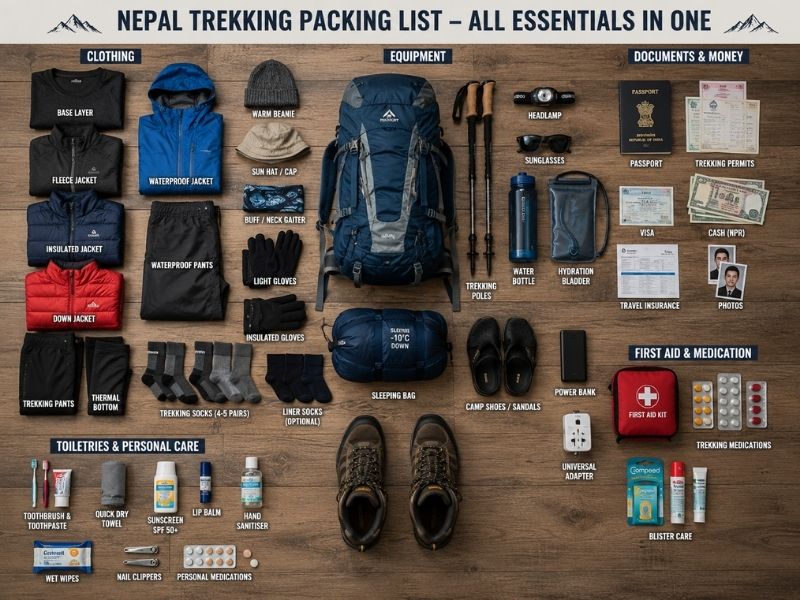
Clothing Checklist for Nepal Treks
Upper body
- 2 to 3 moisture wicking trekking shirts
- 1 thermal base layer
- 1 fleece jacket
- 1 lightweight insulated jacket
- 1 down jacket
- Waterproof shell jacket
- Quick dry underwear
Lower body
- 2 trekking pants
- 1 thermal bottom
- Waterproof rain pants
- Comfortable travel pants or shorts
Head and hands
- Warm beanie
- Sun hat or cap
- Buff or neck gaiter
- Lightweight gloves
- Insulated gloves for higher elevations
Footwear
- Broken in trekking boots
- Camp shoes or sandals
- 4 to 5 pairs of trekking socks
- Liner socks (optional)
Your trekking boots are the single most important item on your Nepal trekking checklist. Never arrive with brand new boots you haven’t tested.
Essential Trekking Equipment
- Daypack (25 to 35 litres)
- Duffel bag
- Trekking poles
- Sunglasses with UV protection
- Headlamp
- Water bottles or hydration bladder
- Power bank
- Universal travel adapter
- Sleeping bag rated for cold conditions
Many trekkers rent sleeping bags, down jackets, and trekking poles in Kathmandu instead of buying them, which is a good option if you only plan to trek once.
Personal Items and Toiletries
- Sunscreen SPF 50+
- Lip balm
- Wet wipes
- Toothbrush and toothpaste
- Quick dry towel
- Hand sanitiser
- Basic first aid kit
- Nail clippers
- Personal medications
The Himalayan sun is stronger than most visitors expect. Sunscreen and sunglasses matter even on cloudy days.
Trekking Medicine Checklist
Talk to your doctor before you travel. Common trekking medications include:
- Diamox for altitude acclimatisation
- Pain relief medication
- Anti diarrhoea medication
- Motion sickness tablets
- Cold and flu medication
- Blister treatment supplies
Never rely on finding specialised medication once you are on the trail.
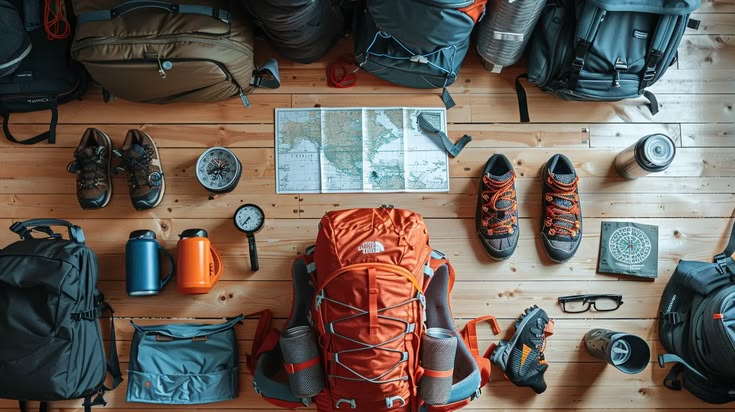
Backpack Size Guide for Trekking in Nepal
You can place this section after Essential Trekking Equipment.
Choosing the Right Backpack Size
One of the most common questions trekkers ask is “What size backpack do I need for trekking in Nepal?” The answer depends on whether you’re trekking independently or with a guide and porter.
Daypack (25–35 Litres)
If you’re trekking with a porter, you’ll only need a comfortable daypack to carry your daily essentials. This should include:
- Water bottles or hydration bladder
- Camera
- Rain jacket
- Extra warm layer
- Snacks
- Sunscreen
- Sunglasses
- Hat and gloves
- Passport and permits
- Personal medication
- Power bank
A 30-litre daypack is the most popular choice for treks like Everest Base Camp, Annapurna Base Camp, Langtang Valley, Mardi Himal, and the Manaslu Circuit.
Duffel Bag (60–80 Litres)
Most guided treks provide a duffel bag that is carried by your porter.
This bag holds:
- Extra clothing
- Sleeping bag
- Down jacket
- Toiletries
- Spare shoes
- Extra gear
Keep the total weight within your trekking company’s porter limit (usually around 20–25 kg shared between two trekkers).
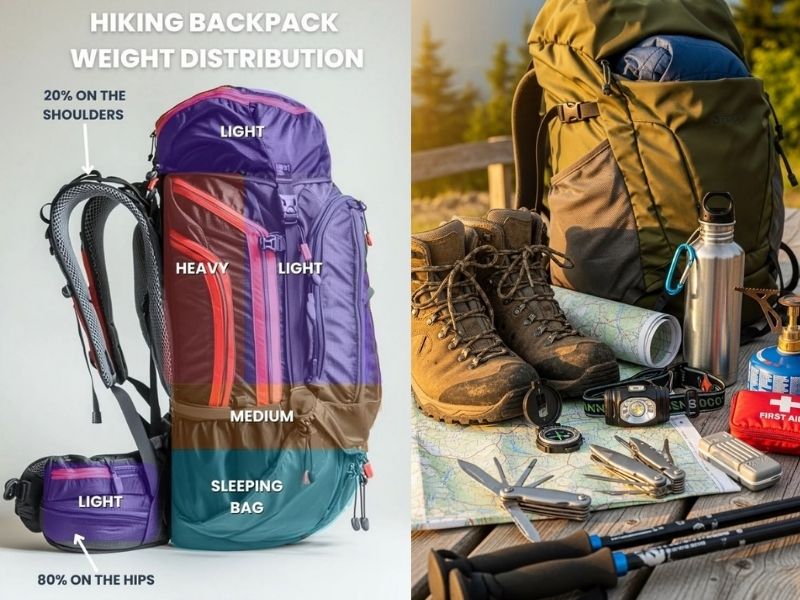
45–55 Litre Backpack
If you’re trekking without a porter, you’ll need a larger backpack that carries everything.
A 50-litre backpack is usually enough for teahouse trekking in Nepal.
Look for features such as:
- Adjustable hip belt
- Ventilated back panel
- Rain cover
- Side bottle pockets
- Trekking pole attachments
65+ Litre Backpack
Very few trekkers actually need a backpack this large.
Only consider one if you’re:
- Camping instead of staying in teahouses
- Carrying camera equipment
- Travelling for several months
- Trekking independently in winter
For most Nepal treks, a large backpack simply encourages overpacking.
Backpack Size Comparison
| Backpack Size | Best For |
| 25–35L | Daypack while porter carries the rest (recommended) |
| 45–55L | Independent teahouse trekking |
| 60–80L Duffel | Carried by porter |
| 65L+ | Camping treks or extended expeditions |
Pro Tip: If you’re trekking with Nepal Mountain Adventure, you only need a comfortable 25–35L daypack. Your porter carries the main duffel bag, making your trek much more enjoyable.
What to Pack by Season
Spring (March to May)
Nepal’s most popular trekking season. Pack standard trekking layers, a rain jacket, sunglasses, lightweight gloves, and a down jacket for evenings. Daytime temperatures are usually comfortable, but nights above 3,500 meters stay cold.
Summer / Monsoon (June to August)
Pack a waterproof backpack cover, extra quick dry clothing, a waterproof jacket and trousers, dry bags, and extra socks. Trails get muddy and humidity is much higher.
Autumn (September to November)
The clearest mountain views and the most stable weather of the year. Pack your standard layering system, a down jacket, a warm hat, and gloves. This is generally the easiest season to pack for.
Winter (December to February)
Pack a heavy down jacket, extra thermal layers, insulated gloves, a warm winter hat, extra warm socks, and a sleeping bag rated for sub zero temperatures. Above 4,000 meters, temperatures can fall well below freezing.
Extra Gear for High Altitude Treks
Everest Base Camp Trek packing list
Extra thermal layers, a high quality down jacket, insulated gloves, a sleeping bag rated to at least minus 10°C, and additional power banks. Above 5,000 meters, wind chill becomes a serious factor.
Manaslu Circuit Trek
Extra cold weather layers, strong waterproof gear, extra snacks, and a sleeping bag suitable for high altitude. Larke La Pass reaches 5,106 meters and can see snow even in trekking season.
Annapurna Circuit Trek
Warm gloves, thermal layers, a windproof jacket, and trekking poles for the Thorong La Pass crossing, where conditions can change fast.
Annapurna Base Camp Trek
Needs less extreme cold weather gear than Everest or Manaslu, but warm layers are still essential for mornings and evenings.
Mardi Himal and Langtang Valley
Standard trekking equipment with seasonal adjustments depending on your travel dates.
What Nepal Mountain Adventure Provides
Most guided treks with Nepal Mountain Adventure include a licensed trekking guide, required permits, accommodation during the trek, transportation or domestic flights depending on the itinerary, and a duffel bag. Selected packages also include a sleeping bag, down jacket, and trekking poles. Always confirm the exact inclusions for your chosen package before you travel.
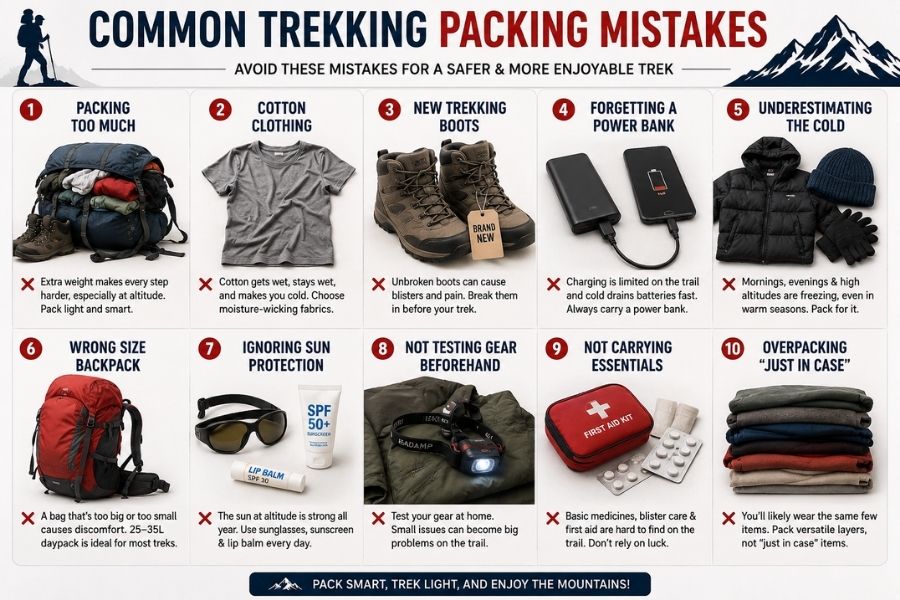
Common Packing Mistakes
Packing too much. Every extra kilogram feels heavier as you gain altitude. Most trekkers wear the same few layers the whole trip. Pack versatile, quick drying clothing instead of a different outfit for every day.
Cotton clothing. Once wet from sweat or rain, cotton takes a long time to dry and makes you cold at higher elevation. Choose moisture wicking synthetics or merino wool instead.
New trekking boots. Brand new boots straight out of the box often lead to blisters and sore feet. Break them in on several walks at home first.
Forgetting a power bank. Charging facilities on the trail are limited and often cost extra, and cold temperatures drain batteries faster. A high capacity power bank keeps your devices running.
Underestimating the cold. Daytime can feel pleasant even in spring or autumn, but mornings, evenings, and higher elevations are often well below freezing. Pack proper thermal layers and a warm down jacket no matter the season.
Wrong size backpack. A daypack between 25 and 35 litres is ideal for most Nepal treks. It should comfortably hold water, snacks, layers, documents, and anything else you need during the day.
Ignoring sun protection. UV exposure at altitude is much stronger than at sea level. Sunglasses, sunscreen, and lip balm matter as much as your cold weather gear.
Not testing gear beforehand. Test your jacket, headlamp, and backpack before you arrive in Nepal. Small issues that seem minor at home can become real problems on a multi day trek.
A successful trek in Nepal isn’t about bringing the most gear. It’s about bringing the right gear. Focus on a practical layering system, reliable footwear, essential safety items, and season appropriate clothing, and your trek to Everest Base Camp, Annapurna Base Camp, Manaslu Circuit, Langtang Valley, or Mardi Himal will be safer and far more enjoyable.
If you’re unsure what to bring for your specific trek, the team at Nepal Mountain Adventure can help you choose the right gear based on your route, season, and experience level.
Explore Our Most Popular Nepal Treks
Now that you’re ready to pack, explore some of Nepal’s most iconic trekking adventures:
- Everest Base Camp Trek
- Annapurna Base Camp Trek
- Manaslu Circuit Trek
- Annapurna Circuit Trek
- Langtang Valley Trek
- Mardi Himal Trek
Each itinerary includes detailed information about difficulty, best season, permits, accommodation, and what to expect on the trail, helping you choose the trek that’s right for you.
Frequently Asked Questions
What should I pack for the Everest Base Camp trek?
Beyond the standard layering system, pack a high quality down jacket, insulated gloves, and a sleeping bag rated to at least minus 10°C, since temperatures near base camp drop well below freezing.
Do I need a down jacket for trekking in Nepal?
Yes, for almost every trek above 3,000 meters. Evenings and mornings get cold even in the warmer seasons.
What is the best season to trek in Nepal?
Spring (March to May) and autumn (September to November) offer the most stable weather and clearest mountain views.
Can I rent trekking gear in Kathmandu?
Yes. Sleeping bags, down jackets, and trekking poles are easy to rent in Kathmandu and Pokhara, which is a practical option if you are not trekking again soon.
What sleeping bag rating do I need for high altitude trekking in Nepal?
For treks above 4,000 meters, such as Everest Base Camp or the Manaslu Circuit, choose a sleeping bag rated to at least minus 10°C to minus 15°C. Teahouses provide blankets, but they are rarely enough on their own.
How many pairs of socks should I pack for a Nepal trek?
4 to 5 pairs of trekking socks is a good number, plus a thin pair of liner socks if you tend to get blisters. Wet or sweaty socks are one of the main causes of blisters on the trail.
Is cotton clothing okay for trekking in Nepal?
No. Cotton takes a long time to dry once wet and can leave you feeling cold at higher elevation. Moisture wicking synthetics or merino wool are much better choices.
Do I need trekking poles in Nepal?
They are not required, but most trekkers find them very helpful. Poles reduce the strain on your knees, especially on long descents, and are easy to rent or buy cheaply in Kathmandu.
What trekking permits do I need in Nepal?
This depends on the region. Most treks need either a TIMS card or a conservation area permit, sometimes both. Your trekking agency can usually arrange these for you before you start.
How much weight can a porter carry on a Nepal trek?
A single porter typically carries up to 20 to 25 kg, often shared between two trekkers. This is one of the main reasons people choose a duffel bag over a large rucksack, since it is easier for a porter to carry.
In a hurry? Jump to our Printable Nepal Trekking Packing Checklist at the end of this guide for a quick packing reference.
Ready to pack? Use the checklist below to make sure you don’t miss any essentials before your trek.
Want an easy version to print or save on your phone?


