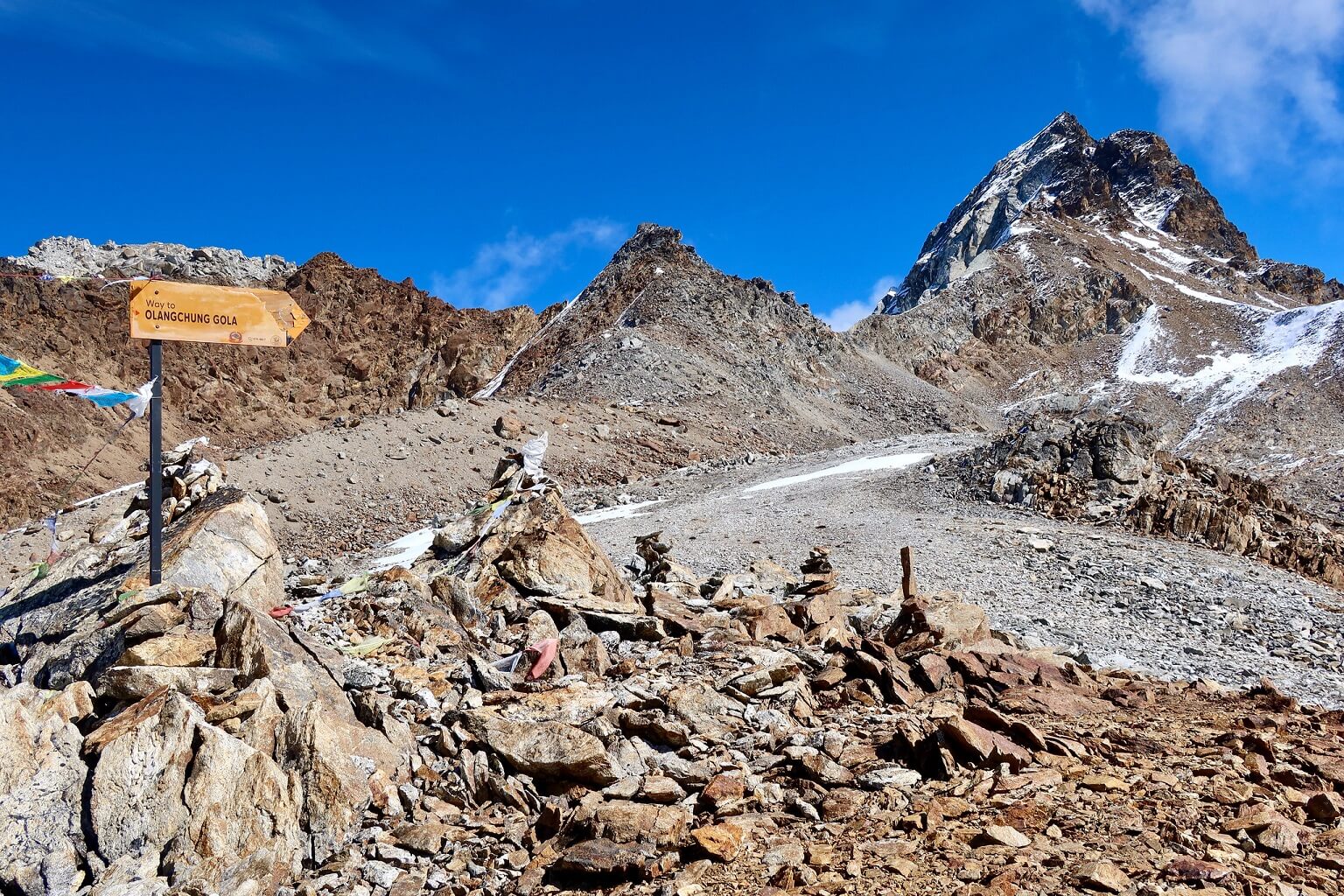
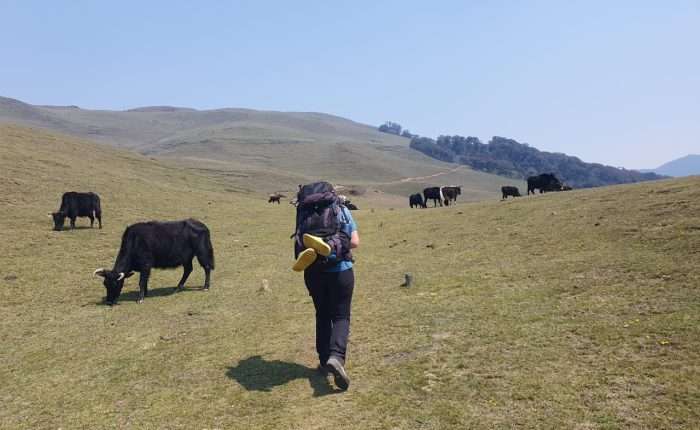
Lumba Sumba Pass Trek is one of the relatively new trekking adventures in the eastern part of Nepal, which was only opened in 2012. The treks in the eastern part of the Himalayas in Nepal are famous as long-route explorations that are not traveled frequently. Farther from the mainstream trekking hubs, this exciting Himalayan pass adventure will reward you with a tranquil experience and the opportunity to connect with the untamed wilderness. One of the fascinating things about trekking Lumba Sumba Pass is that you will explore two of the most popular trekking regions in the eastern part of Nepal, Kanchenjunga, and Makalu, as this pass sits right between them. So, if you are fond of the off-beaten trekking trails and want to take a break from your busy schedules to embrace the arms of nature, nothing comes closer to this remote and immersive exploration.
You will gradually follow the inclining trekking trails, passing across beautiful high-altitude ancient settlements of the different ethnic groups and experiencing their unique culture, traditions, and Himalayan lifestyle. Similarly, the natural allure of the region and the unspoiled, raw Himalayan beauty is another aspect to look up to in this journey. Also, this trek doesn’t lag behind when it comes to thrill factors either, as you will be taking on some of the thrilling Himalayas passes in the far-easter part of the country. Thus, overall, Lumba Sumba trekking is a fascinating journey that introduces you to the beautiful nature, exhilarating culture, traditions, thrills, and challenges of the eastern Himalayas
Meal: Dinner
Accommodation: Hotel
After your arrival in Kathmandu, representatives from NMA Nepal will come to receive you at the airport. Then, a swift transfer to your hotel will follow as you drive across the bustling capital, heading toward the core part of the capital. Our representatives will also assist you with the check-in procedures, and after getting some rest you can stroll around the bright city. Depending on your arrival period, if you have enough time, you can also visit our office to collect more information about your trek.
Overnight stay in Kathmandu.
Accommodation: Hotel
Meals: Breakfast
On this day, you will do sightseeing around some of the most popular tourist destinations in the capital valley. Remember, Kathmandu is home to 7 of the UNESCO World Heritage Sites, so the exploration prospects here are quite unlimited. Although it is not possible to visit every site, you will explore a few on this day.
This is also a trek preparation day, and if you have any unfinished shopping for gear, clothes, or much-needed products, you can complete it on this day. We will also make the arrangements for all the necessary permits on this day.
Overnight stay in Kathmandu.
Accommodation: Tea house
Meals: Breakfast, Lunch, and Dinner
Your exhilarating Lumba Sumba Pass Trek will be in motion from this day onward. During the initial part of this day, you will take a flight from Kathmandu to Bhadrapur in the morning. Flying over the lush landscapes, rivers, waterfalls, and vibrant settlements spread across the valleys, you will make your touchdown at Bhadrapur. Then, after taking some rest to stretch your legs, you will begin your short drive to Illam across the high hills, small mountains and passing the famous tea gardens of Illam.
Overnight stay in Illam.
Accommodation: Tea house
Meals: Breakfast, Lunch, and Dinner
After relishing the fresh and sweet aroma of Nepal’s tea garden, you will then prepare for your journey up ahead. You will continue your drive across the beautiful hilly landscape and river belt off the Himalayan foothills. At every turn of this day’s drive, you will be able to enjoy the majestic views of the pristine Himalayan peaks. After 5 hours of thrilling and fascinating drive, you will finally arrive at Taplejung from Illam.
Overnight stay in Taplejung.
Accommodation: Tea house
Meals: Breakfast, Lunch, and Dinner
This is the first day of trekking in your Himalayan pass exploration. After a warm and delicious breakfast at Taplejung, you will drive toward Chirwa during the first part. The drive on this day also follows the trail across dense forests and meadows as you cross-travel across several steep sections. Following the uphill climb to Siwa Bazaar, the trail then leads to the checkpoint of the Kanchenjunga Conservation Area before dropping to Chirwa. You will then trek toward the Sekthum Village across the woodland by the banks of the rivers and mixed landscapes of cardamom and cultivated farm fields.
Overnight stay in Sekthum.
Accommodation: Tea house
Meals: Breakfast, Lunch, and Dinner
Continuing trekking further on this exciting route, on this day, you will leave the trails of Tamor Khola to reach the banks of Ghunsa Khola. You will make you ascend gradually across the pine, chestnut, and oaks forest to reach Ghaiyabari. Then, your trek will follow the trail alongside the Chanjalung Danda, and you will pass several beautiful settlements, such as Jongim Village and Solima Village, along the way. After overcoming the steep section of the trail during the last part, you will then arrive at your resting destination at Amjilosa Village.
Overnight stay in Amjilosa.
Accommodation: Tea house
Meals: Breakfast, Lunch, and Dinner
Your trekking trek continues to ascend gradually, leading you toward the heart of the far-eastern Himalayas. The trail will pass across the beautiful rhododendron, bamboo, and occasional pine forest as you traverse across alpine pastures and steep meadows. There aren’t human settlements along the trail, and if you are lucky, you might see Red Pandas on today’s hiking trail. After a steep ascend on the final parts that unveil the incredible mountain views and several waterfalls, you will head toward Gyabla Village.
Overnight stay in Gyabla.
Accommodation: Tea house
Meals: Breakfast, Lunch, and Dinner
After enjoying a warm breakfast at Gyabla Village, you will then follow your trail on the east side, heading toward the Phale Village. You will start seeing the mani walls and praying flags on the trail side as you enjoy the fresh breeze and head toward the local monastery. After some interaction at the village, you will then continue following the exciting trails across the fir, pine, and cedar forest to reach the wide trails that open up the view of the valley. Following the easy trail across the cultivated farmlands and larch forest, you will then arrive at Ghunsa Village.
Overnight stay in Ghunsa.
Accommodation: Tea house
Meals: Breakfast, Lunch, and Dinner
You have covered a considerable trekking distance and reached a significant altitude; thus, before heading any further, you will take a rest day here at Ghunsa. Acclimatization hikes help you adapt to the rising altitude effectively. You can hike to Ghunsa Lake, which offers incredible views of Ghunsa Peak, Ghunsa, Selele La, and Phale. After the morning hike, you can spend the rest of your day learning more about this Tibetan village, the culture of people, traditions, and their general lifestyle that has adapted perfectly to this high altitude.
Overnight stay in Ghunsa.
Accommodation: Tea house
Meals: Breakfast, Lunch, and Dinner
After giving your body enough rest and adapting properly to the rising altitude, you will then proceed further with your trekking journey. You will follow the gradual trail on the eastern side of the Ghunsa River and pass through lovely woodland of pine and rhododendrons as well as meadows. After reaching Rampuk Kharka, where you will have lunch, you will continue trekking across a waterfall and a bridge. During the last part, you will cross a landslide-prone region and make your descent to Kambachen.
Overnight stay in Kambachen.
Accommodation: Tea house
Meals: Breakfast, Lunch, and Dinner
This is one of the additional side trips in your Lumba Sumba Pass Trek, where you get the opportunity to explore the magnificence of the Jannu Himal (7,710 meters/ 25,295 feet) which is also known as Kumbhakarna Peak. This is one of the most attractive peaks in the eastern Himalayas and is the 32nd-highest mountain peak in the world. After admiring the beauty of this incredible peak from up close, you will then return back to Kambachen.
Overnight stay in Kambachen.
Accommodation: Tea house
Meals: Breakfast, Lunch, and Dinner
After the side trip, it is time for you to continue with your Himalayan pass trekking. From Kambachen, you will leave the village heading on the ascending [art across the scree and moraines that will lead to Ramtang, which is also a temporary settlement for the yak herders. You will then continue trekking on the rock terrains and pass the landslide zone to reach the sandy landscape of Lhonak Village.
Overnight stay in Lhonak.
Accommodation: Tea house
Meals: Breakfast, Lunch, and Dinner
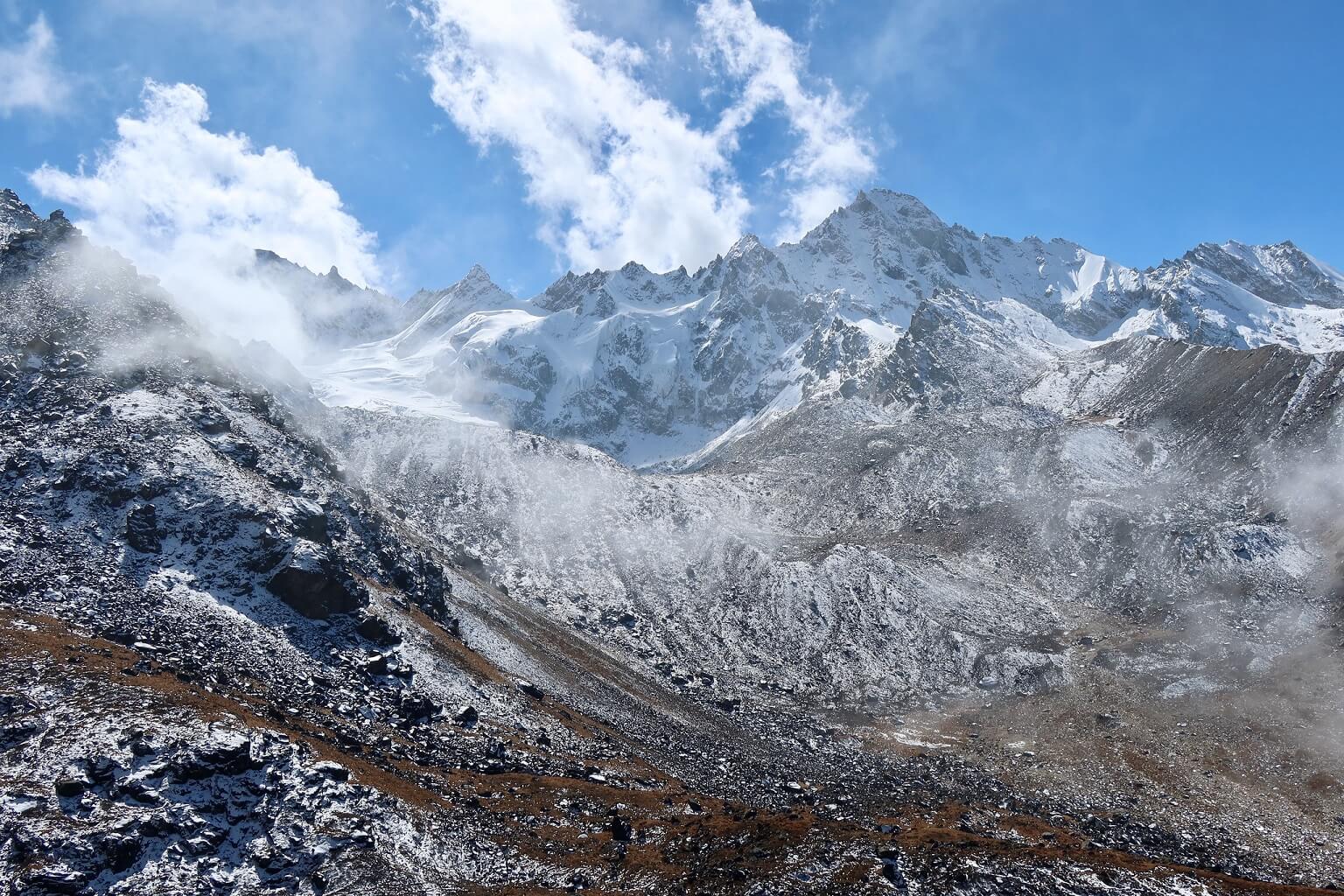
This day’s trek will lead you to the North Base Camp of the third-highest snow-clad peak in the world, Mt Kanchenjunga. This base camp is also known as Pang Pema; as you leave Lhonak, you will traverse across the steep climbing section with rock and boulder-strewn roads and icy moraines to reach the base camp. From the Kanchenjunga North Base Camp, you will be able to enjoy the clear and stunning views of the Kanchenjunga Massif, Nepa Peak, and Tent Peak. After soaking in the magical Himalayan atmosphere, you will then trek back to Lhonak for an overnight stay.
Overnight stay in Lhonak.
Accommodation: Tea house
Meals: Breakfast, Lunch, and Dinner
From Lhonak, you will first make your descent to the Kambachen retracing your steps back on the same alpine terrain and loose rock. After passing the monastery and herder’s temporary camp at Ramtang, you will continue trekking downhill to reach Lakep Village. From here, you will cross a suspension bridge over the Ghunsa River and keep pushing forward to reach the Tibetan culture-influenced settlement of Ghunsa.
Overnight stay in Ghunsa.
Accommodation: Tea house
Meals: Breakfast, Lunch, and Dinner
After enjoying a hot breakfast at Ghunsa Village, you will prepare for your journey to Nangala High Camp. From the village, the trail becomes steeper and more challenging as you navigate your way across the loose rock sections. You will first make your way across the Phole Village, and moving forward, you will arrive at the junction. The path further ahead is mostly flat, and across the pine forest, you will head toward the wide pasture of Nangala High Camp.
Overnight stay in Nangala.
Accommodation: Tea house
Meals: Breakfast, Lunch, and Dinner
It’s an exciting day’s trek today; leaving the high camp, this day’s trek will lead you to Yangma Khola, across one of the thrilling easter Himalayan passes, Nangala Pass (4,820 meters). Although the steep trail of the pass can be somewhat challenging, the epic views of the Himalayan range from the top of the pass will make the trip worth it. From the pass, you will make you descend across a stone shelter and continue walking toward Thasa Khola. Ynagma Khola is just a short distance up ahead from here where you will be camping tonight.
Overnight Stay in Yangma Khola.
Accommodation: Tea house
Meals: Breakfast, Lunch, and Dinner
Unlike crossing the experience crossing the pass, this day’s trekking trails are relatively easier. You will traverse across a mix of diverse landscapes, from lush woodlands to meandering rivers and charming high-altitude settlements. Following the trails alongside the Tamor River, you will also cross a suspension bridge on this day and trek toad Ramite Village. Olangchun Gola, a charming Sherpa village, is just further ahead; this village also houses a 600-year-old monastery that you can explore after your arrival.
Overnight stay in Olangchun Gola.
Accommodation: Tea house
Meals: Breakfast, Lunch, and Dinner
After a long Himalayan journey, it is time for another break. As the trails further ahead elevate to higher altitudes, you will take a break here to rest properly and adapt to a new environment. This beautiful Sherpa village also provides several hiking prospects, like Singjema Lake and Samdu Lake, that you can explore for the acclimatization hike.
Overnight stay in Olangchun Gola.
Accommodation: Tea house
Meals: Breakfast, Lunch, and Dinner
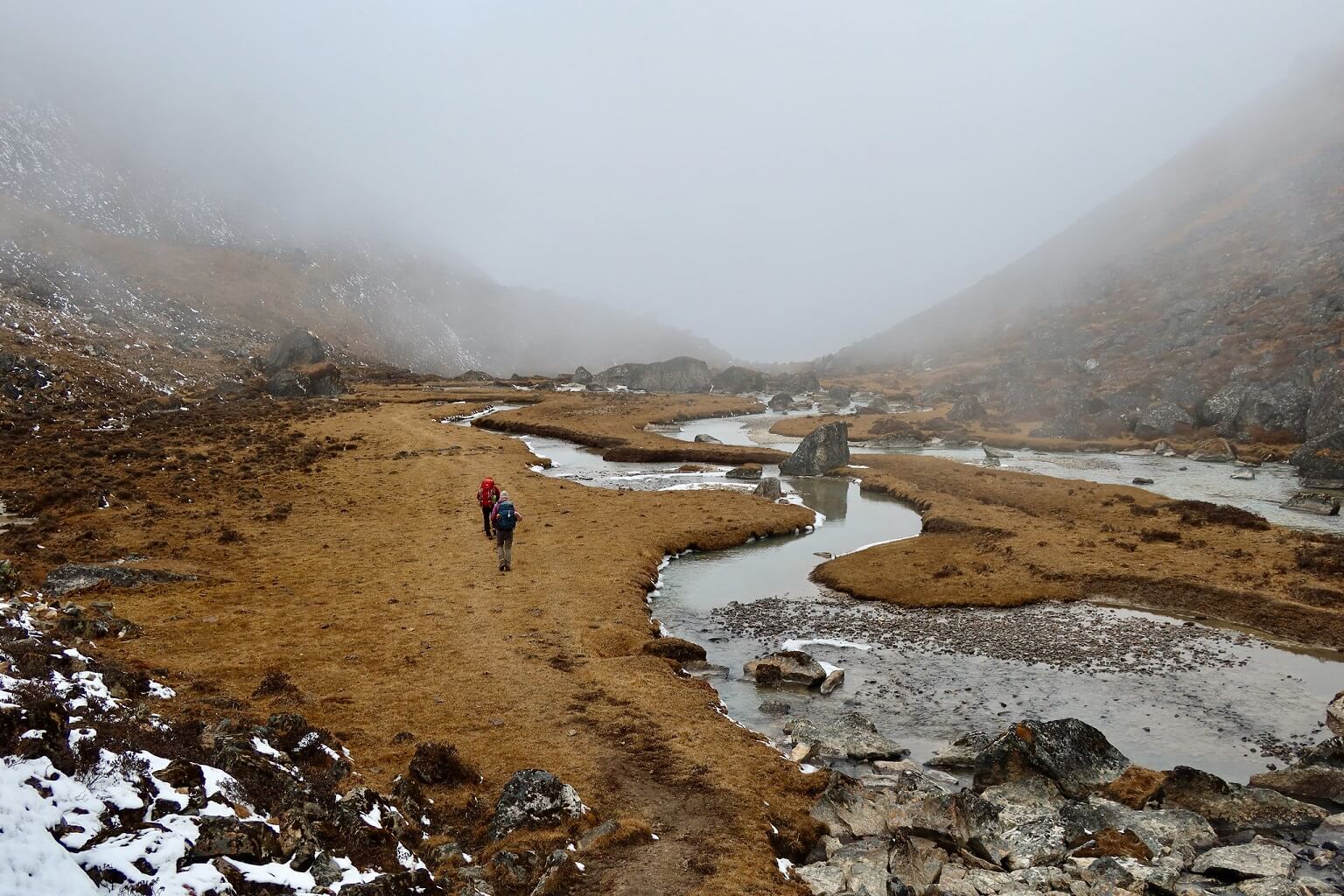
Your acclimatization day will follow an inclining route across the Olagchun Gola, and you will gradually move along the diverse landscape of the country. Leaving the basin of the Tamor River, you will make your ascend to the alpine altitudes. The cultivated fields and lush woodland will open the path to the meadows that will widen the views of the Himalayan vistas. After trekking about 6 to 7 hours from the Olangchun Gola, you will then finally arrive at the wide Kharka which will be your camping site tonight.
Overnight stay in Kharka.
Accommodation: Tea house
Meals: Breakfast, Lunch, and Dinner
Enjoying your breakfast at the campsite with the wide views of the surrounding peaks, you will prepare for the demanding journey up ahead. You will begin your trek toward the trails of the Lumba Sumba Himal as you pass across the serene yak pastures and beautiful high-altitude landscape. This particular section of this mountain trail has high sightseeing for snow leopards, so keep your eyes open for the sighting. Enjoying the wilderness of the isolated Himalayan region, you will arrive at the Camp Pass, which is way above the green vegetation.
Overnight stay in Camp Pass.
Accommodation: Tea house
Meals: Breakfast, Lunch, and Dinner
Today is another exciting day of this newly introduced trekking route, as you will take on the major highlight of this adventure. Starting your trekking journey from the Camp Pass with a hot and tasty breakfast, you will continue navigating the isolated wilderness trails of the far-eastern Himalayas. You will take on the sharp ridge beyond the saddle heading toward the pass. After reaching the top of the pass adorned with praying flags, you will continue climbing toward the high pass, which is actually the Lumba Sumba Pass.
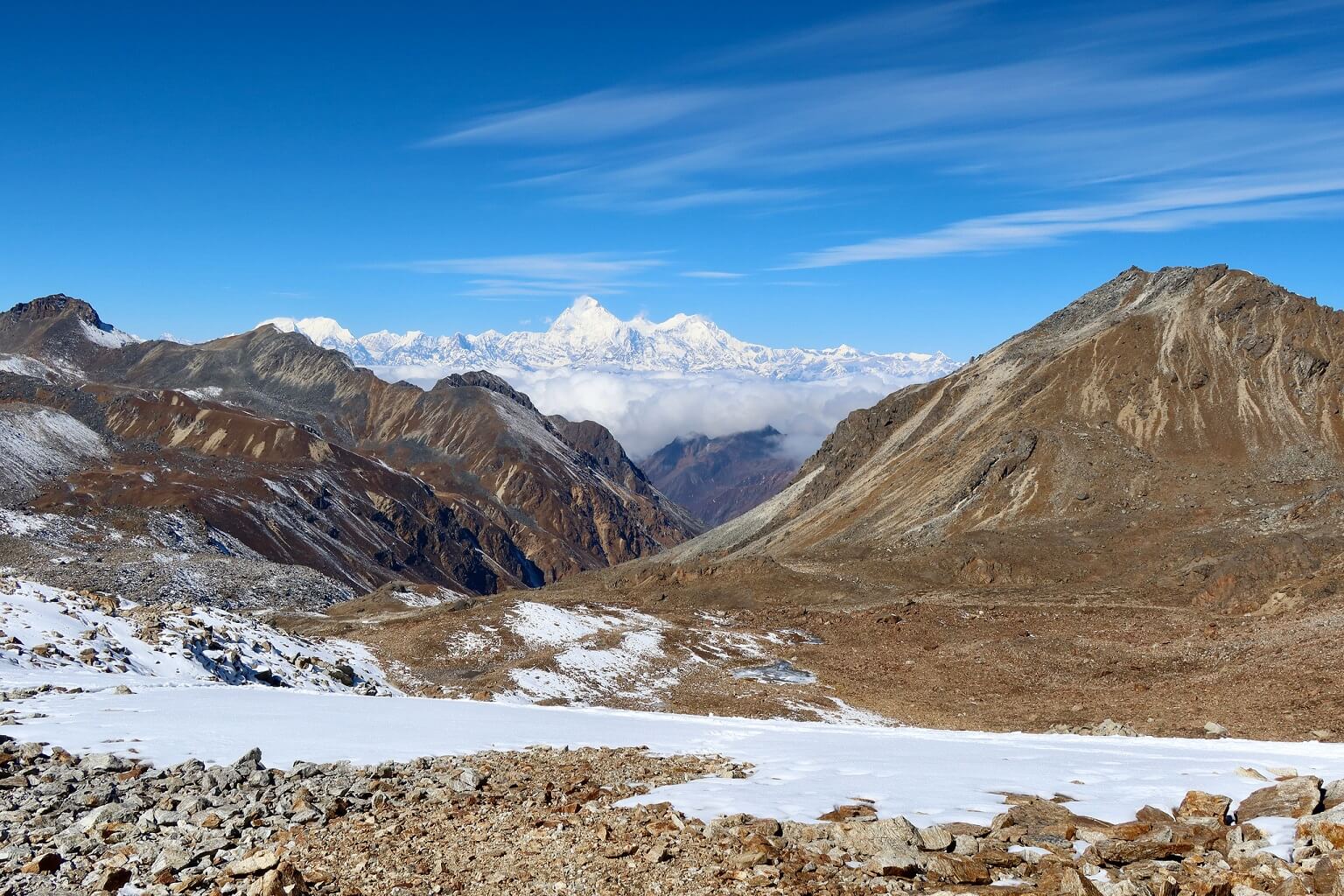
The views from this incredible high-altitude pass, you will be able to enjoy the magnificent views of Kanhcjeung and Jannu Himal, extending on the easter side and all the way to Makalu on the west of the pass. After spending some time at the pass, you will then make you descend about 600 meters on the steep trail toward the large valley below where the Yak Kharka is located.
Overnight stay in Yak Kharka.
Accommodation: Tea house
Meals: Breakfast, Lunch, and Dinner
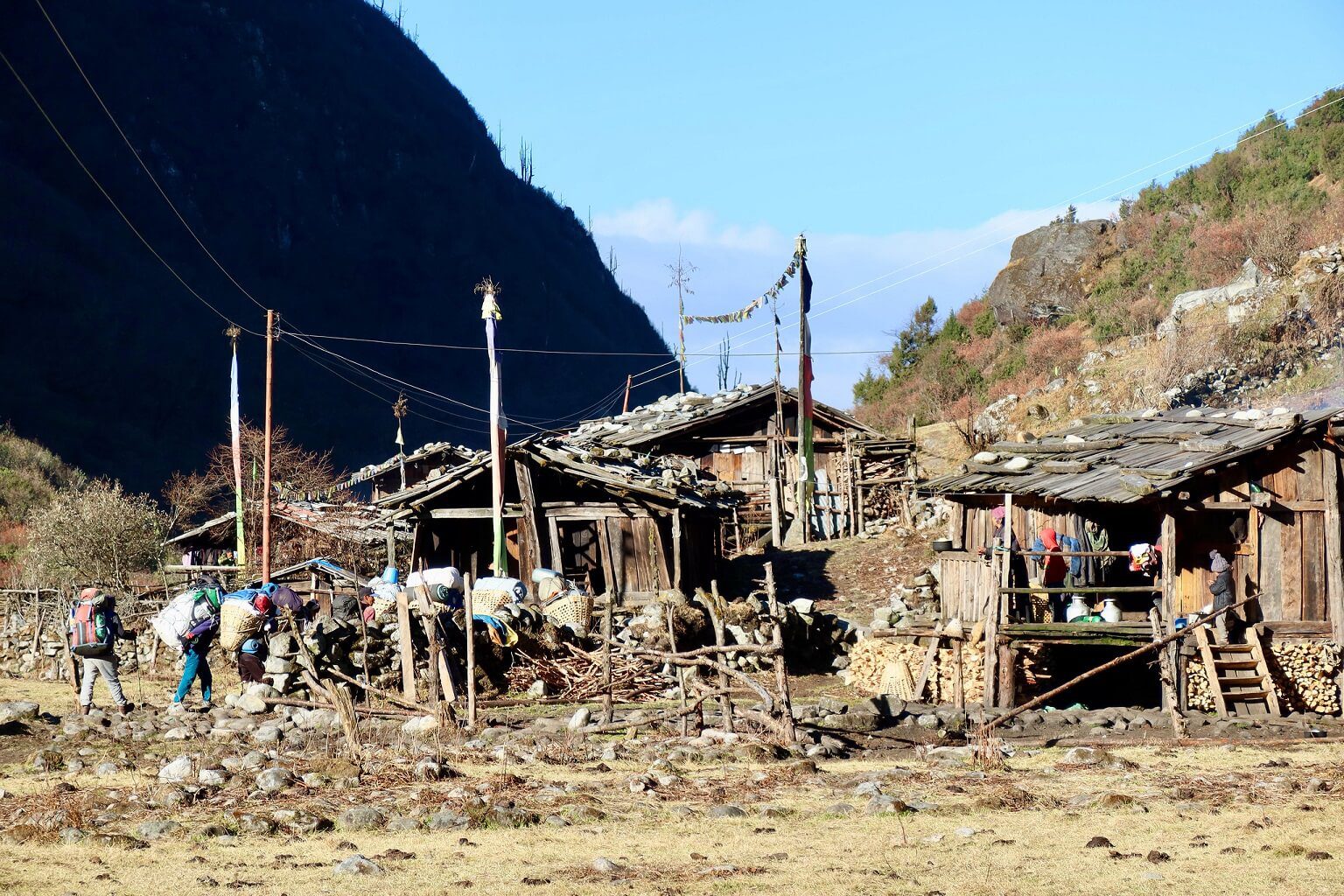
After exploring the major highlight of this Himalayan exploration, your trekking trail gently starts to descend. From the Yakh Kharak, you will pass across several meadows enjoying the excellent views of Makalu. The trail further ahead then takes you across the different varieties of rhododendron trees as you walk closer to the trail stretching from Umbak La Pass (5,200 meters). You will then continue walking on the downhill trail to reach the Thudam Village with around 30 wooden houses. From here, you will continue with the trail toward the east, walking on the steep edge of the valley with several landslide-prone areas before following a steep climb that leads to Jungle Camp.
Overnight stay in Jungle Camp.
Accommodation: Tea house
Meals: Breakfast, Lunch, and Dinner
Your trekking trail will continue descending even further as you leave the Jungle Camp, heading toward the wide pasture below. During the first part of the trek, you will walk on the steep side of the valley and climb steadily across the cavernous bamboo forests. The magical views of Makalu and other surrounding peaks will keep you company in this section as well. During the final part, you will descend on a small clearing that is Yak Kharka, this will be your camping site tonight.
Overnight stay in Jungle Camp.
Accommodation: Tea house
Meals: Breakfast, Lunch, and Dinner
You will enjoy your delicious breakfast on this day, immersing in the tranquility of the Himalayan pasture surrounded by mountain views. Then, you will move along the downhill route across the lush rhododendrons forest and across the ridge that overlooks the Arun Valley. You will then continue with the descending route that stretches all the way to the Arun River, and you will cross a suspension bridge over the river to reach Chyamtang Village. Linggam is just a short distance away from here, where you will stay tonight.
Overnight stay in Linggam.
Accommodation: Tea house
Meals: Breakfast, Lunch, and Dinner
Today, you will descend even further into the tropical part, so you can expect the lush green landscape during your trek. Leaving Linggam behind, you will cross several small villages and move along the exciting trail to reach Gimber Village. Enjoying the mesmerizing views of the easter Himalayan peaks, you will walk on the relatively easy trail to reach the Hatiya Village, where the Tibetan tribe resides. This is also the entry point for the Makalu Barun National Park.
Overnight stay in Hatiya.
Accommodation: Tea house
Meals: Breakfast, Lunch, and Dinner
After your long and demanding Himalayan journey, you will bid farewell to the trekking part and enjoy a comfortable driving experience. You will drive from Hatiya on the recently built dirt road and slowly move across the lush landscapes and beautiful settlements in the region. This day’s drive will also take you through the Gola and Hedanga Gadi, following the scenic trails alongside the Arun Nadi; you will then continue driving toward Num Village and finally reach Tumlingtar.
Overnight stay in Tumlingtar.
Accommodation: Hotel
Meals: Breakfast and Lunch
Your incredible Lumba Sumba Pass Trek marks its closure on this day. Bidding farewell to the eastern region of the country, you will take your flight to Kathmandu from Tumlingtar. Enjoying the lush scenery of landscape and vegetation, beautiful settlements, rivers, and waterfalls, you will make your landing at the airport. Then, after that, our staff will drop you back at your hotel, and after getting some rest you can spend the rest of the day exploring the beautiful city.
Overnight stay in Kathmandu.
Meals: Breakfast
Today is the last day of the Lumba Sumba Pass Trek. For your return flight, you will be brought to Kathmandu Airport. We hope to see you again in the future.
Lumba Sumba Pass Trek is one of the incredible experiences in the far eastern part of the country. For taking on such a high altitude and long-haul trek, you need to choose the most appropriate time period to ensure a comfortable experience throughout the journey. So, the most appropriate period for this long Himalayan adventure would definitely be during one of the high seasons, such as spring (March to May) or autumn (September to November). During these periods, your trek will be accommodated by pleasant climatic conditions and stable weather. But there is more to that if you do this trek in one of these peak seasons. The spring is considered the powerhouse of nature, as wherever you look, you will find nature at its peaks.
Be it the lush woodlands, the cultivated farmlands, wildflowers spread across the trail, the high-flowing river and waterfalls thanks to the melting snow, or the abundant Himalayan flora and fauna; the spring season doesn’t miss out on anything. As for the autumn season, it is mostly popular for the balance and sense of stability it brings, as you can expect the most stable weather throughout the year during this period. The trails are dry and comfortable, the view of the mountains is clear and stunning, and temperatures are pleasant. Similarly, autumn is also the most popular season to experience the incredible festivals in the country, as some of the biggest celebrations in the country occur during this period.
Although the Lumba Sumba Pass Trek may seem like a challenging endeavor due to its long route and significant altitudes that the trekkers have to overcome, this trekking journey has been graded at a moderate level. This means that the trekkers don’t have to navigate their way across any challenging technical parts en route or even physically strenuous sections. This newly introduced trekking route in the far-eastern Himalayas is actually a pleasant and slow-paced adventure where you will be able to explore the unspoiled parts of the Himalayas that still have preserved their wilderness factors. So, taking on this long, thrilling route won’t be a challenge if you have prepared enough, have basic fitness, and are in good health.
However, as trekkers have to overcome several physically demanding sections during the trek, including some of the significant Himalayas passes, this trek is not recommended for beginners. More than the physically challenging part of the trek, the long duration at the remote part of the Himalayas can be a bit discomforting for trekkers who are not experienced with remote explorations. Still, it doesn’t mean that beginners are not allowed to do this trek; if they have confidence in themselves backed up by good fitness and health, they can certainly take part in these remote explorations. That goes for everyone willing to do this trek, as there are no age restrictions at all or specific physical fitness requirements.
The preparation requirement for this marvelous Lumba Sumba Pass Trek will depend on your physical fitness and strength level. Normally, for trekking adventures in Nepal, a 3 to 6-week training time frame is recommended. This training period will give the trekkers enough time to be ready for the trek even if they aren’t that physically active in their daily lives. However, this Lumba Sumba Pass Trek is a long, high-altitude journey that lasts almost a month. So, to ensure your comfort on such a long trail, it will be wise to put in some more effort to enhance your physical aspects. You are not required to have a top fitness level, but you should at least be able to walk multiple hours during each day of trek on uneven roads.
To have a better understanding of the terrain conditions, you can do some practice hiking around the steep region nearby. There are two benefits to doing this: one, you can understand the terrains and what aspects you need to work on and second, you will be able to test your trekking gear. You should primarily emphasize your strength and endurance level, which will be put to the test during the trek. Similarly, focusing on core strength will help you find balance, and cardiovascular/stamina training will improve your body’s ability to adapt to higher altitudes.
Considering the high-altitude nature of the trek, you might also be concerned about the risk of altitude sickness during the trek. However, you don’t need to worry about its risk as you will not traverse the core region of the trans-Himalayan region (above 5,000 meters). So, the only major risk of altitude sickness in this route is Acute Mountain Sickness (AMS) which is a milder form. You will begin your trekking part from Chirwa (1,270 meters), and the highest point of this trek that you will reach is Lumba Sumba Pass (5,177 meters). The overall altitude gain in this trek comes to 3,907 meters (12,818 feet); compared to other high Himalayan passes, the altitude gain isn’t that significant.
Still, NMA Nepal will follow all the precautionary methods to avoid any hassles related to altitude sickness during your trek. This Lumba Sumba Pass Trek package has been designed with the help of industry experts to trek slowly following a gradual ascend. So, you will ascend properly even on the trekking trail; on top of that, our package also includes enough acclimatization days at the most appropriate transitioning destination to neutralize the risk of altitude sickness.
Lumba Sumba Pass Trek is a newly introduced trekking route in the Nepali Himalayas. If you are a trekking enthusiast, you might have already heard about the major trekking routes in the country that are popular across the world. So, what will make your experience really special in this trekking route is the fact that it is less known which means it is also less traversed. If you are looking for a distinct experience away from the mainstream routes in the country, this is the sweetest deal. You will be able to explore the remote part of the Himalayas, which have been untouched by modernization.
So, not only this less-traversed trekking route will provide an unparalleled tranquil experience, but you will also be able to secure an authentic Himalayan trekking experience. During this trek, you will explore a diverse range of settlements from the low-land to all the way to alpine zones as this transits slowly across the driving route. The exhilarating cultural experience will then be backed by the serene atmosphere of the Himalayan wilderness, majestic vistas, and the alluring landscape that makes you feel like you have entered a different realm.
The far-eastern region is one of the most isolated parts of the country. As it is, it is neither a mainstream trekking route nor is it close to one; you shouldn’t expect services like those regions if you have trekked in Nepal before. During the Lumba Sumba Pass Trek, you will enjoy a decent level of food and accommodation facilities as you slowly move across the traditional settlements enroute. As you will also be camping at some sites during your trek, your crew will carry all the necessary equipment to set up the campsite and prepare meals. As for the food at the teahouses, you will receive healthy and nutritious meals; the teahouses generally offer popular traditional dishes.
Besides those, you will also be able to taste other Asian culture-inspired dishes at the teahouses, mostly Tibetan and Indian, and of course, some of the star continental menus. You don’t have to worry, even if you are vegan or vegetarian; you will be able to enjoy both meal options during this trek.
The Lumba Sumba Pass Trek will not only take you across the remote part of the far-eastern Himalayas but also across a major conservation area and restricted areas. So, you will have to get the required permits to access those regions on the mountain. You will need the following permits for this exhilarating Himalayan trek.
As this trek follows the trail of the popular Kanchenjunga and Makalu regions, getting these permits is mandatory. The four VDCs in the region, Yamphuding, Olangchung Gola, Lelep, and Paping of Kanchenjunga, have been designated as restricted areas by the Nepali authorities. So, you will need a restricted area permit to enter this part of the trail, which will cost around US$ 20 per person. Similarly, the permits to enter the conservation area of Kanchenjunga will cost around US$ 20 per person. The Makalu Barun National Park Entry Permit costs it is about US$ 30 per person and the Restricted Area Permit for Sankhuwasabha US$ 20 per person for the first four weeks.
**Note: NMA Nepal will collect all the necessary permits for this trek; just submit the requested copies of the documents and photographs**
Although it is not impossible to do the long route high altitude trek to the Himalayas without a guide and porters, it is extremely difficult and severely affects your overall experience. The guide and porters are integral parts of any successful trekking adventure. Guides handle so many aspects of your trek, from all the logistic details, evaluating situations, providing information, and working as translators to taking care of your safety/security and comfort. So, it is a hard job to manage a trekking adventure to such a remote location without the help of a guide. Similarly, the porters are also equally important aspects of this Lumba Sumba Pass Trek as guides.
They will carry your luggage, and you will be able to travel more freely, truly enjoying the experience. Similarly, the porters also carry the tent equipment and food ingredients to prepare a proper tent and food during the exploration of the remote section of the mountain.
Travel insurance is mandatory for trekking in Nepal. You will have to get insurance to even apply for the permits. The travel insurance plans provide various coverages for medical care, lost baggage, evacuation, delays, etc. So, if you get an insurance plan, you will be able to travel more assuredly and enjoy the overall experience. There are different types of travel insurance that you can get during your visit to Nepal, and the cost of the package will depend on the overall coverage plans.
**Note: If you are looking for travel insurance, consider taking the insurance plan which has emergency evacuation included. You will be trekking at a high altitude where you won’t have access to the road so helicopter evacuation will be the only option for evacuation.**
As trekking is a four-season adventure in Nepal, the packing list for the Lumba Sumba Pass Trek will depend on what kind of season you have chosen. If you are doing this trek during one of the peak seasons, such as spring and autumn, just light and comfortable clothes for different altitudes and appropriate gear will be sufficient for your trek. You can light layers for the lower region as the temperatures at such altitudes are generally warm, insulated layers and heavy outer layers for alpine zones and above as the climate is generally chilly. Gear like a trekking pole, sleeping bag, backpack, power bank, headlamp, GPS, etc will make your journey more convenient.
However, if you are planning this trek during any of the off-seasons, such as monsoon (June to August) and winter (December to February), you will need to bring weather-appropriate gear and clothes. The monsoon is a rainy season with unpredictable weather, so rainproof outer layers, raincoats, waterproof covers for bags, non-slipper boots, etc., should be your top priority for the winter season, which is the pinnacle point of the Himalayas; warm and insulated layers should be your top priority. Similarly, you should also prepare your trekking boot with a microspike to easily walk over the snow, and other gear like a gaiter, insulation for the boot, neck buff, heating pad, etc. will be really helpful for the trek.
The Lumba Sumba Pass Trek is considered challenging due to its high altitude, remote trails, and long trekking days. Trekkers should have good physical fitness, prior trekking experience, and the ability to acclimatize to high altitudes.
The best time to trek the Lumba Sumba Pass is during the spring (March to May) and autumn (September to November) seasons. These periods offer stable weather, clear skies, and pleasant temperatures, ideal for trekking.
Yes, you need several permits for the Lumba Sumba Pass Trek, including the Kanchenjunga Conservation Area Permit (KCAP) and the Makalu Barun National Park Permit. Trekkers may also require a special trekking permit which arrange by our company.
Essential items include:
It is highly recommended to hire a licensed guide and/or porter. The trail is remote and less frequented, so a guide can provide valuable assistance with navigation, cultural insights, and safety.
The trek typically starts from either Taplejung or Tumlingtar. To reach Taplejung, you can take a flight from Kathmandu to Suketar Airport or travel by road. To reach Tumlingtar, you can fly from Kathmandu to Tumlingtar Airport. Road travel is also an option but takes longer.
Preparation should include:
Yes, altitude sickness is a concern due to the high elevations reached during the trek. It is important to acclimatize properly, stay hydrated, and be aware of the symptoms of altitude sickness. Trekkers should have a flexible schedule to allow for rest and acclimatization days.
| Cookie | Duration | Description |
|---|---|---|
| cookielawinfo-checkbox-analytics | 11 months | This cookie is set by GDPR Cookie Consent plugin. The cookie is used to store the user consent for the cookies in the category "Analytics". |
| cookielawinfo-checkbox-functional | 11 months | The cookie is set by GDPR cookie consent to record the user consent for the cookies in the category "Functional". |
| cookielawinfo-checkbox-necessary | 11 months | This cookie is set by GDPR Cookie Consent plugin. The cookies is used to store the user consent for the cookies in the category "Necessary". |
| cookielawinfo-checkbox-others | 11 months | This cookie is set by GDPR Cookie Consent plugin. The cookie is used to store the user consent for the cookies in the category "Other. |
| cookielawinfo-checkbox-performance | 11 months | This cookie is set by GDPR Cookie Consent plugin. The cookie is used to store the user consent for the cookies in the category "Performance". |
| viewed_cookie_policy | 11 months | The cookie is set by the GDPR Cookie Consent plugin and is used to store whether or not user has consented to the use of cookies. It does not store any personal data. |