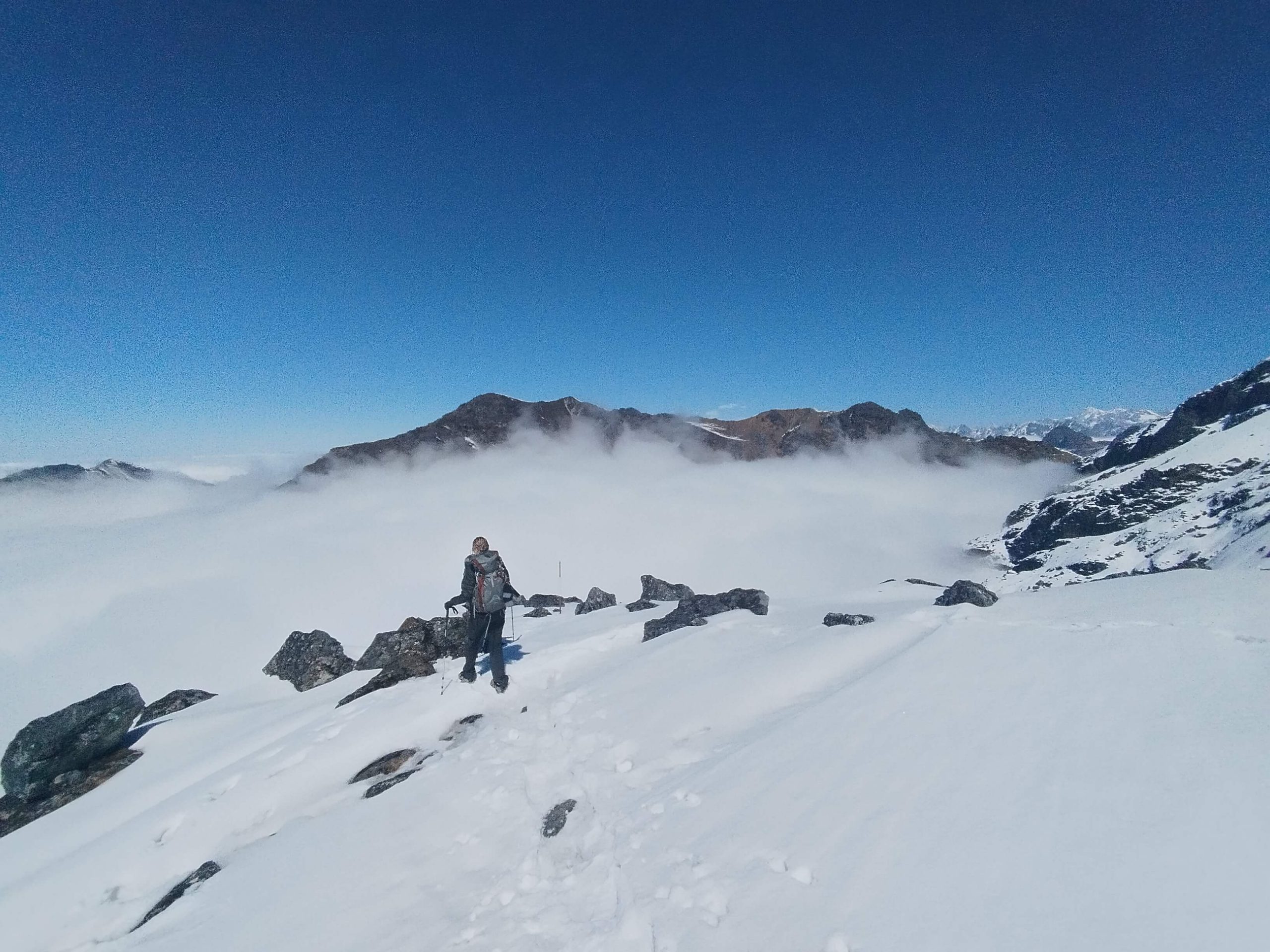
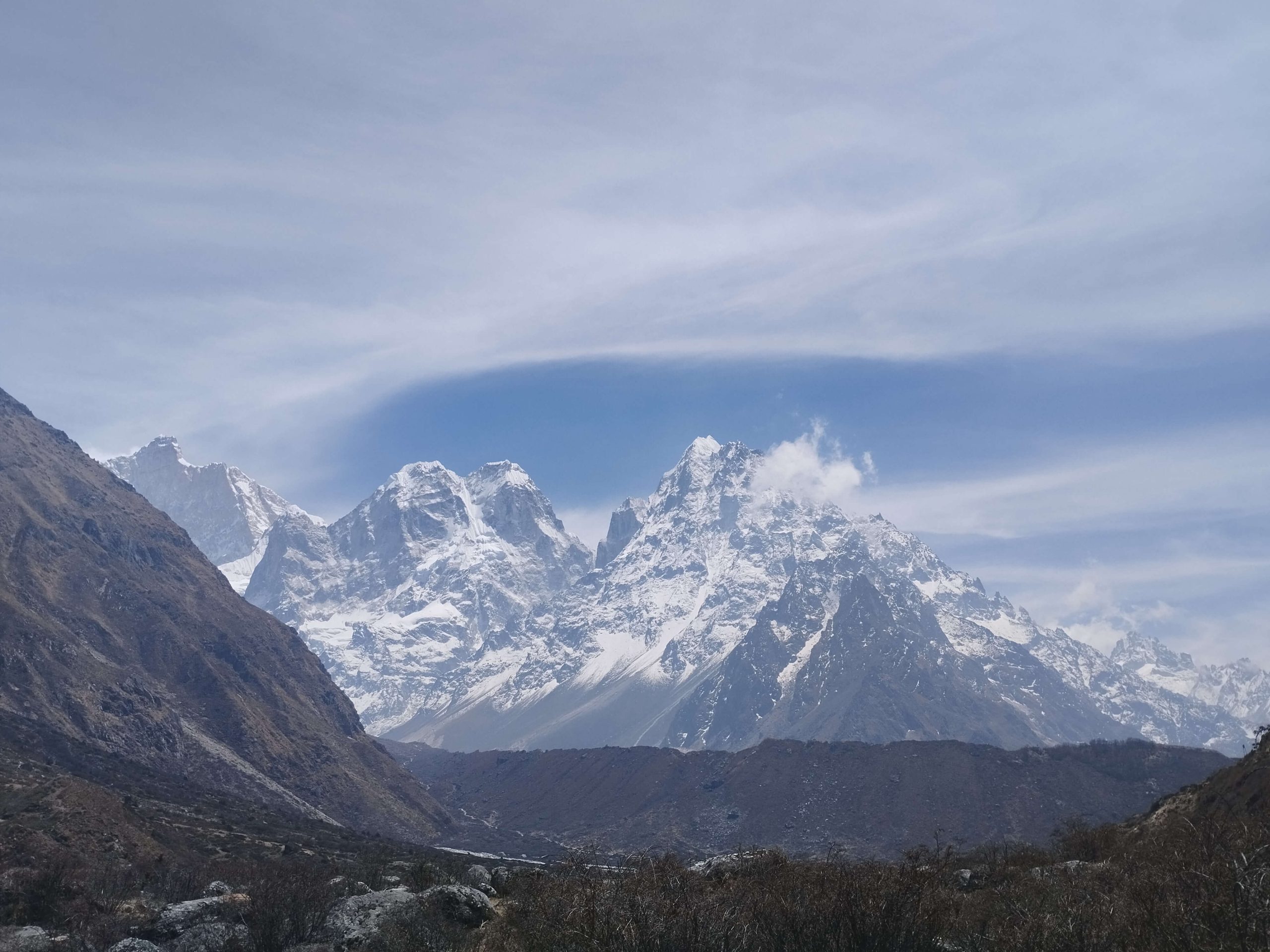
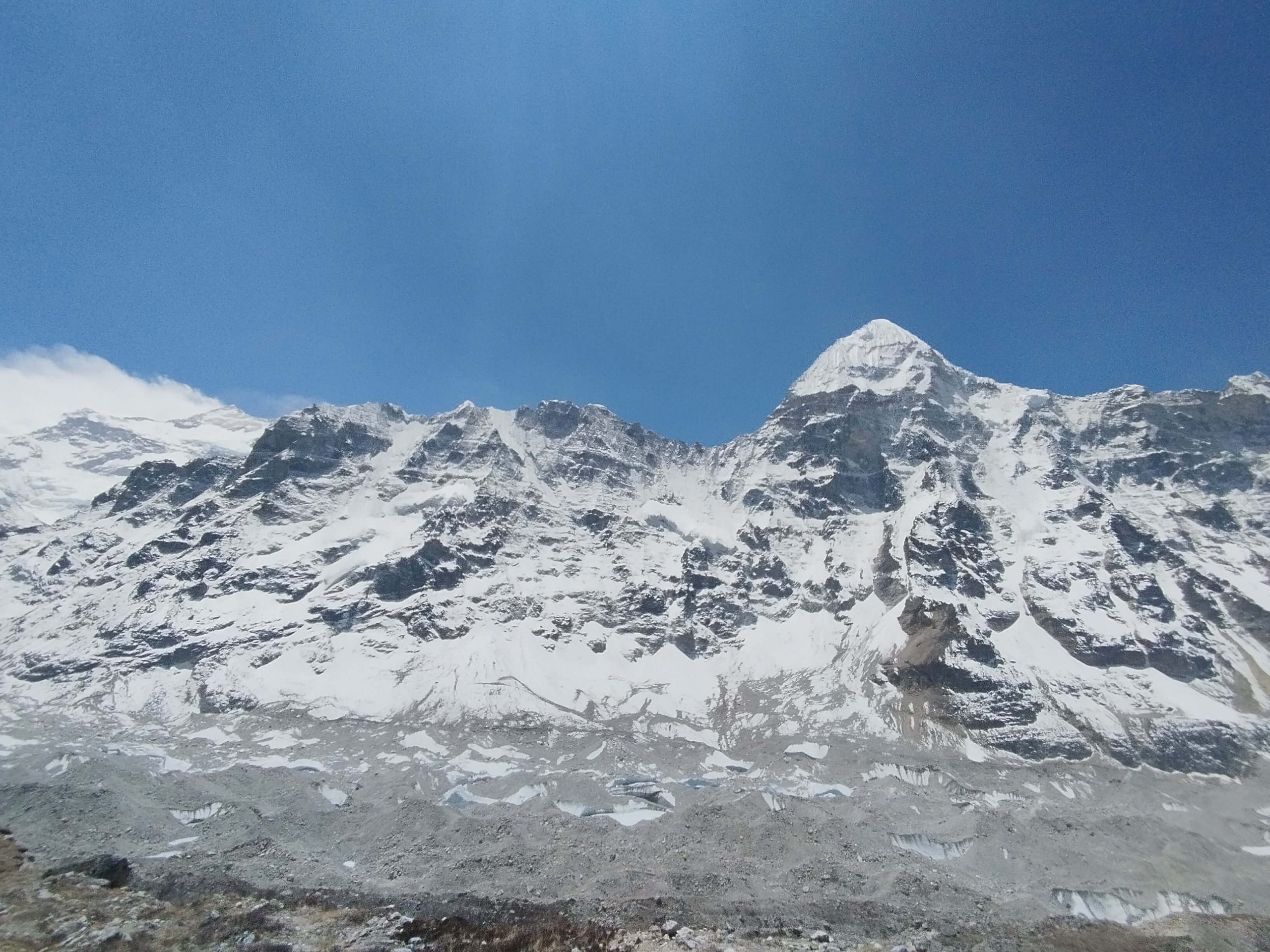
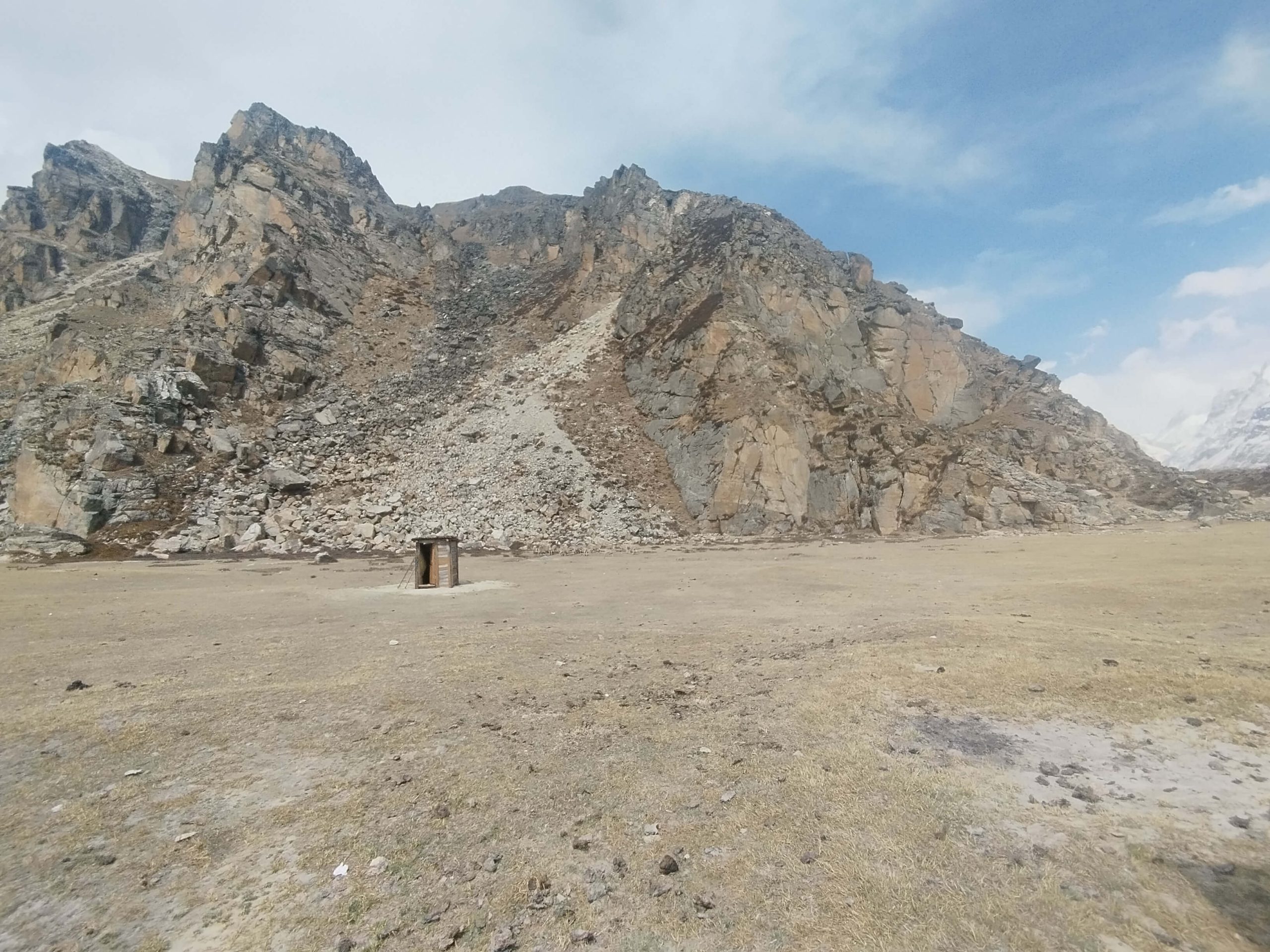
The Kanchenjunga Circuit Trek is a challenging and exhilarating adventure that takes you through the breathtaking landscapes of the Kanchenjunga region in the eastern part of Nepal. Kanchenjunga trek is considered one of the most remote and least explored trekking routes in the country, offering trekkers an opportunity to immerse themselves in the pristine beauty of the Himalayas.
The Kanchenjunga Circuit Trekking usually takes around 20 to 25 days to complete, covering a total distance of approximately 200 kilometers. The Kanchenjunga trek follows the Kanchenjunga Conservation Area, which is home to a diverse range of flora and fauna, including rhododendron forests, magnolia trees, and rare species like Snow leopards, Red pandas, Musk deer, and birds like Shy dragons, Amphibians, pheasants, and many more. This trail will allow you to explore the remarkable valleys, their rich culture, and tradition, native resident, magnificent views of the mountains, etc.
The trekking route takes you through several traditional villages inhabited by indigenous communities such as the Limbu, Rai, and Sherpa people. These villages offer a unique opportunity to experience their rich culture, traditions, and warm hospitality. You can interact with the locals, visit monasteries, and gain insights into their way of life.
Likewise, imagine yourself trekking through the third-highest mountain in the world and the second-highest peak making it one of the most famous and hardest treks of Nepal. Yes! You read that right. Mt Kanchenjunga trek will offer you a sunrise that splashes hues of red on a blushing mountain range. Mount Kanchenjunga is located on the far north-eastern side along the border of Sikkim and Nepal in the Himalayas raising an elevation of 8586 meters (28,169ft). It is still considered a remote trekking trail which is still an unexplored virgin trekking route. The first person to climb this mountain was Joe Brown and George Band on 25 May 1995.
Mount Kanchenjunga gets its name from 5 submits giving meaning to its name as “Five Treasures of Great Snow” symbolizing gold, silver, grains, precious stones, and holy scriptures.
We start our trip by arriving in Kathmandu first and flying from Kathmandu to Bhadrapur. On to reach Bhadrpur we will take a day off and next day drive to Illam to Taplejung. From this region, we will legitimately start our trek. We will be hiking from a minimum of 5 hours to a maximum of 8 hours per day. It might be difficult and exhausting at some point but the Paradise is so much more nearby than you think.
For a visual representation of the Kanchenjunga Circuit Trek, you can refer to a Kanchenjunga Circuit Trek Map specifically designed for this route. These maps are available in Kathmandu at our office we provide this map to all trekkers. The map will provide detailed information about the trekking trail, villages, altitude, and other relevant details to assist you during your journey.
Our thoughtfully designed Kanchenjunga Circuit Trek itinerary ensures a comprehensive exploration of the region. Trek through traditional villages like Ghunsa, Yamphudin, and Kambachen, offering cultural insights into the local way of life. The itinerary also includes high mountain passes and scenic viewpoints for breathtaking panoramas of the Kanchenjunga range.
The Kanchenjunga Circuit Trek is a tough journey, especially for experienced hikers. The main challenges include going to very high places where you need to get used to the altitude to avoid getting sick. The weather can be tricky, changing a lot from warm forests to cold areas with the chance of sudden snow. The trek is far away from cities, so there aren’t many facilities, making it a bit hard for logistics. Trekkers need to be ready for the tough terrain, with steep ups and downs and difficult river crossings. Getting the right permits, like the Restricted Area Permit and Kanchenjunga Conservation Area Permit, can also be a bit of a challenge. Despite these challenges, the trek gives a special and satisfying experience for those who want an adventure away from the usual paths, surrounded by the amazing views of Kanchenjunga.
The Kanchenjunga Circuit Trek takes trekkers through a breathtaking journey in the eastern part of Nepal, beginning in the town of Taplejung or Suketar, depending on the itinerary. The trail winds its way through a diverse range of landscapes, starting with lush subtropical forests adorned with rhododendrons and orchids. As trekkers ascend, they traverse terraced fields, charming villages like Chirwa, Sekathum, and Amjilosa, immersing themselves in the local culture of Limbu and Tibetan communities. The trek then leads to higher altitudes, passing through Gyabla, Ghunsa, Khambachen, and Lhonak, offering spectacular views of towering peaks, including the majestic Kanchenjunga.
Trekkers might choose to explore additional bases like Oktang and Yalung before reaching Pangpema, the North Base Camp. The journey is not only a physical challenge with steep ascents and descents but also an opportunity to witness the rich biodiversity of the Kanchenjunga Conservation Area. The remote and less-crowded nature of the route adds to its allure, providing adventurers with an off-the-beaten-path experience in one of Nepal’s most stunning and less-explored regions.
Before starting the Kanchenjunga Circuit Trek, it’s important to get some permits to make sure everything goes smoothly and is legal. There are two main permits you need. One is called a Restricted Area Permit (RAP) because the trek goes through a place where not everyone can go. The other is a Kanchenjunga Conservation Area Permit (KCAP), which helps take care of the unique plants and animals along the trail. These permits are really important for following the rules and also to keep trekkers safe by helping authorities keep track of how many people are in the remote area. Getting these permits involves some paperwork, so it’s a good idea to plan in advance and get them from the local agency who handle these things.
The best time to undertake the Kanchenjunga Circuit Trek is during the spring and autumn seasons. In spring, which spans from March to May, the weather is relatively stable, and the trail comes alive with blooming rhododendrons and other wildflowers, creating a colorful and picturesque landscape. The temperatures are moderate, making it comfortable for trekking, and the clear skies offer stunning views of the towering peaks. Similarly, autumn, from late September to November, is another optimal period for the trek.
During this time, the weather is generally dry, and the skies are clear, providing excellent visibility of the Kanchenjunga massif and surrounding peaks. The stable weather conditions make for safer and more enjoyable trekking, and the temperatures are mild. Both spring and autumn offer favorable conditions for experiencing the diverse landscapes and cultural richness of the region, making either season an ideal choice for the Kanchenjunga Circuit Trek.
Breathtaking views
This trek offers breathtaking views of the third-highest mountain in the world, Mt. Kanchenjunga. The region is rich in scenic beauty, mesmerizing landscapes, lush forests, alpine meadows, and glacial rivers. By embarking on this trek, you’ll be able to catch stunning mountainous vistas of Jannu, Kabru, Talung, Yalung Kang, Pyramid Peak, Twin Peaks, Tent Peak, and others. On top of that, as you walk through the trails, the dense forest that takes you through rhododendrons and pine sights opens your way to alpine meadows. Along with that, numerous glacial rivers and tumbling waterfalls along the walk contribute to the area’s unspoiled splendor.
Cultural insights
The Kanchenjunga Circuit Trek is not only a journey through stunning mountainous landscapes but also a cultural exploration. The journey takes you through some of the culturally preserved regions of Nepal. Traditional villages that are characterized by their unique architecture and local handicrafts give you the opportunity to explore and immerse in the distinct culture. The presence of numerous gompas, chortens, mani walls, and prayer flags add beauty to the region and a spiritual dimension to the trek. The main religion of this region is Buddhism, while also Hinduism is found in some places. The place is blended with the unique cultures of Rai, Limbu, Tibetan, Bhote, Tamang, Gurung, Newar, Chhetri, Brahmin and others.
Remote experiences
Another major reason why to pursue Kanchenjunga Trek over numerous Himalayan trekking sites in Nepal is that you’ll get to immerse in the remote experiences. The journey is challenging, riveting, and yet amusing. Being one of the remote and least explored regions, trekkers can enjoy the beauty of the region in a tranquil manner. The Kanchenjunga Circuit Trek provides a more authentic and rugged trekking experience compared to other trekking sites like Annapurna Circuit Trek or Manaslu Circuit Trek. This is because of the remote vibe that lures trekkers to the heartland of the region. There are parts of the walk where you might not see another hiker for days because of how remote it is. This seclusion offers the opportunity to truly experience solitude and forge a close bond with the natural world.
Rich Biodiversity
The Kanchenjunga Circuit Trek is within the Kanchenjunga Conservation Area, which is rich in biodiversity. This region encompasses lush forests and elevated hills that provide you with a lively atmosphere to immerse in. During your journey, you’ll pass through distinct flora of the region, from rhododendron and pine forests to alpine meadows. Along with that, the journey provides you glimpses of Himalayan wild species like Himalayan Tahr, Red Panda, Snow Leopard, Blue Sheep, and others. In addition, the journey goes by glaciers that are nourished by the high Himalayas’ year-round snowfields. These glaciers support the hydrology of the area by supplying rivers and streams that upstream support the various ecosystems and nearby communities.
Accommodation: Hotel
Meals: Breakfast
On arrival at Kathmandu airport, you will have beautiful views of the city. You will see the mountains and terraced fields below. Our guide will receive you from the airport and accommodate you in a nice hotel. Feel free and enjoy your day by exploring Kathmandu valley by visiting nearby shops. You can also buy the necessary equipment that is required during the trek or you can just relax and prepare yourself for the trek.
Overnight at Kathmandu
Accommodation: Hotel
Meals: Breakfast
Today you will explore the two most popular and famous places of Kathmandu valley i.e. Pasupatinath Temple and Bouddha Nath Stupa.
Boudhanath stupa is located at the heart of the city and is one of the UNESCO World Heritage sites making it one of the most imposing landmarks in Kathmandu. It is also the largest Stupa in the world.
Pasupatinath is a Hindu sacred and famous religious place which is an incarnation of the Hindu god Shiva as “Lord of the animals”. We will attend the arati at night which is very much famous among people.
Overnight At Kathmandu
Accommodation: Tea house
Meals: Breakfast, Lunch, and Dinner
After having breakfast your guide will take you to the airport. With access to air transport, you will get to see the magnificent view of the Himalayas on your way. You will have to take a trip of a vehicle to Illam (4-5 hours drive). On the way you have a beautiful view of the tea garden of ilam.
Stay a night in Illam.
Accommodation: Tea house
Meals: Breakfast, Lunch, and Dinner
Enjoy your long day trip from Illam, known as the Tea plantation area of our country. After having breakfast, for 5 hours we will go towards Taplejung through terrace fields and hills. On your way, you will see interesting Buddhist Gumbas.
You can explore the hills, city, and have lunch on your way.
Stay a night in Taplejung.
Accommodation: Tea house
Meals: Breakfast, Lunch, and Dinner
After having morning breakfast you start your journey driving towards Chirwa and then start your trekking from Chirwa to Sekhthum for 5-6 hours.
It will be a long day of drive with trekking mainly to the downhill but we will have a chance to rest at the small limbu village. It is located at the bank of the river of Tamor.
Stay a night at the village of Sekthum.
Accommodation: Tea house
Meals: Breakfast, Lunch, and Dinner
The trekking journey stretches from Sekthum to Amjilosa alongside the bank of the thundering Tamor River. You’ll encounter village settlements while on the way to Amjilosa and also gain a thrilling aspect of the trek by crossing the river via a sweeping suspension bridge. You’ll hop on the journey by exploring the verdant trees and settlements of Jonggim. This day’s trek will give you the taste of Himalayan wilderness and the perfect chance to catch stunning landscapes.
The trails continue alongside Ghunsa Khola and offer you the magical beauty of waterfalls and rivers. The trails are within the Kanchenjunga Conservation Area, which is the home to distinct wild species of the region, including Red Panda and Himalayan Monal. Through today’s journey, you’ll be able to catch glimpses of the distinct flora and fauna of the region.
Overnight at Amjilosa
Accommodation: Tea house
Meals: Breakfast, Lunch, and Dinner
By today, you’ve ascended more than 2500m, and you’ll start to feel changes in atmospheric pressure and oxygen level. Being mindful of such changes, you’ll start your trek towards Gyabla at a steady pace. The trek will be relatively easier as you’ll ascend by 200m in altitude. The trail takes you through dense forests and distinct settlements. As the journey is within the Kanchenjunga Conservation Area, you may be able to catch the sights of Red Panda.
You’ll pass through blooming rhododendron forests and pine forests while watching bird species and listening to their chirping. Then, you’ll pass through the forests of bamboo, where you can catch glimpses of wild species before finally arriving at Gyabla. The last uphill climb to reach Gyabla presents you with outstanding mountainous beauty. Upon arriving at Gyabla, you’ll spend the night at one of the finest teahouses in the region.
Overnight at Gyabla
Accommodation: Tea house
Meals: Breakfast, Lunch, and Dinner
Today’s trek can tend to be challenging as you’ll have to ascend by more than 800m in altitude. It is important to maintain your steady pace while passing through ascents. It is necessary to rest to let your body adapt to gradual changes in atmospheric pressure and oxygen level. The journey will be through lush forests and the village of Phale, which was a Tibetan refugee camp decades ago.
From there, the journey takes you to the Ghunsa village, the largest and most famous village in this region. This village is culturally rich and has numerous arts and handicrafts to see. The village is accommodated with basic facilities like telephone, health care, internet and electricity. Upon reaching Ghunsa, you’ll catch the stunning mountainous landscapes and glimpses of cascading waterfalls and rivers. You’ll spend the night at one of the best teahouses in Ghunsa.
Stay overnight in Ghunsa.
Accommodation: Tea house
Meals: Breakfast, Lunch, and Dinner
By today, you’ve ascended by more than 3500m in altitude, and it is important to acclimatize properly to reduce the risks of catching altitude sickness. To let your body adapt to the environment of the Himalayan region, you’ll acclimatize at Ghunsa. Ghunsa encompasses magical lakes and gompas. On this day, you’ll explore nearby places, visit lakes, explore stupas and gompas, and immerse yourself in the rich culture of the region.
There is a ridge to climb, and reaching the top of it will provide you with stunning mountainous beauty. The thrilling short trek will present you with the spectacular beauty of Jannu Peak. After that, you can retrace and spend time resting in order to prepare for the epic adventure to come.
Overnight at Ghunsa
Accommodation: Tea house
Meals: Breakfast, Lunch, and Dinner
Kambachen is within 5-6 hours of trek from Ghunsa, and we’ll begin our journey towards it today. As you embark on the journey to Kambachen, you’ll be able to relish the beauty of Glacial rivers and picturesque valleys along with the stunning beauty of Jannu Peak. With each step you put forward, you’ll be presented with majestic Himalayan landscapes. The trails may include steep sections and take you through landslide-prone areas which is why it is important to maintain a keen observation.
The trail will take you through dense forests and present you with alpine vegetation. The journey not only provides you with an opportunity for cultural exploration but also presents you with glimpses of wild and bird species. Passing through numerous chortens, mani walls, prayer flags, and prayer wheels will let you immerse in the rich culture of the region. You’ll spend the night at Kambachen.
Overnight at Kambachen.
Accommodation: Tea house
Meals: Breakfast, Lunch, and Dinner
Today, it is another time to acclimatize at Kambachen and head for a side trip. This day marks an important day of this journey as it indulges you outside the boundaries of Kanchenjunga Circuit. Considering the side trip, you’ll be heading to Janu Himal Base Camp to relish the magical beauty of Janu Peak. This mountain is also known as the holy mountain of Kirati culture.
Along the trip, you’ll be astonished by the enthralling views of the mountains that dominate the sky. The trip will also present you with sights of blue sheep and yak along the way. After relishing the beauty of mountainous landscapes, you’ll retrace Kambachen and spend the rest of the day exploring village settlements. This day serves you with an excellent side trip and proper acclimatization.
Overnight at Kambachen.
Accommodation: Tea house
Meals: Breakfast, Lunch, and Dinner
The journey continues towards Lhonak through the mesmerizing beauty of Himalayan landscapes and hills. We’ll pass breathtaking vistas of mountains and endangered species of wildlife, like yaks, snow leopards, and blue sheep, as we stroll on. You will arrive at Lhonak after walking through the hills for 5 hours.
Along the way, you’ll get to see the magical beauty of Kanchenjunga. Following glacial rivers, the journey takes you to remote wilderness. Trekking through the isolated region will provide you with a sense of solitude and tranquility. Upon arriving at Lhonak, you’ll spend the night at one of the finest teahouses in the region and prepare for the rip-roaring adventure that you’ll have tomorrow.
Stay overnight at Lhonak.
Accommodation: Tea house
Meals: Breakfast, Lunch, and Dinner
This is the main event of the Kanchenjunga Circuit Trek. On this day, you’ll embark on the journey to Kanchenjunga North Base Camp after your early morning breakfast. The journey begins with ascending towards the moraine from the glaciers of Kanchenjunga. After several days of hiking, the sight of the prayer flags and the captivating, towering third-highest peak, Kanchenjunga, will keep you occupied.
The journey takes you to the Base Camp and serves you close-up views of the third-highest mountain in the world. Along with that, you’ll be able to catch glimpses of Wedge Peak, Nepal Peak, and Tent Peak. The stunning Himalayan landscapes and towering peaks will leave you awestruck and create a perfect opportunity for photography. Along with that, reaching Kanchenjunga North Base Camp through by conquering forthcoming challenges and trail difficulties is a significant achievement.
On top of that, observing prayer flags and numerous chortens along the way will let you experience the spiritual ambiance of the region. It stands for the mountains’ profound cultural and religious significance. After enjoying the beauty of stunning Himalayan landscapes, you’ll retrace Lhonak to spend the night.
Overnight at Lhonak
Accommodation: Tea house
Meals: Breakfast, Lunch, and Dinner
It is now time to retrace to Bhadrapur and carry a flight to Kathmandu. For that, we’ll begin our journey after early morning breakfast from Lhonak to Ghunsa. We’ll pass through the same trails we’ve ascended and upon reaching there, we’ll spend the night at one of the teahouses of the region.
Overnight at Ghunsa
Accommodation: Tea house
Meals: Breakfast, Lunch, and Dinner
From Ghunsa, we’ll take another route to add delight to the trek. On our way to Selele La, we’ll be able to relish the beauty of Mt. Makalu. The path leads us through a forest and over a grassy ridge from which we can see the towns of Ghunsa and Phole, in addition to the breathtaking views of Mt. Makalu, the world’s fifth-tallest peak.
Overnight at Sele Le
Accommodation: Tea house
Meals: Breakfast, Lunch, and Dinner
The trail from Sele La Base Camp to Cheram involves passing through three high passes. Firstly, we cross the Sinion La Pass (4440m), from where we can catch the magical beauty of Mt. Makalu. From there, we reach Sinelapche Bhanjyang (4646m) via Mirginla La (4480m). On the way to Tseram, the Sinepalche trail descends sharply from the Last Pass, providing a view of Kanchenjunga. We spend our night at one of the teahouses of this region.
Overnight at Cheram
Accommodation: Tea house
Meals: Breakfast, Lunch, and Dinner
The trek from Cheram to Ramche, reaching an elevation of 4,580 meters (15,026 feet) via the Oktang View Point at 4,730 meters (15,517 feet), is a strenuous yet exhilarating journey, typically taking 7-8 hours to complete. Starting from Cheram at 3,870 meters (12,696 feet), the trail ascends gradually, offering breathtaking views of the surrounding peaks and glaciers. As you approach the Oktang View Point, the panoramic vistas become even more spectacular, providing a close-up view of majestic mountains like Kanchenjunga. After taking in the stunning scenery at Oktang, the trek continues to Ramche, where the altitude and the serene environment offer a unique experience. The descent back to Cheram follows the same path, allowing trekkers to revisit the beautiful landscapes, completing a challenging and rewarding day of trekking.
Overnight at Cheram
Accommodation: Tea house
Meals: Breakfast, Lunch, and Dinner
The riveting and beautiful Kanchenjunga Circuit Trek is leaning towards an end, and on the way of retracing towards Torongding, we’ll pass through lush green forests and distinct settlements. The trail demands walking for about 5-6 hours to reach Torongding, where we’ll spend the night.
Overnight at Torongding.
Accommodation: Tea house
Meals: Breakfast, Lunch, and Dinner
From Torongding, we head towards Sherpa Gaun. Though we’ve descended much altitude by now, it is important to maintain a steady pace and be mindful of risk-prone areas. There are risks of landslide-prone areas along the way which demands keen attention. The Yamphuding village of the Sherpa community is also referred to as Sherpa Gaun. Our objective will be reached after a strenuous six to seven-hour journey downward through mountains and forests.
Stay overnight at Yamphuding (Sherpa Gaun).
Accommodation: Tea house
Meals: Breakfast, Lunch, and Dinner
Walking is very much easier now as we have already passed out the hard trails. We will see amazing villages and fields during the trek. After walking for 5-6 hours we will reach the beautiful small limbu village of Khebang which is surrounded by greenery.
Overnight at Khebang
Accommodation: Tea house
Meals: Breakfast, Lunch, and Dinner
This is the last day of the trekking journey. We start our trek from Khebang and walk for about 5-6 hours to reach Happukhola. We don’t need to rush, which is why we spend our night at Happukhola and be ready for the scenic drive tomorrow
Accommodation: Tea house
Meals: Breakfast, Lunch, and Dinner
From Happukhola, we carry our journey via a drive to Illam. We’ll catch glimpses of gigantic mountains once again, but at a distant level. After that, we enjoy the beautiful tea garden of Illam and spend the night at one of the finest lodges of Illam.
Accommodation: Hotel
Meals: Breakfast
After having morning breakfast drive to Bhadrapur around 3 hours drive and our guide will help you catch an early flight and after reaching Kathmandu you will be accommodated in a nice hotel where you can have a rest.
Accommodation: Hotel
Meals: Breakfast
After having breakfast our guide will help you with the luggage and you will be safely driven to the airport. Today your beautiful journey in Nepal ends. You will take a beautiful memory of Nepal with your friends, family or with yourself too.
The Kanchenjunga Circuit Trek takes 21 to 26 days with Nepal Mountain Adventure, flying from Kathmandu to Bhadrapur or Taplejung and trekking the complete circuit around Kanchenjunga (8,586 m), the third highest mountain in the world, visiting both the north base camp at 5,143 m and the south base camp at 4,780 m.
The Kanchenjunga Circuit Trek with Nepal Mountain Adventure starts from USD 2,499 per person including the Kanchenjunga Conservation Area Permit, licensed guide, porter, teahouse and camping accommodation, all meals, and domestic flights to Taplejung.
Three permits are required which are the Kanchenjunga Conservation Area Permit (USD 20), the Kanchenjunga Restricted Area Permit (USD 10 per week), and the TIMS card (USD 20). A minimum group of two trekkers with a licensed guide is legally required for the restricted area section. Nepal Mountain Adventure handles all permits before departure.
The Kanchenjunga Circuit is rated extremely strenuous and is one of the most physically demanding treks in Nepal. Both base camps sit above 4,700 m, the circuit crosses remote high passes, trekkers spend multiple weeks above 3,500 m in terrain with minimal rescue infrastructure, and the total duration of 21 to 26 days requires exceptional fitness and mental endurance.
Kanchenjunga (8,586 m) is the third highest mountain in the world and its base camp treks are among the least visited in Nepal receiving only a few hundred trekkers annually compared to tens of thousands at EBC. The trekking route crosses the boundary into Sikkim, India creating one of the most geographically unique high altitude trekking experiences available anywhere in the Himalayas.
Spring (April to May) and autumn (October to November) are the best seasons. The approach to Kanchenjunga from Taplejung passes through the lowest and wettest terrain in the Nepal trekking world and receives significant monsoon rainfall from June to September making those months very difficult for the lower valley sections.
The circuit reaches 5,143 m at Kanchenjunga North Base Camp (Pangpema) and 4,780 m at Kanchenjunga South Base Camp (Oktang). Optional viewpoint hikes above both base camps can push to approximately 5,300 m on clear days giving some of the most dramatic close range views of an 8,000 m peak available on any trek in Nepal.
The Kanchenjunga region is home to the Limbu, Rai, and Sherpa communities of far eastern Nepal who have unique languages, festivals, and cultural traditions completely distinct from the better known Sherpa communities of the Khumbu. The trail passes through traditional village life in Taplejung, Ghunsa, and the high altitude Tibetan influenced communities in the upper Kanchenjunga valleys.
Teahouses are available in the main villages of Taplejung, Chirwa, Sekathum, Amjilossa, Ghunsa, and Tortong but above the main villages camping is required for the approach to both base camps. Nepal Mountain Adventure operates a hybrid teahouse and camping itinerary with full camping equipment provided for the high altitude sections of the circuit.
Yes, the views from both base camps are extraordinary. From Pangpema North Base Camp (5,143 m) the entire north face of Kanchenjunga fills the horizon directly above the camp. From Oktang South Base Camp (4,780 m) the south and southwest faces are visible with the Yalung Glacier flowing directly toward the camp creating one of the most dramatic glacial base camp settings in the entire Nepal Himalaya.
The Kanchenjunga Circuit Trek exceeded all my expectations. The journey through diverse landscapes – from dense forests to high passes – was exhilarating, offering spectacular views of the majestic Kanchenjunga peak. The opportunity to interact with local communities added a unique cultural touch, making this trek a perfect blend of adventure and immersion. If you’re a trekking enthusiast looking for an off-the-beaten-path experience, the Kanchenjunga Circuit Trek is an absolute must.
I love this trek. It is a remarkable adventure through remote landscapes and vibrant local cultures. With stunning views of the world’s third-highest peak, diverse terrain, and interactions with welcoming villagers, it’s a truly immersive and unforgettable trekking experience. The journey combines physical challenges with cultural insights, making it a must-visit for nature enthusiasts and intrepid explorers.
| Cookie | Duration | Description |
|---|---|---|
| cookielawinfo-checkbox-analytics | 11 months | This cookie is set by GDPR Cookie Consent plugin. The cookie is used to store the user consent for the cookies in the category "Analytics". |
| cookielawinfo-checkbox-functional | 11 months | The cookie is set by GDPR cookie consent to record the user consent for the cookies in the category "Functional". |
| cookielawinfo-checkbox-necessary | 11 months | This cookie is set by GDPR Cookie Consent plugin. The cookies is used to store the user consent for the cookies in the category "Necessary". |
| cookielawinfo-checkbox-others | 11 months | This cookie is set by GDPR Cookie Consent plugin. The cookie is used to store the user consent for the cookies in the category "Other. |
| cookielawinfo-checkbox-performance | 11 months | This cookie is set by GDPR Cookie Consent plugin. The cookie is used to store the user consent for the cookies in the category "Performance". |
| viewed_cookie_policy | 11 months | The cookie is set by the GDPR Cookie Consent plugin and is used to store whether or not user has consented to the use of cookies. It does not store any personal data. |